

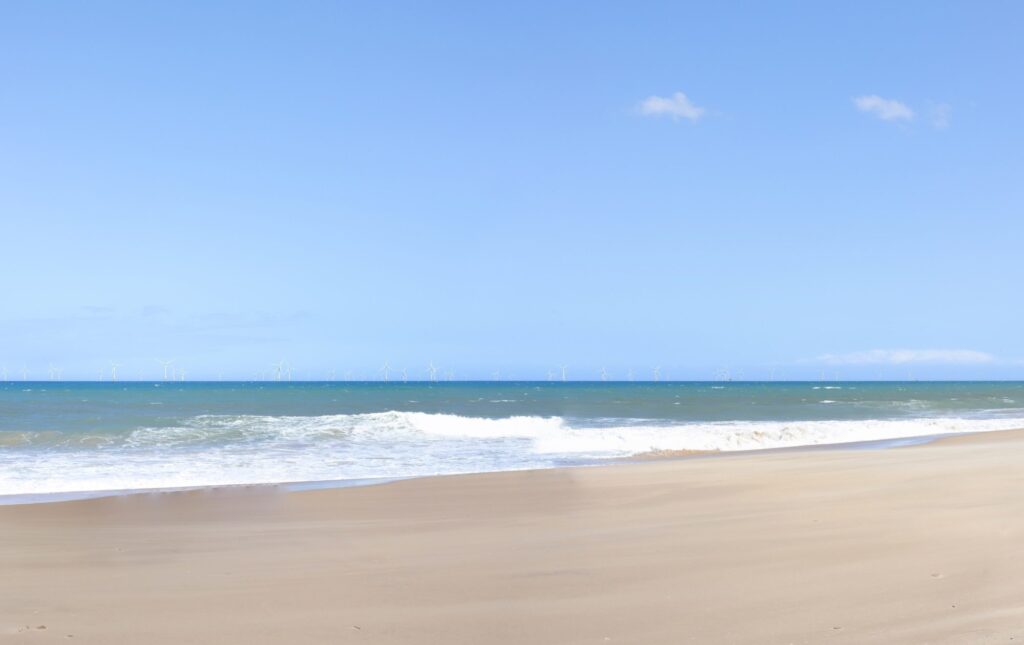
Plans to develop a 1-gigawatt wind farm off the coast of Gippsland in Victoria have been submitted for federal environmental assessment. This move comes shortly after a community meeting where hundreds of locals voiced their opposition to the project. The Blue Mackerel Offshore Wind Project, developed by Jera Nex bp, aims to install up to 70 wind turbines approximately 10 km from the shore between Woodside and Seaspray in Victoria’s southeast.
The proposal, which appeared in the EPBC queue on Monday, outlines that each turbine will have a capacity ranging from 15 to 23 megawatts (MW). The height of the turbines is expected to be between 266 and 327 meters above sea level, depending on the chosen turbine capacity. While the current design is based on 15 MW turbines, the developers note that future advancements in turbine technology could lead to the use of larger turbines, potentially reducing the total number required.
Local Opposition and Community Concerns
The project has sparked significant controversy, particularly due to its proximity to the scenic 90 Mile Beach. A recent community meeting facilitated by third-party consultancy Nous Group on behalf of Blue Mackerel saw around 400 attendees, all of whom reportedly opposed the wind farm. A petition with over 2,600 signatures was also presented, highlighting widespread resistance.
According to the community group Celebrate Seaspray, concerns include the potential loss of visual amenity, impacts on tourism, noise and light pollution, and harm to local wildlife. The group also expressed a “deep lack of trust” in Blue Mackerel’s transparency and authenticity in presenting the project’s visual impacts.
Developer’s Response and Community Engagement
Jera Nex bp, a joint venture between Japan’s largest power generation company Jera and global oil and gas giant bp, has been proactive in engaging with the community. Blue Mackerel project director David Ghaly emphasized the company’s commitment to transparency and community involvement. “Our approach to community has been to be honest and open and transparent – and technically accurate,” Ghaly stated.
During the community meetings, Blue Mackerel provided virtual reality headsets to offer immersive visualizations of the wind farm from various viewpoints along the coastline. This initiative aimed to facilitate informed discussions and gather diverse opinions from locals, including holidaymakers and children learning about renewable energy in schools.
Environmental and Economic Implications
The Blue Mackerel project holds significant potential for contributing to Australia’s renewable energy goals. Awarded Major Project Status by the federal government, it plays a crucial role in transitioning the state and national grid away from coal. However, the project’s location in a Biologically Important Area (BAI) raises environmental concerns. The area is home to species such as the Pygmy Blue Whale, the Southern Right Whale, and the White Shark.
According to the project’s EPBC referral documents, while the turbines will be noticeable from the shore, they are not expected to dominate the landscape. The documents also highlight the area’s existing marine activities, including recreational and commercial fishing, which predominantly occur close to shore due to rough offshore conditions.
Future Prospects and Community Benefits
As the federal environmental assessment progresses, the developers are keen to shift the conversation towards a community benefits program. “We’d like to hear from the community about how we can best be a responsible project, given that we will be there for 35 years,” Ghaly noted. The company aims to address community concerns while ensuring the project’s long-term viability and contribution to clean energy.
The outcome of the federal review and ongoing community engagement will be pivotal in determining the project’s future. As the Gippsland offshore wind zone continues to attract interest, the balance between renewable energy development and community impact remains a critical consideration.