




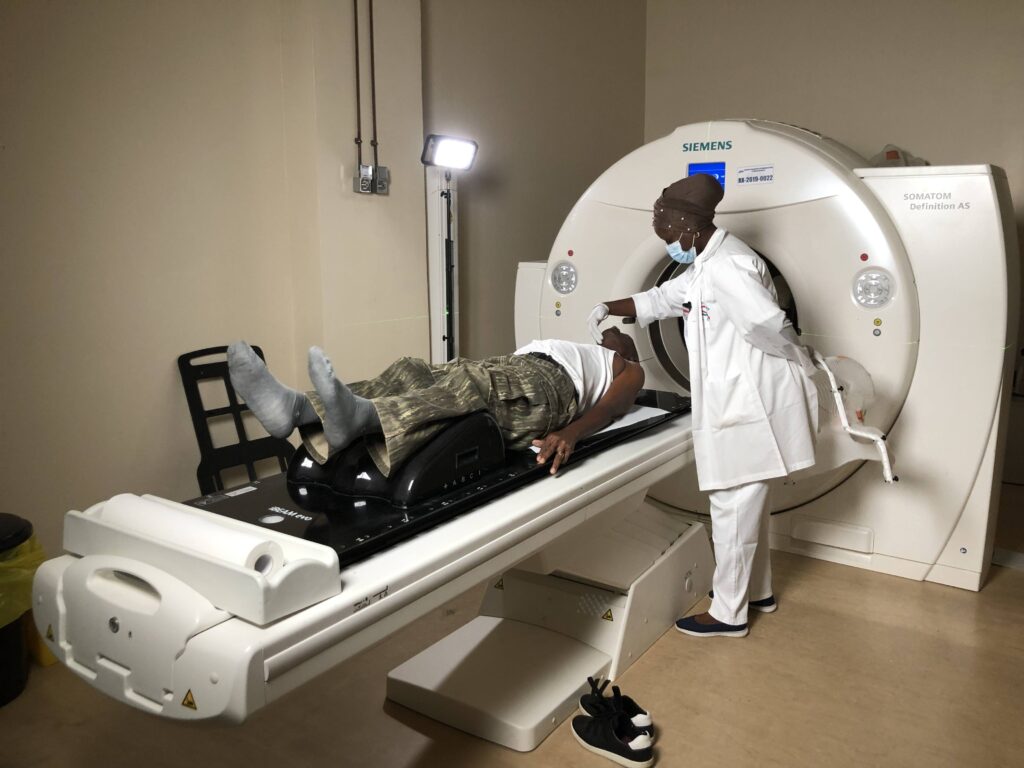
Cancer remains a formidable global public health challenge, particularly in low- and middle-income countries where nearly 70% of cancer-related deaths occur due to limited access to specialized care. As the world observes World Cancer Day, attention turns to how nuclear science and technology are providing new hope to cancer patients in underserved regions through the International Atomic Energy Agency’s (IAEA) Rays of Hope initiative.
Launched in 2022 by IAEA Director General Rafael Mariano Grossi, the Rays of Hope initiative has made significant strides in procuring vital diagnostic and treatment equipment for low- and middle-income countries. This includes the acquisition of more than 90 items such as ten linear accelerators and 55 mammography machines. Over 100 countries have joined the initiative, which has successfully raised more than EUR 90 million in extrabudgetary funds to bolster cancer care in these regions.
Transforming Cancer Care with Technology
The initiative has established 18 Anchor Centres, delivering training to over 700 oncology professionals worldwide in the safe and optimal use of radiation medicine. “Rays of Hope is changing the reality on the ground and is a concrete example of how the IAEA delivers,” said IAEA Director General Grossi. “Hospitals are being built, technology is being transferred, but we can still do more to bring cancer care closer to people that need it the most.”
According to the latest estimates by the International Agency for Research on Cancer (IARC), 10 million people succumbed to cancer in recent years, with this number expected to nearly double by 2045. The rise in cases is driven by multiple factors, including aging populations and environmental and lifestyle risk factors.
Addressing Radiotherapy Gaps
Radiotherapy is essential for treating more than half of all cancer patients, yet access remains uneven. The Rays of Hope initiative was launched in Addis Ababa, Ethiopia, with an initial focus on Africa, where many countries lack even a single radiotherapy machine. Malawi was one of the first beneficiaries, inaugurating its first public radiotherapy center in July 2025 at the Kamuzu Central Hospital in Lilongwe.
“The new National Cancer Centre has been a game changer for specialized care in Malawi,” said Dr. Leo Masamba, a clinical oncologist at the Centre. “We have treated over 100 patients in the first six months alone, with many more scheduled for treatment ahead.”
The initiative is also supporting the establishment or expansion of national radiotherapy centers in Chad, Ethiopia, Kenya, Lesotho, Liberia, Senegal, Togo, and Zambia, as well as expanding radiotherapy care in the Dominican Republic, Honduras, Mexico, and Paraguay in Latin America.
Enhancing Early Detection with Nuclear Medicine
Nuclear medicine and imaging techniques are indispensable for the early detection of tumors, significantly improving treatment outcomes and reducing mortality. With an estimated 2.3 million cases annually, breast cancer is the leading cause of cancer deaths among women globally. Regular mammograms can detect the disease early, before symptoms appear.
Rays of Hope is deploying 55 mammography units across Africa, Latin America, and the Caribbean, bridging a major gap in diagnostic imaging and benefitting thousands of women. Hospital Nacional Nuestra Señora de Fátima in Cojutepeque, El Salvador, was among the first to receive these machines, now screening over 20 women per month for breast cancer.
“Since July 2025, 137 women have benefited from the service and 3% had highly suggestive findings of malignancy. They were immediately referred to specialized care, strengthening early care and continuity of treatment,”
the hospital management stated.
Expanding Nuclear Medicine Services
The initiative is also expanding nuclear medicine services in Kenya, Kyrgyzstan, Senegal, and Togo. In early 2025, Jordan inaugurated a PET-CT scanner at Al-Bashir Hospital, marking the first advanced nuclear medicine diagnostic equipment in a public hospital in the country, expected to benefit over 500 patients.
Looking Ahead
The progress made by the Rays of Hope initiative underscores the potential of nuclear technology in transforming cancer care in underserved regions. However, as the IAEA Director General Grossi noted, there is still much work to be done to ensure equitable access to cancer treatment worldwide. Continued international collaboration and investment will be crucial in expanding these efforts and ultimately reducing the global cancer burden.
As the world continues to grapple with the challenges posed by cancer, initiatives like Rays of Hope offer a beacon of promise, harnessing the power of technology to save lives and improve the quality of care for millions around the globe.