




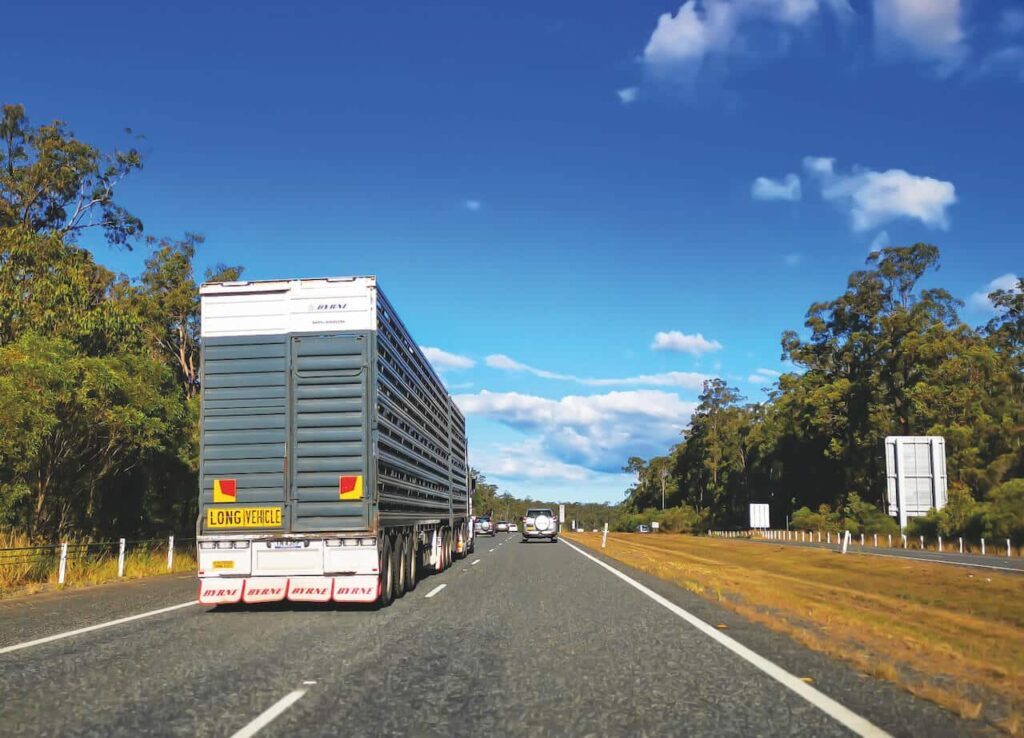
The National Truck Accident Research Centre’s (NTARC) Major Incident Investigation Report 2025, commissioned in partnership with the NTI, reveals a promising reduction in human factor-related incident causes. The report highlights a 1.6 percent decrease in inattention/distraction incidents and a 7.6 percent reduction in inappropriate speed incidents from 2023 to 2024.
This comprehensive report, the second produced under a collaboration between NTI, the National Road Safety Partnership Program (NRSPP), and the Monash University Accident Research Centre (MUARC), serves as a critical resource for industry and policymakers. For over two decades, NTI, Australia’s leading transport and logistics insurer, has utilized its claims data to produce the NTARC report, providing insights that aim to enhance safety and productivity in the heavy vehicle sector.
Analyzing Key Findings
Dr. Jasmine Proud from MUARC emphasized that inattention/distraction, inadequate following distance, and inappropriate speed remain significant contributors to major incidents. “Inattention/distraction accounted for 17.9 percent of all major incidents in 2024, a fall of 1.6 percent on the previous year,” she noted. These incidents are predominantly single-vehicle, suggesting that the transport industry is well-positioned to tackle this issue.
Inadequate following distance was identified as the second most common cause of human factor crashes in 2024, with 80 percent occurring in major cities. These incidents often involve another vehicle, typically a car, highlighting the complexities of interactions between light and heavy vehicles.
Dr. Proud also reported a decrease in inappropriate speed-related incidents, which fell from 13.8 percent in 2019 to 8.6 percent in 2024. “These incidents are not confined to high-speed roads and reveal how a heavy vehicle’s high centre of gravity, load shift potential, and articulation reduces its stability, especially on curves,” she explained.
Implications for Industry and Policy
NTI’s Chief Executive Officer, Janelle Greene, stated that the NTARC report aims to identify opportunities for improving safety outcomes. This year’s report introduces data broken down by State and Territory for the first time, facilitating more targeted actions. “Continuing to drive systemic and behavioural change remains central to reducing human factor-related incidents and improving safety for all road users,” Greene emphasized.
Encouragingly, a range of industry-led and government-supported programs are already addressing these issues. These initiatives include tailored education and awareness campaigns, resource packs, toolbox talks, workshops, and policy and technology innovations.
Challenges and Future Directions
Greene highlighted the hazardous nature of the heavy vehicle driving profession, noting that in truck and car fatal crashes, heavy vehicles were not at fault in 85.7 percent of incidents. “They face high levels of unpredictability in the workplace, including road conditions, environmental factors, and load mass and geometry,” she said.
The NTARC report’s release in October coincides with Safe Work Month, underscoring the commitment to improving safety standards. “Heavy vehicle drivers deserve a safe work environment free from the risk of death or serious injury,” Greene asserted. Industry and government collaboration continues to drive change, with the NTARC Partnership dedicated to supporting research that enhances understanding of the sector’s unique hazards.
Looking Ahead
The NTARC report not only provides a snapshot of the current state of the heavy vehicle industry but also serves as a roadmap for future safety improvements. By identifying key areas for intervention and fostering collaboration between industry and government, the report aims to ensure that Australia’s road transport sector remains both safe and productive.
As the industry continues to evolve, the insights from the NTARC report will be instrumental in guiding policy and operational changes that prioritize the safety of heavy vehicle drivers and all road users.