




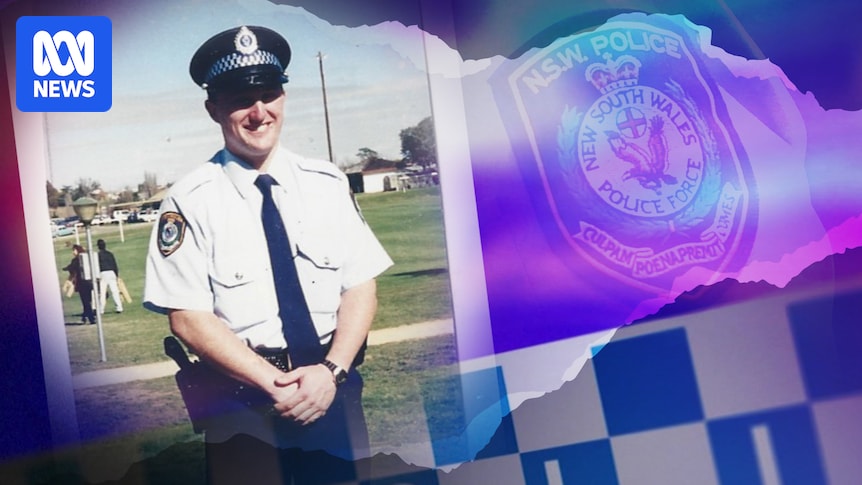
A former New South Wales Police officer, Adam Watts, faced a challenging battle with the force’s insurer over his mental health claims, which were disputed by a doctor who never personally consulted or examined him. This controversy unfolded during a year-long dispute, highlighting significant issues within the workers’ compensation system.
Adam Watts served as a general duties officer for 17 years before being medically discharged with post-traumatic stress disorder (PTSD) in 2012. “One of the first jobs I did was [responding to] a young guy who gassed himself in the car and the mother wanted answers and I had no answers to give her,” Watts recounted, illustrating the traumatic experiences that contributed to his condition.
Despite NSW Police accepting liability for Watts’s psychological injury and providing ongoing compensation, his mental health remained precarious. His psychologist reported that Watts continued to suffer from “nightmares of past traumas, including seeing dead bodies.”
The Dispute Over Medical Claims
In 2019, Watts was diagnosed with Graves’ disease, an autoimmune condition affecting the thyroid, which can exacerbate anxiety. After medication proved ineffective, his thyroid gland was surgically removed in 2023. Watts sought reimbursement for the $6,000 surgery from Employers Mutual Limited (EML), the police force’s insurer.
EML denied the claim, citing a “strong family history of hyperthyroidism” and overlooking the possibility that severe stress from his police service triggered his condition. Frustrated, Watts represented himself at the Personal Injury Commission, challenging EML’s decision.
Doctor’s Opinion Without Consultation
EML’s case hinged on the opinion of a doctor, referred to as ‘Dr X’, who never met Watts. Dr X based his conclusions solely on Watts’s medical records, questioning his mental health prior to the diagnosis and asserting there was no documented stress leading up to 2019. However, the commission found ample evidence of severe anxiety and depression in Watts’s medical notes from early 2019.
“The jury was still out on whether there was a link between stress and Graves’ disease,” Dr X argued, yet acknowledged its recognition as a potential cause for over 70 years.
Watts’s treating doctor countered, stating, “the severe stress that he experienced during his time in the police force has triggered the presentation of Graves’ disease.”
Commission’s Ruling and Systemic Issues
In April last year, the Personal Injury Commission ruled in Watts’s favor, citing “an unbroken chain of evidence” from his treating doctors linking PTSD and Graves’ disease. The commission criticized Dr X’s submission as “brief”, “unclear”, and “based upon an assumption” unsupported by evidence.
Despite the ruling, the ordeal took a significant toll on Watts, pushing him to his “breaking point.” EML eventually covered the surgery cost, but the case shed light on broader systemic issues within the workers’ compensation framework.
High Incidence of Psychological Claims
A recent report by the NSW Auditor General revealed that psychological injury claims accounted for 74% of the police force’s compensation costs between mid-2019 and mid-2024, amounting to $1.75 billion, compared to just 26% for physical injuries.
Shane Butcher, a workers’ compensation lawyer and spokesperson for the Australian Lawyer’s Alliance, remarked that many former officers feel the system “isn’t looking out for them,” and that disputes like Watts’s often “compound” their injuries.
“They’re suffering psychologically so they’re finding it challenging already, then they’re met with constant barriers, constantly having to retell their story, constantly asked questions,” Butcher explained.
Butcher noted that EML had previously relied on evidence from unconsulted doctors, and it was unsurprising they lost Watts’s case. He criticized the system for not adequately supporting former officers in returning to work.
Implications and Future Considerations
The case of Adam Watts underscores the pressing need for reforms in the workers’ compensation system, particularly concerning the evaluation of psychological injuries. The reliance on medical opinions without direct consultations raises ethical and procedural questions.
As the NSW Police and related authorities face scrutiny, there is a growing call for more transparent and supportive measures to ensure fair treatment of officers suffering from psychological trauma. The outcome of Watts’s case may serve as a catalyst for change, prompting a reevaluation of current practices and policies.
