
Since the tragic events at Bondi, New South Wales politicians have largely set aside their differences to enact stricter gun laws and collectively mourn. However, as the state begins to move past the immediate aftermath, the familiar dynamics of NSW politics are re-emerging.
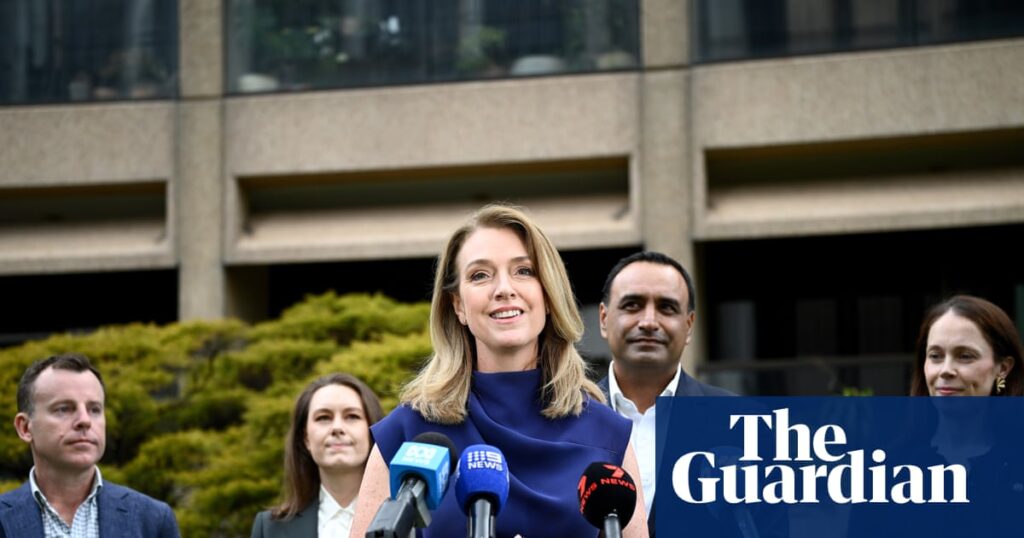
On Tuesday, Liberal leader Kellie Sloane unveiled her new shadow cabinet lineup, a move delayed by the recent tragedy. This announcement offers insight into her strategic direction for the next 15 months leading up to the state election, highlighting potential challenges and opportunities.
New Leadership, New Challenges
Kellie Sloane, a newcomer to the political scene, assumed the opposition leadership role in November amid a period of desperation for her party. The Minns Labor government, despite being a minority, maintains a stable position thanks to a substantial crossbench presence. The Coalition, with 35 seats compared to Labor’s 46, faces a daunting task.
The Coalition’s predicament is exacerbated by recent polling data from Resolve Strategic, which, alongside internal party surveys, indicates a primary vote of just 28%. If this trend holds, the Coalition could lose an additional 10 seats, potentially relegating them to opposition status for at least two more terms.
“A primary vote of 28% could spell disaster for the Coalition, risking a further 10-seat loss,” according to recent polling data.
Fresh Faces in the Shadow Cabinet
In response to these challenges, Sloane’s shadow cabinet introduces several new figures, signaling a phase of renewal with a long-term vision for governance. Among the new appointments are Monica Tudehope as shadow attorney general, Jacqui Munro in a junior environment and science role, and James Wallace handling industrial relations.
Chris Rath, noted for his blend of experience and youth, takes on the critical housing portfolio, positioning him as a key advocate for the Coalition’s housing strategy in Sydney. The opposition is expected to focus heavily on issues like housing, family welfare, and the cost of living in the coming months.
The Nationals also see new leadership with Brendan Moylan, a lawyer from Moree, stepping into the agriculture role, while former leader Dugald Saunders steps aside. This infusion of new talent aims to contrast sharply with Labor, which currently lacks a similar influx of ambitious newcomers.
Policy Overhaul and Internal Dynamics
Sloane has strategically reintegrated some of the most vocal critics of former leader Mark Speakman, aiming to maintain party unity. This, coupled with last year’s overhaul of party machinery, is intended to mitigate factional conflicts.
However, significant policy challenges remain. The Coalition must redefine its stance on critical issues such as the environment, climate change, and national park management. Recent splits between the Nationals and Liberals on topics like net zero targets and gun control highlight the internal divisions that could complicate a unified platform.
“The Coalition’s internal divisions on key issues raise questions about its future policy direction,” analysts suggest.
Economic Concerns and Future Prospects
Financial challenges also loom large, with NSW’s state debt projected to rise to $177.2 billion by June 2026. This fiscal situation may necessitate controversial measures such as further privatization to fund infrastructure projects, including new metro lines.
Meanwhile, Premier Chris Minns has enhanced his reputation through his decisive handling of the Bondi incident, promising a royal commission and demonstrating strong leadership.
The Coalition’s path forward involves not only policy refinement but also convincing the public of its commitment to issues like climate change, especially when federal counterparts seem to diverge on these priorities.
Looking Ahead
As the NSW Coalition navigates these complex challenges, the next 15 months will be crucial in defining its identity and electoral prospects. With a focus on renewal and strategic policy shifts, the opposition aims to position itself as a viable alternative in the long-term political landscape of New South Wales.
The coming months will reveal whether Sloane’s leadership and the new shadow cabinet can effectively address the pressing issues and resonate with voters, setting the stage for future electoral battles.