




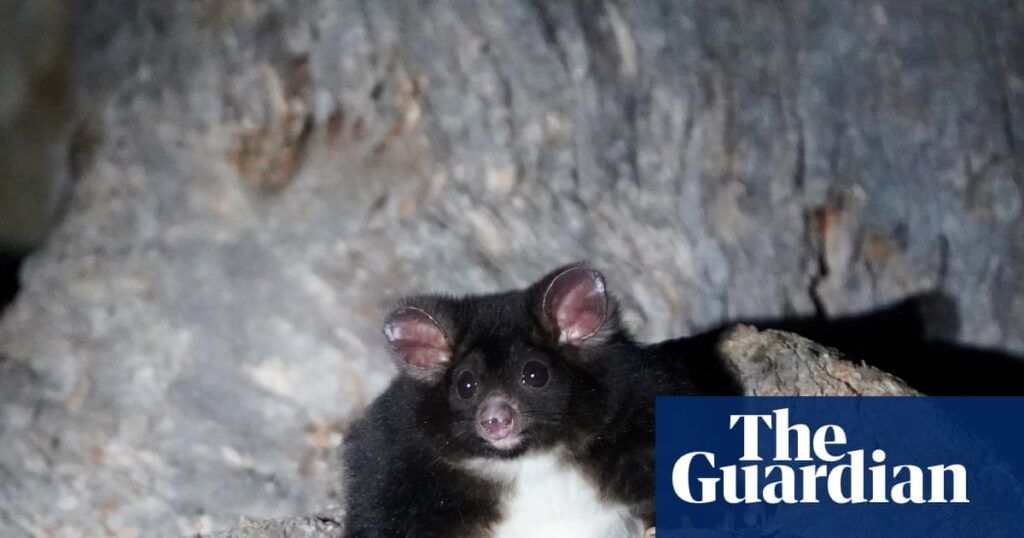
A former New South Wales Labor environment minister has urged the government to halt imminent logging activities in a forest on the state’s south coast. This call to action follows the discovery by citizen scientists of 102 trees identified as homes to the endangered greater gliders.
Bob Debus, who served as environment minister under the Carr and Iemma governments, has leveled serious accusations against the NSW Forestry Corporation (NSWFC). He claims the agency frequently breaches its own regulations, suggesting that such practices are essentially part of its business model.
Controversial Logging Plans at Glenbog State Forest
The controversy centers around Glenbog State Forest, where Wilderness Australia reported finding 102 “den trees” during surveys conducted over the past two months. These findings stand in stark contrast to the Forestry Corporation’s own surveys, which identified only four den trees in the area.
Under state regulations, logging is prohibited within 50 meters of known den trees. If the citizen scientists’ findings are accurate, it could significantly impact the planned logging operations.
“Forestry Corp is in breach of its own regulations so frequently that the practice is effectively part of its business model,” said Bob Debus.
Ecological Concerns and Accusations
Andrew Wong, operations manager at Wilderness Australia, led the team of volunteers in the surveys. He warned that continuing with the logging operations could amount to “ecological fraud,” accusing the Forestry Corporation of minimal surveying efforts and underreporting the presence of gliders.
Glenbog, located near the Deua National Park, is a vital habitat for greater gliders and other threatened species. Its unique cloud forest microclimate makes it less susceptible to extreme temperatures, further highlighting its ecological importance.
Historical Context and Legal Challenges
The Forestry Corporation has faced legal scrutiny in the past. A series of convictions last year led a former magistrate to liken the agency to a “criminal organization,” a comparison the NSWFC dismissed as “ridiculous.”
In response to legal challenges, the corporation altered its survey methods, shifting from daytime to dusk and nighttime surveys. However, Wong claims these efforts still fall short, as surveys often miss crucial windows when gliders emerge from their dens.
Government and Forestry Corporation Responses
Tara Moriarty, the agriculture minister overseeing forestry, stated her expectation that the Forestry Corporation adheres to the Coastal Integrated Forestry Operations Approvals. She emphasized that these guidelines provide specific instructions for locating greater glider dens.
A spokesperson for the Forestry Corporation noted that nocturnal surveys are conducted in compliance with approval conditions, which specify the timing, location, and speed of surveys. The corporation also considers third-party information in its planning processes, establishing exclusion zones around identified den sightings.
“The records provided by the citizen scientists are currently being incorporated into the plan,” said the Forestry Corporation spokesperson.
Implications for Wildlife and Local Communities
Beyond the gliders, the area is home to numerous wombats, including those rehabilitated at a nearby wildlife sanctuary. In 2014, an incident during forestry operations led to the destruction of wombat burrows, prompting an informal agreement between the sanctuary and the NSWFC to protect these habitats.
Marie Wynan, founder of the sanctuary, expressed concern over the potential impact on wombats, many of which were released by her organization. She highlighted that 666 burrows have been identified in the area.
“They don’t deserve to be buried alive,” Wynan stated, emphasizing the need for protective measures.
The NSWFC has assured its cooperation with the wildlife sanctuary to prevent damage to wombat burrows during logging operations.
As the debate over Glenbog State Forest continues, the situation underscores the ongoing tension between economic interests and environmental conservation in New South Wales. The outcome of this controversy may set a precedent for future forestry practices in the region.