




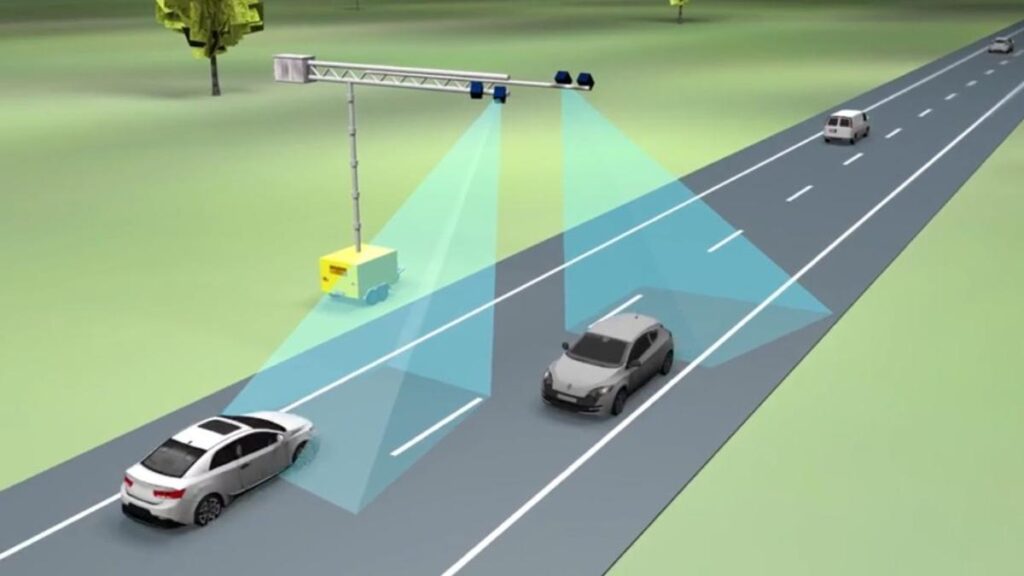
In a significant upgrade to road safety measures, New South Wales (NSW) will soon see its mobile phone and seatbelt detection cameras operating in both directions. Starting Sunday, March 1, the state’s traffic cameras will utilize new bi-directional capabilities to monitor motorists more effectively.
Currently, there are 10 cameras across NSW that capture images of passing vehicles. These cameras employ artificial intelligence (AI) to scrutinize the images and identify any infractions occurring inside the vehicles, which are subsequently confirmed by trained personnel. The new functionality will allow these cameras, when positioned on single-lane roads, to scan traffic moving in opposite directions.
Enhancing Road Safety with Advanced Technology
The initiative to upgrade the cameras is part of a broader safety program that will be fully implemented over the next six months. Previously, the cameras were limited to monitoring up to two lanes of traffic traveling in one direction. This expansion marks a significant step in utilizing technology to enhance road safety.
According to Transport for NSW, drivers caught without a seatbelt face a fine of $423 and three demerit points. The penalty increases for each additional passenger found unbelted or improperly belted. Similarly, using a mobile phone while driving, even if it is resting on the lap, incurs a $423 fine. All collected fines are reinvested into funding more road safety programs.
Program Expansion Without New Cameras
Interestingly, the expansion does not involve adding new cameras to the existing fleet, which has been operational for nearly seven years. “The target was to be able to check each registered vehicle in NSW an average of at least 20 times a year,” stated Transport for NSW Secretary Josh Murray. Since the program’s inception, the number of registered vehicles in NSW has surged by almost 12 percent, reaching 7.5 million—a rise of one million vehicles.
Josh Murray emphasized the need for the program to adapt to the growing number of vehicles. “We need to ensure our program continues to check the appropriate number of vehicles, and we use our technology to its full effect,” he said.
“One in just under every 1300 vehicles checked by these cameras in 2025 had someone breaking seatbelt laws. One in every 1200 were caught using their mobile phone illegally.” — Transport for NSW Secretary Josh Murray
Impact and Future Implications
The data reveals a concerning trend: the incidence of mobile phone offences has tripled since the cameras were first introduced in 2019. This underscores the critical need for robust enforcement mechanisms to deter dangerous driving behaviors.
The announcement comes at a time when road safety is a growing concern, with increasing vehicle registrations and the persistence of risky driving habits. By leveraging advanced technology, NSW aims to create safer roads and reduce the number of accidents caused by distracted or careless driving.
As the program rolls out, it will be crucial to monitor its effectiveness in curbing traffic violations and enhancing overall road safety. The success of this initiative could serve as a model for other regions looking to adopt similar technological advancements in traffic enforcement.
Looking ahead, the focus will remain on maximizing the potential of existing resources and ensuring that the state’s road safety strategies keep pace with evolving traffic dynamics. The continued investment in technology and infrastructure will be vital in achieving these goals and maintaining public safety on NSW roads.