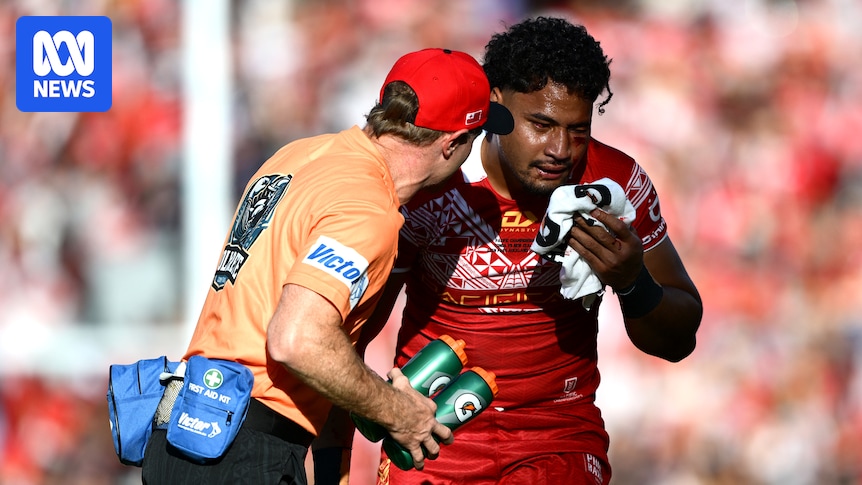
Three officials from the Tonga national rugby league team are facing potential two-year suspensions following an investigation by the National Rugby League (NRL) into the handling of Eli Katoa’s head injuries. The incident, which occurred during the Pacific Championship Test against New Zealand at Auckland’s Eden Park on November 2, has raised significant concerns about player safety protocols.
Katoa, who suffered multiple head knocks during the match, was forced out of the 2026 season and underwent brain surgery as part of his recovery. The NRL has issued breach notices to the team’s head and assistant doctors, as well as the head trainer, citing failures in the on-field treatment of Katoa.
Details of the Breach Notices
The breach notices propose that both the head and assistant doctors be banned from any involvement with NRL clubs, teams, or players in representative competitions for no less than two years. Similarly, the head trainer faces a proposed two-year ban, while a formal warning has been issued to the team’s medical assistant. The officials have been given five business days to respond to these notices.
“The NRL is continuing to support Mr Katoa and his family during his important recovery,” an NRL statement read. “The investigation has identified a number of serious concerns regarding possible breaches of the NRL rules and protocols by a number of individuals in the way that Mr Katoa was treated.”
The NRL emphasized that the concerns relate to a potential breakdown in communication among medical professionals responsible for Katoa’s safety, including a failure to share crucial information about his health.
Background and Context
The incident unfolded when Katoa collided with teammate Lehi Hopoate before the Test match against New Zealand. He subsequently suffered two additional head knocks during the game, leading to seizure activity on the sideline. Katoa was rushed to the hospital, where he underwent surgery for a brain bleed. He remained in Auckland for several weeks before returning to Melbourne for further medical evaluation.
This development follows increased scrutiny on head injuries in rugby league, as the sport grapples with the long-term health implications for players. The NRL’s stringent protocols are designed to safeguard player health, making adherence crucial.
Expert Opinions and Historical Comparisons
Experts in sports medicine have weighed in on the situation, emphasizing the importance of strict adherence to concussion protocols. Dr. Sarah Thompson, a renowned sports physician, stated, “The safety of players must always come first. Any deviation from established protocols can have severe consequences, both for the individual and the sport as a whole.”
Historically, rugby league has faced challenges with managing player concussions. Similar incidents have prompted the NRL to implement comprehensive guidelines to address head injuries, reflecting a broader trend in contact sports towards prioritizing player welfare.
Implications and Future Steps
The proposed bans underscore the NRL’s commitment to enforcing its safety protocols. Should the suspensions be upheld, it would serve as a stern warning to all involved in the sport about the non-negotiable nature of player safety regulations.
Meanwhile, Katoa’s recovery continues to be a priority. The NRL has assured ongoing support for him and his family, highlighting the league’s dedication to player well-being beyond the field.
The outcome of the breach notices and the responses from the Tonga team officials will be closely monitored, with potential repercussions for how medical protocols are implemented and enforced in the future.