
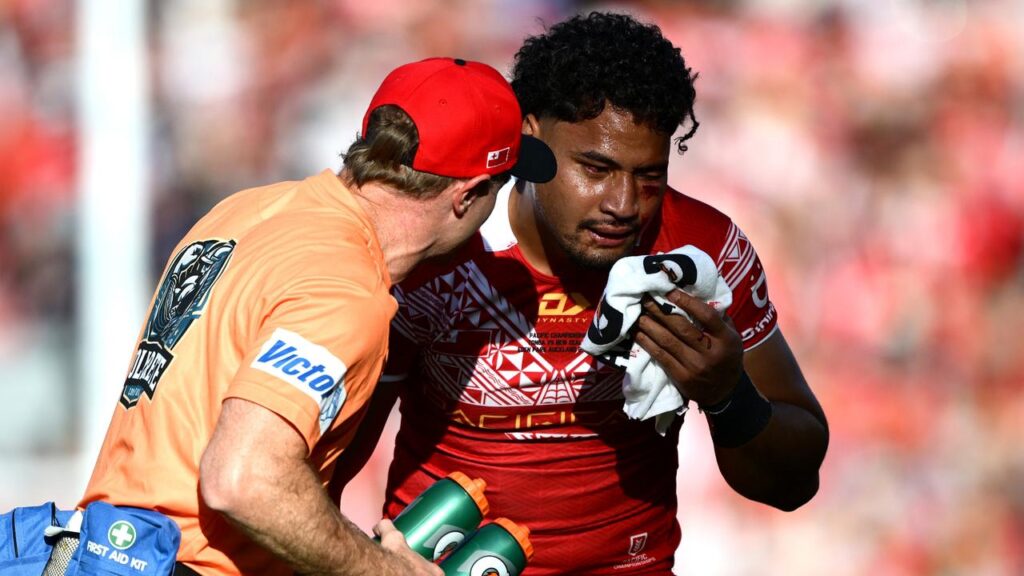
The National Rugby League (NRL) has announced the results of its investigation into the events leading to Eliesa Katoa’s hospitalization, issuing four breach notices to officials of the Tongan XIII. Katoa, a star player for the Melbourne Storm, sustained three head injuries during Tonga’s Pacific Championships match against New Zealand on November 2, which culminated in an emergency brain surgery following a seizure on the sideline.
Upon returning from Auckland to Melbourne, the Storm declared Katoa out for the 2026 season. The NRL released a statement on Monday, emphasizing their ongoing support for Katoa and his family during his recovery. The statement highlighted significant concerns about potential violations of NRL rules and protocols by several individuals responsible for Katoa’s care.
“The NRL is continuing to support Mr Katoa and his family during his important recovery,” the statement read. “The investigation has identified a number of serious concerns regarding possible breaches of the NRL Rules and protocols by a number of individuals in the way that Mr Katoa was treated.”
Investigation Findings and Breach Notices
The investigation revealed a possible breakdown in communication among medical and health professionals concerning Katoa’s safety. The NRL pointed out failures in sharing and disclosing critical information vital to the player’s health. The league stressed that its rules and protocols are designed to protect player safety and must be strictly adhered to.
As a result, the head doctor, assistant doctor, and the orange shirt trainer (head trainer) of the Tonga XIII team received breach notices, with proposed penalties of 24-month bans from any involvement with Australian Rugby League Commission (ARLC) or NRL-related competitions. Meanwhile, the yellow shirt trainer (medical assistant) was issued a formal warning.
“All individuals will also be required to undergo further training on their responsibilities under the NRL Rules and the NRL’s policy for the management of possible head injuries and concussion,” the statement added.
Background and Context
The announcement comes as player safety, particularly concerning head injuries and concussions, remains a critical issue in rugby league and other contact sports. The NRL has been under increasing pressure to ensure the well-being of its players, with past incidents prompting the implementation of stricter guidelines and protocols.
Historically, the league has faced criticism for its handling of player injuries, leading to reforms aimed at improving medical assessments and communication among team staff. The case of Eliesa Katoa underscores the ongoing challenges in enforcing these measures effectively.
Expert Opinions and Future Implications
Medical experts in sports health have long advocated for rigorous adherence to concussion protocols, emphasizing the long-term health risks associated with head injuries. Dr. Sarah Thompson, a sports medicine specialist, noted, “The health and safety of players must always be the top priority. Ensuring proper communication and swift action in the event of head injuries is crucial to preventing severe outcomes.”
The breach notices serve as a stark reminder of the responsibilities held by medical staff and trainers in safeguarding athletes. The NRL’s actions may prompt other sports organizations to re-evaluate their own protocols and training programs to prevent similar incidents.
Next Steps and Consequences
All four members of Tonga’s medical staff have the opportunity to respond to the breach notices. The NRL’s decision to impose penalties and require additional training reflects a broader commitment to enhancing player safety standards.
As the rugby league community continues to grapple with the complexities of managing player health, the outcome of this investigation could set a precedent for future cases. The situation highlights the need for continuous improvement in medical practices and the enforcement of safety protocols to protect players at all levels of the sport.