


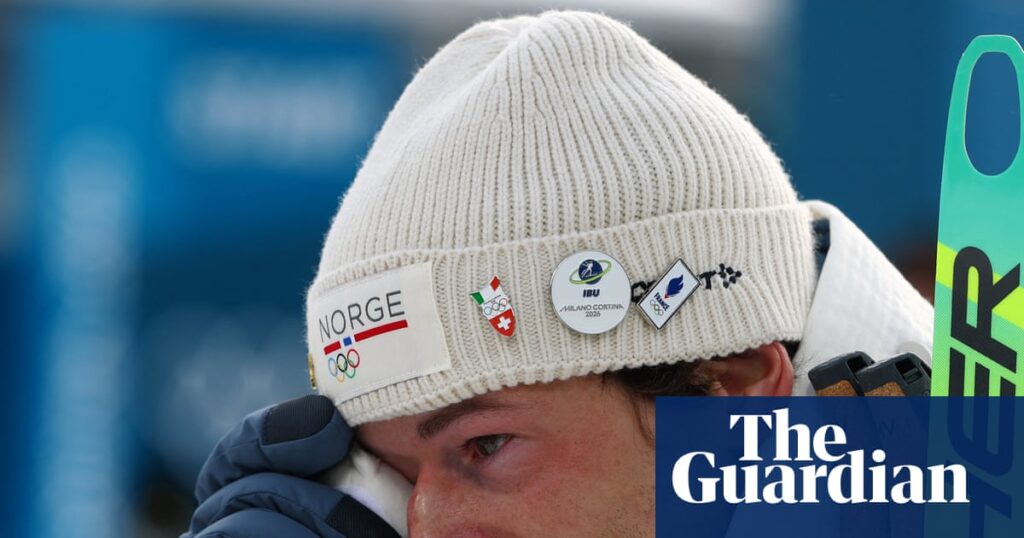
In a dramatic turn of events at the Winter Olympics, Norwegian biathlete Sturla Holm Lægreid not only secured a bronze medal in the men’s 20km biathlon but also made headlines with a tearful confession during a post-race interview. Lægreid, overcome with emotion, apologized for an affair, stating, “It has been the worst week of my life.”
While Johan-Olav Botn clinched the gold and Frenchman Éric Perrot took silver, it was Lægreid’s revelation that captivated viewers across Norway. Speaking to broadcaster NRK, Lægreid recounted his personal turmoil over the past six months, sharing, “There is something I want to share with someone who may not be watching today. Half a year ago I met the love of my life. The world’s most beautiful and nicest person. Three months ago I made the mistake of my life and cheated on her, and I told her about that a week ago.”
The Impact of Personal Struggles on Athletic Performance
Lægreid’s candid admission sheds light on the often-hidden personal struggles athletes face, even as they compete on the world stage. When asked how he managed to perform under such emotional strain, Lægreid replied, “I try to be a good role model and I did something stupid. I got a nice video from the club at home and I used that as motivation today.”
Despite his personal challenges, Lægreid is no stranger to success. He previously won gold in the relay at the Beijing Olympics and boasts 14 world championship medals, including seven golds. However, he admitted that recent events have shifted his focus away from sport, saying, “I had the gold medal in life, and I am sure there are many people who will see things differently, but I only have eyes for her.”
Emotional Victories and Tributes
The day was equally emotional for gold medalist Johan-Olav Botn, who dedicated his victory to his late teammate, Sivert Guttorm Bakken. As Botn crossed the finish line, he pointed to the sky and shouted, “We did it Sivert!” in a poignant tribute. Bakken was found dead in his hotel room in Lavazè, Italy, last December.
“My thoughts felt OK all the way,” Botn told NRK. “I went out on the last lap and had an incredible emotional rollercoaster. It was very special. When I crossed the line I broke down. I was thinking about him all the way through the last lap.”
Lægreid, reflecting on his own emotional state, expressed concern that his interview might have overshadowed Botn’s moment of triumph. “Of course, now I hope I didn’t ruin Johan’s day. Maybe it was really selfish of me to give that interview,” he said.
Understanding the Human Side of Athletes
Lægreid’s openness about his personal life highlights the human side of athletes, who often face intense scrutiny and pressure. According to sports psychologist Dr. Ingrid Hjelmseth, “Athletes are expected to perform at their best, regardless of personal circumstances. Lægreid’s admission is a reminder that they are human and face the same challenges as everyone else.”
This incident also underscores the importance of mental health support for athletes. In recent years, there has been a growing recognition of the mental health challenges faced by athletes, with many advocating for greater resources and support systems.
Looking Ahead
As Lægreid grapples with the fallout from his confession, he remains hopeful for reconciliation. “I do not want to say who it is. She has had enough to deal with after last week but I hope that there is light at the end of the tunnel for us both. And that she can continue to love me,” he told NRK.
The events of the day serve as a poignant reminder of the complexities of life both on and off the field. As the Winter Olympics continue, the stories of triumph and personal struggle will undoubtedly continue to unfold, offering a deeper understanding of the athletes who inspire us.