


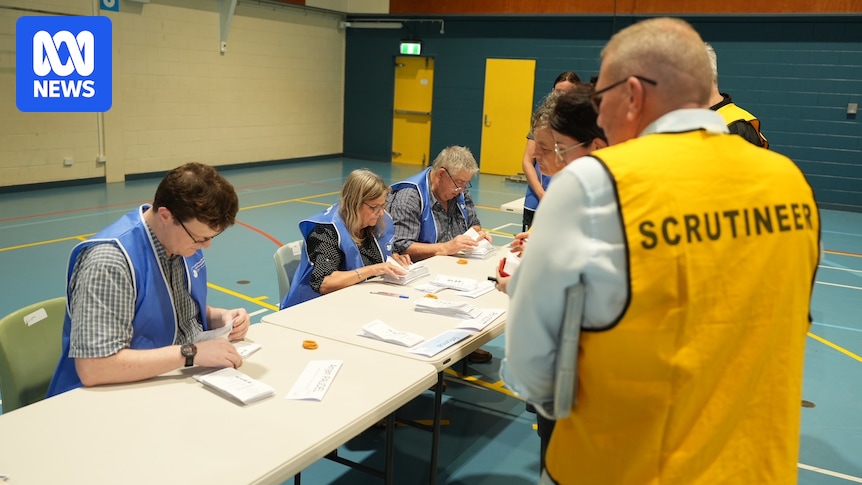
Vote counting has commenced in Nightcliff as the Greens attempt to retain the marginal seat they captured from Labor by a narrow margin of 36 votes in the 2024 Northern Territory election. This by-election follows the resignation of Greens politician Kat McNamara, who stepped down last month due to health concerns.
Kat McNamara made history by becoming the first Green to secure a seat in the NT Parliament when she narrowly defeated former Labor chief minister Natasha Fyles in the 2024 general election. The current by-election sees four candidates vying for her position: Suki Dorras-Walker from the Greens, independent Phil Scott, Labor’s Ed Smelt, and Anjan Paudel from the Country Liberal Party (CLP).
Key Issues and Candidate Perspectives
Throughout the campaign, candidates have identified community safety and environmental concerns as major issues within the electorate. Nightcliff, traditionally a Labor stronghold, was held by the party for 23 years before McNamara’s victory. The seat’s history suggests a tight race, with candidates anticipating a close result.
In 2024, McNamara’s win was significantly bolstered by CLP voters who preferred the Greens over Labor, a dynamic that could play a crucial role in the current election outcome. Foot traffic at Nightcliff High School’s polling station was minimal on Saturday, as many constituents had already cast their votes.
Voter Turnout and Electoral Dynamics
According to the NT Electoral Commission, 5,938 individuals are registered to vote in Nightcliff. As of Thursday, 2,264 votes had been cast, with 32 people utilizing mobile voting services and 441 postal votes issued. These early voting figures indicate a high level of engagement among the electorate.
The NT Electoral Commission reported that 2,264 votes had been cast by Thursday, with 5,938 people enrolled to vote in Nightcliff.
The release of updated donations disclosure records by the NT Electoral Commission on Friday shed light on the financial backing of the candidates. The Greens emerged as the top-funded party, securing over $43,000. Labor followed with $31,000, while the CLP and independent Phil Scott received $23,000 and over $12,000, respectively.
Financial Backing and Political Support
Labor candidate Ed Smelt received contributions from notable figures, including former Labor chief ministers Clare Martin, Paul Henderson, and Michael Gunner. Meanwhile, the Country Liberal Party attracted donations from businesses such as Paspaley Pearling Co and KPMG. The financial dynamics underscore the competitive nature of the by-election.
The Greens collected more than $43,000 in donations, leading the financial race against Labor’s $31,000 and the CLP’s $23,000.
Implications and Future Outlook
The outcome of this by-election holds significant implications for the political landscape in the Northern Territory. A win for the Greens would solidify their presence and influence in the region, while a Labor victory could signal a return to traditional voting patterns. The CLP and independent candidates also present alternative options for voters seeking change.
As vote counting continues, the candidates and their supporters remain on edge, eagerly awaiting the final results. The by-election not only tests the political pulse of Nightcliff but also reflects broader trends in voter sentiment across the Northern Territory.
With the stakes high and the results uncertain, the Nightcliff by-election serves as a microcosm of the shifting political dynamics in the region. The final outcome will undoubtedly shape the strategies and priorities of all parties involved as they look towards future elections.