




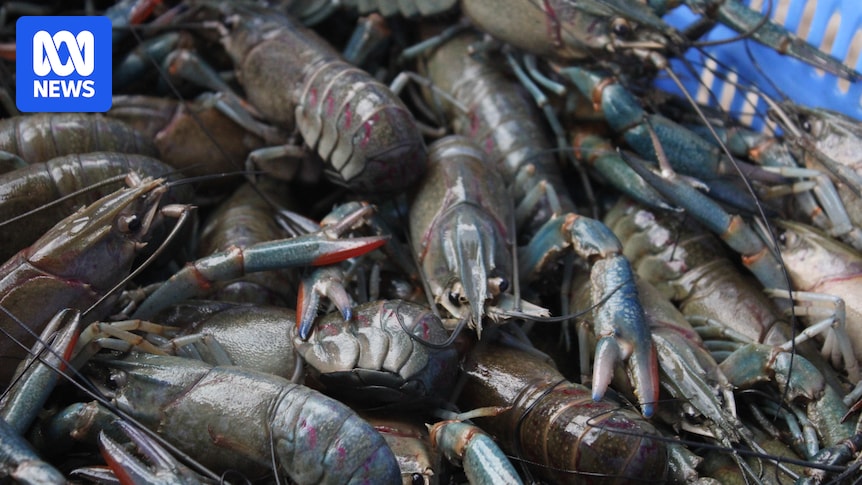
Freshwater crayfish farmer Nathan Cleasby is facing an unexpected challenge: keeping up with the soaring demand for redclaw crayfish from restaurants across Australia. Since purchasing his 20-hectare farm in Townsville in 2023, Cleasby has been overwhelmed by the summer demand for this delicacy, even as the industry itself faces a decline.
Cleasby, who aspires to own the largest redclaw farm in Australia, currently operates 5.5 hectares of ponds. However, he is already strategizing his next steps to boost production. Collaborating with James Cook University and the CSIRO, Cleasby is focusing on sustainable feedstock and animal genetics to enhance the survival rates of his redclaw stock.
“We’ve got the land, we’ve got the machinery, it’s all ready to go,” Cleasby stated. “We just want to know what we’re doing before we start.”
Challenges in a Declining Industry
Redclaw crayfish, native to northern Queensland, face regulatory challenges as they are considered a noxious aquatic species outside their native range due to their competitive nature against other native yabbie species. The Queensland Department of Primary Industries’ 2023-24 Aquaculture Production Summary revealed a stark 45.7 percent drop in redclaw production from the previous year.
According to Dean Jerry, an aquaculture expert at James Cook University, the redclaw industry has traditionally been a “cottage” industry with small-scale operations. This perception has discouraged new entrants, despite the biological potential of redclaw to be scaled up as a significant product.
“I think this has discouraged some new entrants to come into the industry, despite the biological potential of the animal itself to be a great product to scale,” Professor Jerry explained.
The Need for Long-term Research
Professor Jerry emphasized the necessity of long-term research to elevate redclaw production to levels comparable with other aquaculture industries, such as prawns. He pointed out that many new industries suffer from short-lived projects that fail to realize their full impact due to a lack of sustained research efforts.
“Quite often, for many new industries, projects are short and sweet, but they don’t sort of realise their potential impact because there is no continuation of the research,” he noted.
He identified nutrition and genetics as critical areas for further study, acknowledging that while some knowledge exists about redclaw nutrition, much more work is needed to develop cost-effective feeds.
Redclaw’s Growing Popularity
Despite the industry’s struggles, demand for redclaw remains robust. Townsville fine dining chef Steele Lee, who features Cleasby’s crayfish on his menu, reports that his customers are impressed by the versatility of the species.
“You can use the whole animal — the shells, the meat, it’s pretty exciting as a chef to be able to do so many different things with one animal,” Lee said.
Lee has observed a growing popularity of redclaw in fine-dining restaurants over the past few years, a trend he finds encouraging.
“It’s good to see it’s growing and getting its place on the menu,” he added.
Looking Ahead
Cleasby remains optimistic about the future of the redclaw industry, citing strong demand and favorable price points as key factors that could help turn the industry around. He notes that the few remaining producers work closely together to meet the market’s needs.
“I think the demand is strong enough, the price point is really good, so hopefully we can turn the industry and start increasing production year on year,” Cleasby said.
The collaboration with scientific institutions and the focus on sustainable practices may well be the key to revitalizing the redclaw industry, ensuring that it not only survives but thrives in the coming years.