


On December 9, 1967, Nicolae Ceaușescu, one of the most controversial and eccentric leaders of the 20th century, ascended to power as the President of Romania. His rise marked the beginning of a tumultuous era for the Eastern European nation, characterized by grandiose ambitions and oppressive rule.
Ceaușescu, the uneducated son of a shoemaker, climbed the ranks of the Romanian Communist Party through strategic alliances and the ruthless elimination of rivals. Upon becoming president, he vowed to improve living standards in Romania, then one of Europe’s poorest countries. He also sought to distance Romania from the Soviet Union, notably criticizing the Soviet military’s intervention in Czechoslovakia in 1968.
The Iron Grip of Ceaușescu’s Regime
Despite initial promises of reform, Ceaușescu’s rule quickly turned authoritarian, heavily influenced by his ambitious wife, Elena. The regime crushed dissent through a feared secret police force, and the Romanian populace endured severe food shortages as Ceaușescu prioritized exporting food to pay off foreign debts.
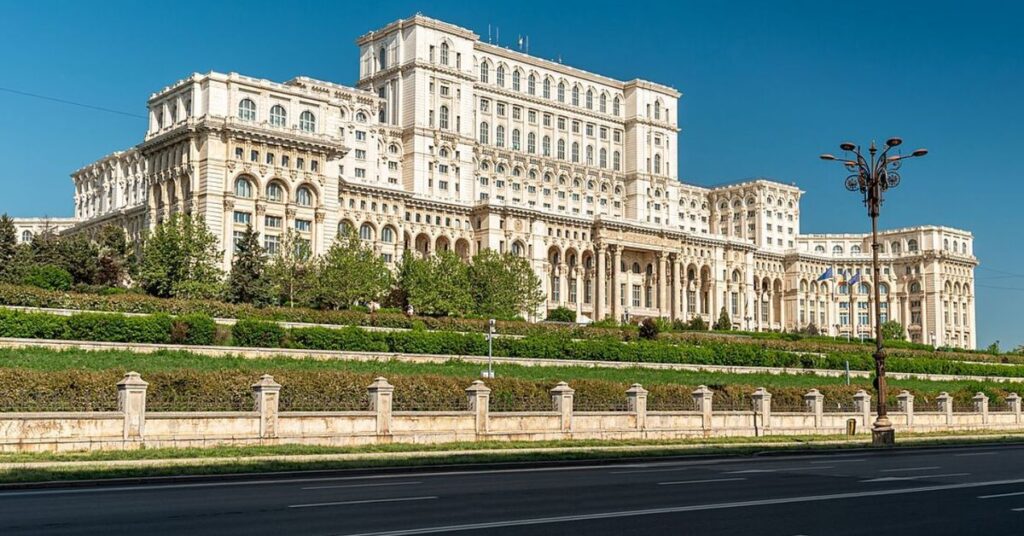
By the 1970s, Romania’s economy was in dire straits, prompting Ceaușescu to embark on an extravagant construction spree. The centerpiece of this initiative was the colossal Parliamentary Palace in Bucharest, envisioned as a symbol of the state’s power.
The Monumental Parliamentary Palace
The Parliamentary Palace, which became the third largest building in the world, was a testament to Ceaușescu’s megalomania. Its construction required 220,000 square meters of carpet, 3,500 tonnes of crystal, and one million cubic meters of marble. The project was launched after a 1977 earthquake devastated much of Bucharest’s lower city center, necessitating the relocation of 40,000 residents to make way for the massive construction site.
Construction involved 700 architects, 20,000 workers operating in three shifts, and 5,000 troops.
Ironically, Ceaușescu never witnessed the completion of this monumental structure. By December 1989, with the palace only two-thirds finished, political upheaval swept Eastern Europe as the Berlin Wall fell and Soviet influence waned.
The Fall of Ceaușescu
As communist regimes across the region collapsed, Ceaușescu’s grip on power weakened. When he ordered his secret police to suppress demonstrations, his security forces defected, and the Romanian army seized control. The once unassailable dictator and his wife were captured, tried, and executed by firing squad on December 25, 1989.
The downfall of Nicolae and Elena Ceaușescu marked the end of an era of tyranny and excess in Romania. The unfinished Parliamentary Palace stands as a stark reminder of the dictator’s grandiose ambitions and the heavy toll they exacted on the Romanian people.
Legacy and Lessons
The story of Nicolae Ceaușescu serves as a cautionary tale about the dangers of unchecked power and the human cost of megalomania. It highlights the importance of vigilance against authoritarianism and the resilience of people in the face of oppression.
Today, the Parliamentary Palace is a symbol of both Romania’s turbulent past and its potential for renewal. As the country continues to evolve, the lessons of Ceaușescu’s rule remain relevant, reminding future generations of the need for transparency, accountability, and democratic governance.