



On December 9, 1967, Nicolae Ceaușescu, one of history’s most notorious and eccentric dictators, ascended to power in Romania. Ceaușescu, an uneducated shoemaker’s son, climbed the ranks of the Romanian Communist Party through strategic alliances and the ruthless elimination of rivals. His presidency promised to elevate Romania, then one of Europe’s poorest nations, and to distance it from the Soviet Union’s influence.
Ceaușescu’s early years in power were marked by a bold stance against Soviet intervention, notably criticizing the 1968 suppression of protests in Czechoslovakia. However, encouraged by his ambitious wife Elena, he soon established a regime characterized by oppression and control reminiscent of North Korea’s Kim dynasty. Under his rule, dissent was crushed by a feared secret police, and Romanians endured severe food shortages as Ceaușescu exported much of the country’s produce to pay off foreign debts.
The Monumental Ambitions of Ceaușescu
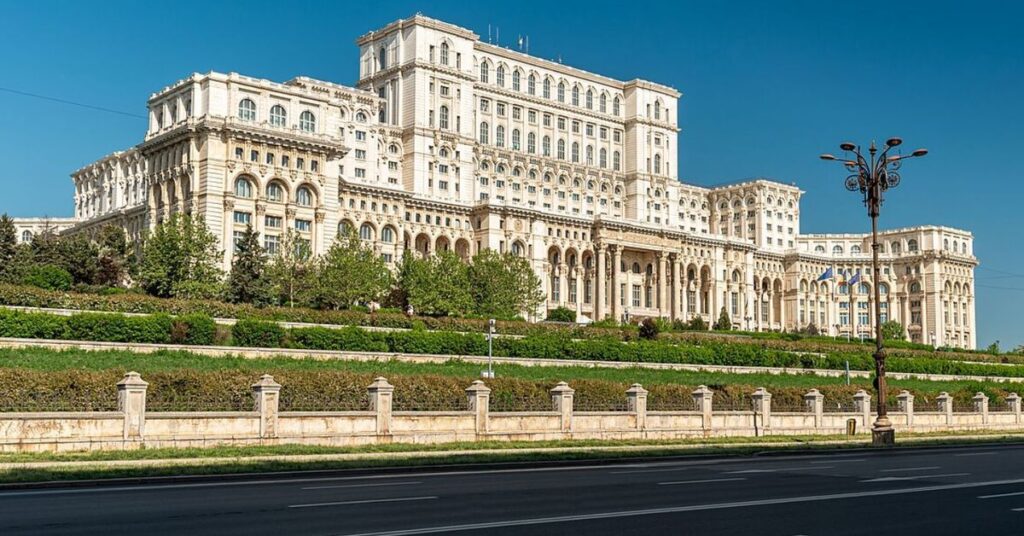
By the 1970s, Romania’s economy was near collapse, yet Ceaușescu embarked on an extravagant construction spree, erecting massive buildings and monuments. The most infamous of these was the Parliamentary Palace in Bucharest, a colossal edifice that became the world’s third-largest building. Its construction demanded 220,000 square meters of carpet, 3,500 tonnes of crystal, and one million cubic meters of marble.
The decision to build the palace followed a devastating earthquake in 1977 that destroyed much of Bucharest’s lower city center. The government forcibly relocated 40,000 residents to make way for the construction site, which employed 700 architects, 20,000 workers in rotating shifts, and 5,000 troops.
The Parliamentary Palace, a symbol of Ceaușescu’s megalomania, remains a testament to his grandiose vision and the human cost of his regime.
The Fall of a Dictator
Ironically, Ceaușescu never witnessed the completion of his architectural legacy. By December 1989, the Parliamentary Palace was only two-thirds finished when Eastern Europe experienced a seismic political shift. The Berlin Wall fell, signaling the end of Soviet dominance and sparking the collapse of communist regimes across the region. In Romania, Ceaușescu’s order to suppress protests backfired as his security forces defected, and the army seized control.
On December 25, 1989, Nicolae and Elena Ceaușescu were tried and executed by firing squad, marking a dramatic end to their tyrannical rule. The downfall of the Ceaușescus was emblematic of the broader collapse of authoritarian regimes in Eastern Europe during this period.
Legacy and Lessons
Today, the legacy of Nicolae Ceaușescu serves as a cautionary tale of unchecked power and the dangers of megalomania. The Parliamentary Palace, now a functioning government building, stands as a reminder of the excesses of his regime. It also highlights the resilience of the Romanian people, who endured decades of hardship before reclaiming their freedom.
As historians and political analysts reflect on Ceaușescu’s rule, they emphasize the importance of vigilance against authoritarianism and the need for democratic institutions to prevent similar abuses of power. The events of December 1989 remain a pivotal chapter in Romania’s history, illustrating the potential for change even in the face of seemingly insurmountable oppression.
“The fall of Ceaușescu was not just the end of a dictatorship; it was a new beginning for Romania and a testament to the power of collective action and hope.” – Political Analyst
As Romania continues to evolve, the lessons of its past remain relevant, offering insights into the complexities of governance and the enduring human spirit.