



New Zealand has declined an invitation from former U.S. President Donald Trump to join his proposed “Board of Peace”, citing a lack of clarity over the initiative’s objectives. The announcement was made by New Zealand’s Foreign Minister Winston Peters, who emphasized the need for the board’s work to align with the United Nations Charter.
The board, initially intended to focus on Gaza’s future, has since been envisioned by Trump as a mediator for global conflicts, potentially overshadowing the United Nations Security Council. While several Middle Eastern nations and emerging powers have accepted the invitation, traditional Western allies remain hesitant.
New Zealand’s Stance and Concerns
Foreign Minister Winston Peters expressed that New Zealand’s contribution to the board would not add significant value, given the involvement of regional states. He highlighted New Zealand’s commitment to the UN and the necessity for the board’s operations to be consistent with international frameworks.
“It is a new body, and we need clarity on this, and on other questions relating to its scope, now and in the future,” Peters stated.
Australia’s Hesitation
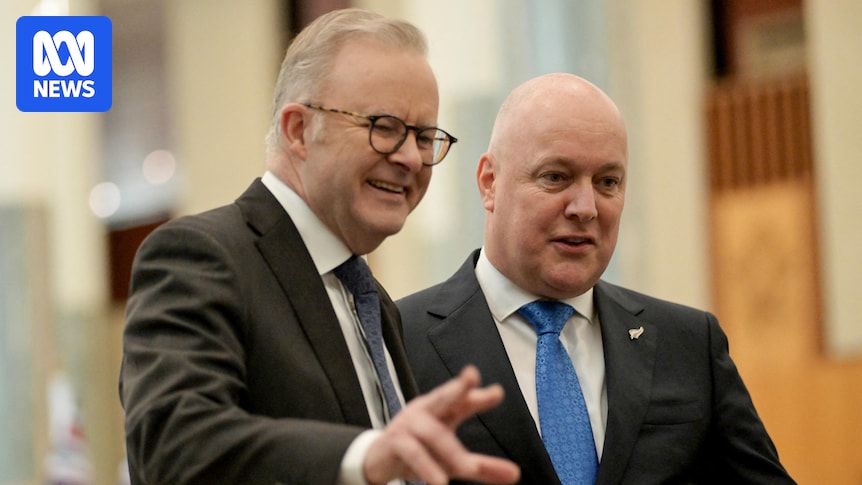
Australia, another key player in the region, has yet to make a definitive decision. Prime Minister Anthony Albanese has expressed uncertainty regarding the board’s objectives. On the ABC’s Insiders, he reiterated Australia’s foundational role in the United Nations and the importance of multilateralism.
Albanese also noted the significance of Australia’s security relationship with the United States, particularly through alliances like AUKUS and the Quad, but emphasized the need for further consideration of the invitation.
Global Reactions and the UN’s Position
Trump’s vision for the Board of Peace, which includes the possibility of it replacing the UN, has met with skepticism from major global players. UN Secretary-General Antonio Guterres reaffirmed that the responsibility for international peace lies with the UN.
“In my opinion, the basic responsibility for international peace and security lies with the UN, lies with the security council,” Guterres remarked.
The UN Security Council has mandated the board to focus on Gaza until 2027, but the proposal for a broader mandate has been met with resistance, particularly from Russia and China, who abstained from the vote on the US-drafted resolution.
Acceptance and Rejection Across Nations
More than 25 countries, including eight Muslim nations, have accepted the invitation, supporting the board’s mission in Gaza. However, major European nations and other global powers have declined or remain undecided. The UK, France, and Germany have all refused to join, citing concerns over the board’s alignment with UN principles.
French President Emmanuel Macron stated that the board “raises serious questions, in particular with respect to the principles and structure of the United Nations.”
Meanwhile, countries like Russia, China, India, Japan, and Brazil are still considering their positions, reflecting the global divide over Trump’s initiative.
Operational Challenges and Future Prospects
The Board of Peace’s operational framework has raised eyebrows, with a $1 billion entry fee for permanent membership and Trump retaining veto power. The board’s charter, which includes figures like Jared Kushner and Tony Blair, has been criticized for its potential to centralize power.
U.S. Secretary of State Marco Rubio attempted to alleviate concerns by emphasizing the board’s current focus on Gaza’s ceasefire plan, asserting it is not intended to replace the UN.
“This is not a replacement for the UN, but the UN has served very little purpose in the case of Gaza other than the food assistance,” Rubio commented.
As the world watches, the future of the Board of Peace remains uncertain, with its success likely dependent on its ability to gain broader international support and clearly define its role within the global peacekeeping architecture.