




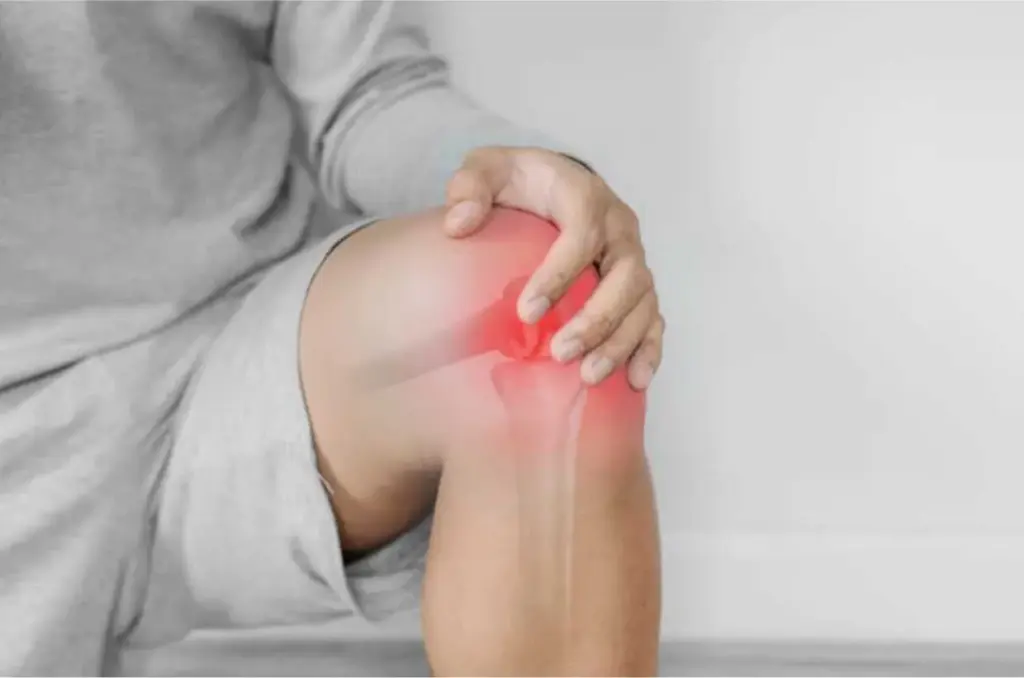
Knee cartilage deterioration often progresses unnoticed until it transforms everyday activities, like climbing stairs, into challenging tasks. A groundbreaking study led by Stanford Medicine reveals that inhibiting a specific age-related protein can stimulate the regrowth of knee cartilage in older mice and prevent rapid arthritis onset in injured mice. Remarkably, the same method also encouraged human knee tissue from joint replacements to generate new, functional cartilage in laboratory settings.
The research, published in the journal Science, was spearheaded by Stanford University researchers Helen Blau and Nidhi Bhutani. Blau, a professor of microbiology and immunology, directs the Baxter Laboratory for Stem Cell Biology, while Bhutani serves as an associate professor of orthopaedic surgery. The study was co-led by Stanford instructor Mamta Singla and former Stanford postdoctoral scholar Yu Xin (Will) Wang, now an assistant professor at the Sanford Burnham Institute in San Diego. Contributions also came from researchers at the Sanford Burnham Prebys Medical Discovery Institute.
A Direct Approach to Combating Osteoarthritis
Osteoarthritis impacts approximately 20% of U.S. adults, affecting around 33 million individuals nationwide. The financial burden is significant, with direct healthcare costs estimated at $65 billion annually. Despite this, no approved medication currently exists to slow or reverse cartilage degradation, with treatments typically focusing on pain management, lifestyle modifications, and, in severe cases, joint replacement.
The Stanford-led team concentrated on a protein known as 15-PGDH, short for 15-hydroxyprostaglandin dehydrogenase. Described as a “gerozyme,” this enzyme becomes more prevalent with age, seemingly driving tissue decline. Previous research from Blau’s lab linked 15-PGDH to reduced regenerative capacity in various tissues, including muscle, by breaking down prostaglandin E2, a molecule crucial for repair signaling. Blocking 15-PGDH had previously aided recovery in damaged tissues such as muscle, nerve, bone, colon, liver, and blood cells.
Why Cartilage Rarely Recovers
Cartilage, however, has remained a stubborn exception, possessing limited self-repair abilities even in youth. With aging, this capacity diminishes further, often leading to osteoarthritis. The cartilage most affected in osteoarthritis is hyaline cartilage, or articular cartilage, which facilitates smooth joint movement. Over time, stress from aging, injury, or excess weight can cause cartilage cells called chondrocytes to become inflammatory, releasing signals that promote swelling and collagen breakdown, an essential structural protein.
“Once collagen and other cartilage-building molecules fall, the tissue thins and softens. Pain and swelling often follow. Researchers have tried many repair strategies, including transplanted cells and scaffolds. But reliably restoring articular cartilage has remained difficult,” Singla told The Brighter Side of News.
Singla continued, “Our team asked a simpler question first: does 15-PGDH rise in cartilage as joints age?” In mice, it did. Levels of 15-PGDH in knee cartilage increased about twofold in older animals compared to younger ones. Researchers then tested the effects of blocking the enzyme using a small-molecule inhibitor, SW033291, also known as PGDHi.
Cartilage Regeneration in Mice
Older mice received the inhibitor either through systemic injections into the abdomen or localized injections into the knee joint. Both methods resulted in the thickening of cartilage that had thinned with age. The team also assessed the type of cartilage that regenerated. Unlike fibrocartilage, which is less suited for smooth joint motion, the treated mice exhibited signs of restored hyaline cartilage, including stronger signals for collagen type II and other markers associated with healthy joint cartilage.
“Cartilage regeneration to such an extent in aged mice took us by surprise,” Bhutani remarked. “The effect was remarkable.”
The researchers observed changes within cartilage cells, expecting stem cells to drive the repair process, as seen in other tissues. Instead, existing chondrocytes exhibited a more youthful gene activity pattern.
“This is a new way of regenerating adult tissue, and it has significant clinical promise for treating arthritis due to aging or injury,” said Helen Blau, PhD. “We were looking for stem cells, but they are clearly not involved. It’s very exciting.”
Implications for Human Treatment
The team also explored an injury model mimicking a common human issue: an ACL tear. In humans, even after surgical repair, about half develop osteoarthritis in the injured joint within approximately 15 years. In mice, researchers induced an ACL-like rupture and administered joint injections of the inhibitor twice weekly for four weeks. Treated animals exhibited less cartilage damage and a reduced likelihood of developing osteoarthritis in the weeks following injury. They also demonstrated more normal movement and placed more weight on the injured leg compared to untreated animals.
Testing on human knee tissue from osteoarthritis patients undergoing total knee replacement showed promising results. Lab experiments revealed that cartilage samples treated with the inhibitor for one week displayed reduced 15-PGDH activity and gene activity shifts away from cartilage breakdown and fibrocartilage programs. The treated tissue also showed signs of rebuilding cartilage matrix and improved mechanical stiffness, a property linked to how well cartilage can withstand forces during movement.
“The mechanism is quite striking and really shifted our perspective about how tissue regeneration can occur,” Bhutani said. “It’s clear that a large pool of already existing cells in cartilage are changing their gene expression patterns.”
An oral version of a 15-PGDH inhibitor is already in clinical trials aimed at treating age-related muscle weakness. Blau highlighted early safety progress in that effort and expressed optimism for a cartilage-focused trial.
“Phase 1 clinical trials of a 15-PGDH inhibitor for muscle weakness have shown that it is safe and active in healthy volunteers. Our hope is that a similar trial will be launched soon to test its effect in cartilage regeneration. We are very excited about this potential breakthrough. Imagine regrowing existing cartilage and avoiding joint replacement.”
The study was funded by the National Institutes of Health, several foundations, and Stanford programs. Blau, Bhutani, and other co-authors are inventors on patent applications held by Stanford University related to 15-PGDH inhibition in cartilage and tissue rejuvenation, licensed to Epirium Bio. Blau is a co-founder of Myoforte/Epirium and holds equity and stock options in the company.
Practical Implications of the Research
If these findings hold up in human trials, cartilage loss may no longer be an inevitable path to joint replacement. A local injection could potentially help older adults rebuild articular cartilage instead of merely managing pain, extending the functional life of knees and hips, especially for those striving to remain active in their later years.
The injury results also suggest a future role in sports medicine. After an ACL tear, the long-term threat is often osteoarthritis, not just the initial injury. A short course of joint injections post-injury or surgery could reduce subsequent cartilage breakdown and help maintain mobility for decades.
For research, the study signifies a conceptual shift, suggesting that cartilage can recover through changes in existing cell behavior rather than relying on stem cells. This could broaden the search for arthritis treatments toward “reprogramming” signals within chondrocytes, providing clearer targets and faster testing in human tissue.
Research findings are available online in the journal Science.