



An international research team led by the University of Michigan has unveiled groundbreaking methods to map brain activity across the day with single-cell precision. The study, published in PLOS Biology, highlights how brain activity shifts over time and offers potential pathways to address fatigue and mental health issues. The findings could pave the way for new therapeutic strategies and objective fatigue assessments, crucial for individuals in high-stakes professions like aviation and surgery.
The research employed mouse models to develop an experimental protocol and computational analysis that tracks active neurons and networks at different times of the day. “We undertook this difficult study to understand fatigue,” explained senior author Daniel Forger, a professor of mathematics at the University of Michigan. “We’re seeing profound changes in the brain over the course of the day as we stay awake, and they seem to be corrected as we go to sleep.”
Innovative Techniques and Global Collaboration
The study was supported by federal funding from the U.S. National Science Foundation and the U.S. Army Research Office, along with the Human Frontier Science Program (HFSP). The HFSP facilitated international collaboration, bringing together teams from the U.S., Japan, and Switzerland. This global effort was crucial in developing the innovative techniques used in the study.
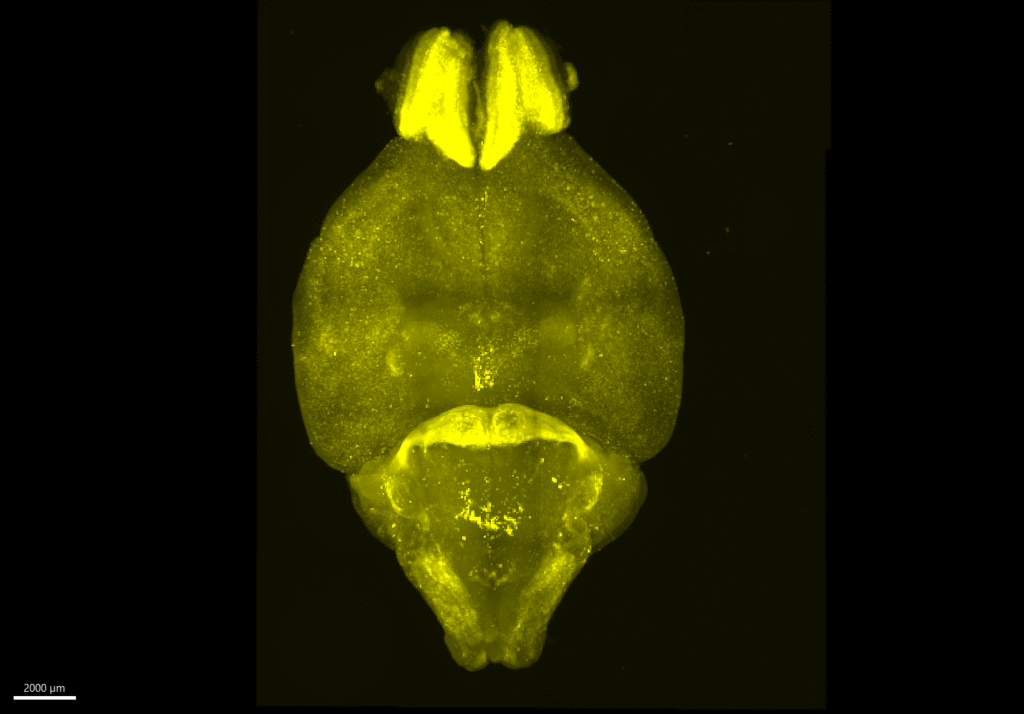
Researchers in Japan and Switzerland contributed by developing a novel experimental approach using light sheet microscopy, which allowed for the creation of 3D images of mouse brains. A genetic tagging method was also introduced, causing active neurons to glow under the microscope. “We know from studies over the last 20 or 30 years how to decipher how one aspect—a gene or a type of neuron, for instance—can contribute to behavior,” said Konstantinos Kompotis, a senior scientist at the University of Zurich. “But we also know that whatever governs our behavior, it’s not just one gene or one neuron or one structure within the brain. It’s everything and how it connects and interacts at a given time.”
Understanding Brain Activity Patterns
The study revealed that as mice wake up, brain activity begins in the subcortical layers and shifts to the cortex as the day progresses. “The brain doesn’t just change how active it is throughout the day or during a specific behavior,” Kompotis noted. “It actually reorganizes which networks or communicating regions are in charge, much like a city’s roads serve different traffic networks at different times.”
These findings lay the groundwork for identifying fatigue signatures and potentially linking brain activity patterns to mental health disorders. “This study doesn’t touch on that,” Forger said, “but I do think the activity we saw in different regions is going to be important for understanding certain psychiatric disorders.”
Applications and Future Directions
Although the experimental techniques are not directly applicable to humans, the researchers believe that their findings can be translated from mouse models to human physiology. The computational methods developed are generalizable and could be applied to human data from EEG, PET, and MRI scans. “The mathematics behind this problem are actually quite simple,” said Guanhua Sun, a co-author and now a Courant Lecturer at New York University. “The method we introduced in this paper can be modified in a way that applies to that human data.”
Kompotis has already begun collaborating with industrial partners to explore how different therapeutics and drug candidates affect brain activity. This research could lead to new treatments for conditions like Alzheimer’s and Parkinson’s, as well as better understanding of how fatigue impacts cognitive function.
On a poignant note, the team dedicated the study to Steven Brown, a colleague who tragically passed away in a plane crash during the project. “Steve was a perfect collaborator,” Forger said. “We learned how important one person can be in scientific research.”
This study not only advances our understanding of brain activity but also underscores the importance of international collaboration in scientific breakthroughs. As researchers continue to explore these findings, the implications for fatigue management and mental health treatment remain promising.
