




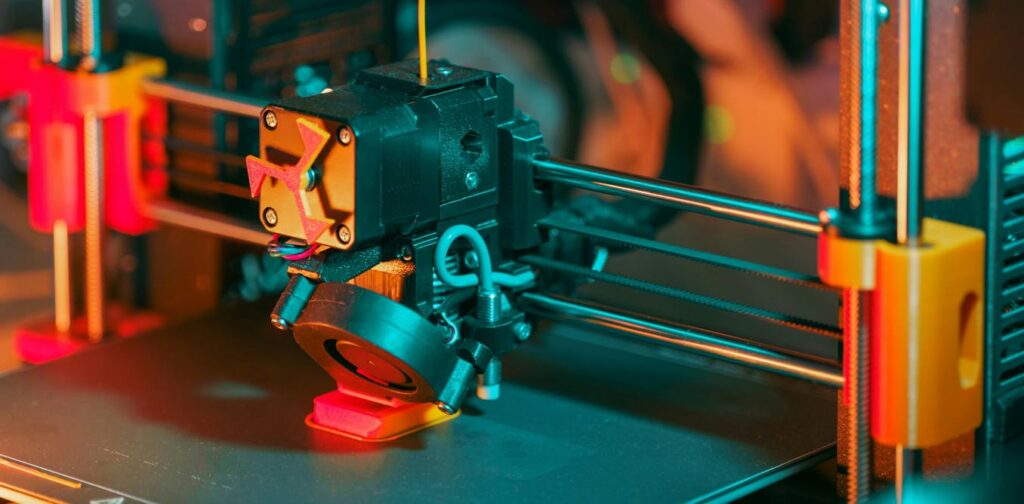
3D-printed firearms, often dubbed “ghost guns” due to their perceived untraceability, are increasingly seen as a threat to public safety. The blueprints for these weapons are readily accessible online, allowing individuals with a basic 3D printer and internet connection to manufacture their own unlicensed firearms. However, recent research suggests that these guns may not be as untraceable as previously thought.
A new study published in the journal Forensic Chemistry reveals that the filaments used in 3D printers possess distinct chemical profiles. These profiles could potentially link seized 3D-printed guns back to their source, challenging the notion that these firearms are beyond the reach of law enforcement.
The Growing Threat of ‘Ghost Guns’
Last October, an operation by the Australian Border Force uncovered 281 3D-printed firearms or components. These components can be combined with parts from hardware stores to create “hybrid” weapons, which are as lethal as factory-made firearms. The ease of access and assembly has led to increased calls for retailers to implement measures to curb the proliferation of these guns, such as blocking certain technologies on 3D printers or monitoring the purchase of items that could be used to manufacture hybrid firearms.
Despite these efforts, the challenge remains: how to manage the weapons already circulating in communities. Traditional firearms analysis struggles to trace these ghost guns, leaving researchers to explore alternative solutions.
Understanding 3D-Printing Filaments
3D-printing filaments, primarily composed of various polymers or plastics, are crucial in the creation of these firearms. The most common polymer used is polylactic acid (PLA), a bioplastic also used in compostable waste bags. Other popular filaments include ABS, known for its toughness and used in LEGO bricks, and PETG, a flexible polymer found in sports water bottles.
Specialist filaments often combine different polymers and include additives to enhance properties like toughness, flexibility, or appearance. Although these filaments are typically patented, their precise formulations, including additives, are not usually disclosed on packaging. These undisclosed ingredients could be key in tracing ghost guns.
The unique mix of ingredients in each filament results in a specific chemical signature. This signature can be identified using infrared spectroscopy, which measures how the filament absorbs infrared light. The resulting pattern, or infrared profile, varies based on the filament’s molecular composition.
Research Findings: Distinct Chemical Signatures
In collaboration with ChemCentre, a forensic laboratory in Western Australia, researchers analyzed over 60 filaments from the Australian retail market. They discovered that many filaments, despite appearing identical, could be distinguished by their infrared profiles. Filaments made from PLA, ABS, and PETG were easily differentiated due to significant differences in their chemical compositions.
Moreover, even filaments made from the same polymer could be distinguished due to minor additives affecting their infrared profiles. For instance, one filament contained a compatibiliser, an additive that facilitates the mixing of two polymers. This ingredient was absent in other filaments of the same base polymer, indicating a unique formulation that could aid in tracing the source of a ghost gun.
“These findings highlight why chemical analysis of filaments is useful, despite them being a widely available consumer product.”
Tracing the Seemingly Untraceable
The ability to identify different 3D-printing filaments could enable forensic investigators to link a seized gun to a specific filament or connect guns from different cases. Such connections could lead law enforcement to the suppliers, disrupting the supply chain and future production of ghost guns.
While the research shows promise in distinguishing some filaments, it was not conclusive for all. The team is now expanding their research to include more analytical techniques, aiming to provide a comprehensive chemical profile of each filament. This approach could help establish links between a seized 3D-printed firearm, the filament used, and the printer that produced it.
By uncovering the chemical fingerprint of 3D-printed guns, the study offers a potential breakthrough in law enforcement’s ability to trace these weapons, potentially removing the veil of untraceability that criminals have relied upon.