




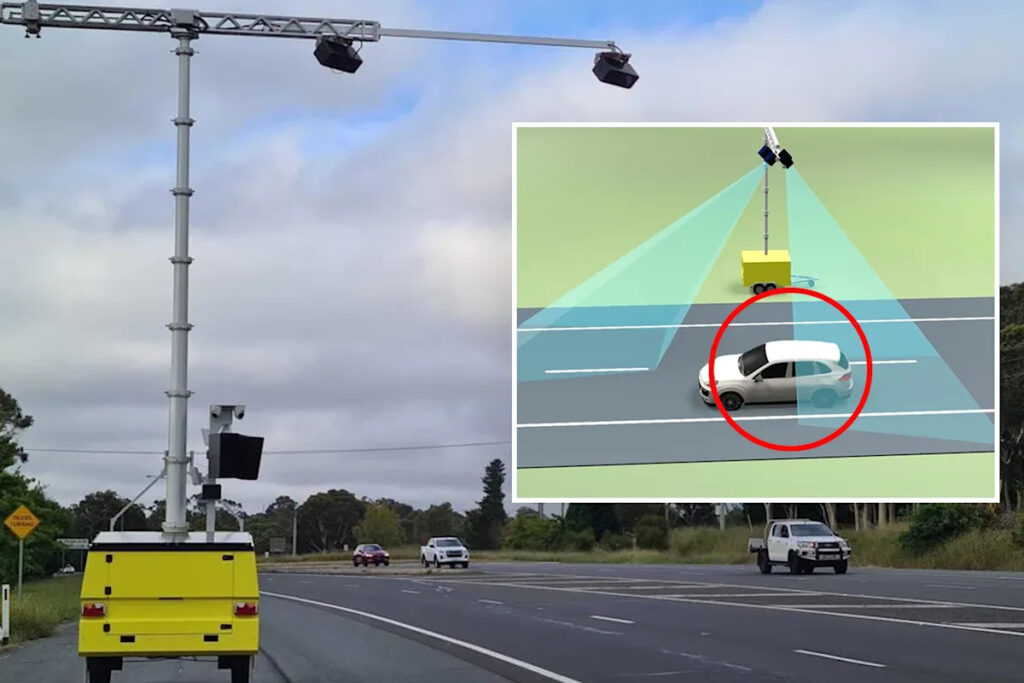
Drivers across New South Wales are being urged to comply with traffic laws as the state prepares to enhance the capabilities of its roadside cameras. Starting March 1, the mobile phone and seatbelt detection cameras will operate “at full bi-directional capacity” on single-lane roads, effectively doubling the likelihood of capturing offenders.
Previously, these cameras were restricted to monitoring up to two lanes in a single direction. The upgrade means that hotspots will now have increased surveillance, significantly impacting driver behavior and compliance. This development follows a reported 12 percent increase in vehicle registrations across the state, prompting Transport for NSW (TfNSW) to respond with enhanced monitoring measures.
Technological Advancements in Road Safety
There are currently 10 transportable mobile phone and seatbelt detection cameras deployed across NSW. Although the number of cameras is not set to increase, their upgraded capabilities are expected to make a substantial difference. According to Josh Murray, Secretary of TfNSW, the initiative to monitor each registered vehicle in NSW an average of at least 20 times a year began nearly seven years ago.
“Since then, the number of registered vehicles in NSW has jumped almost 12 percent, from 6.7 million to 7.5 million,” Murray stated.
The introduction of mobile phone detection cameras has already made a notable impact on road safety, with seatbelt offences being included in the program in 2024. Murray highlighted the effectiveness of these measures, noting a significant reduction in offences over time.
Impact of Mobile and Seatbelt Cameras
Data from 2025 reveals that approximately one in every 1,300 vehicles checked by these cameras had a seatbelt offence, while one in every 1,200 vehicles was caught using a mobile phone illegally. This marks a significant improvement from earlier figures, where one in every 400 cars was detected for mobile phone infractions when the program first began.
“We know lives have been saved as people change their behaviours in response to awareness and education with seatbelt use and distractions through phone use featuring as key contributors to the road toll,” Murray added.
The rollout of the expanded camera capabilities will commence in March and is anticipated to take approximately six months to complete. Fixed mobile phone and seatbelt cameras will remain unchanged, ensuring continued enforcement across the state.
Financial and Legal Implications
Revenue generated from infringements issued by the cameras will continue to support road safety initiatives. In NSW, penalties for illegal mobile phone use stand at $423, increasing to $562 if the offence occurs in a school zone. Additionally, offenders face a penalty of 5 demerit points, which doubles during designated demerit periods. Incorrect seatbelt use incurs a $423 fine and three demerit points.
The move represents a significant step forward in using technology to enhance road safety and enforce traffic laws. As the state continues to see an increase in vehicle registrations, the need for effective monitoring and enforcement becomes increasingly critical.
Meanwhile, experts suggest that these technological advancements could serve as a model for other states looking to improve road safety. The success of NSW’s program could potentially influence nationwide policies, underscoring the importance of technology in modern traffic management.
As the rollout progresses, drivers are encouraged to remain vigilant and adhere to traffic regulations to avoid penalties and contribute to safer roads for all.