




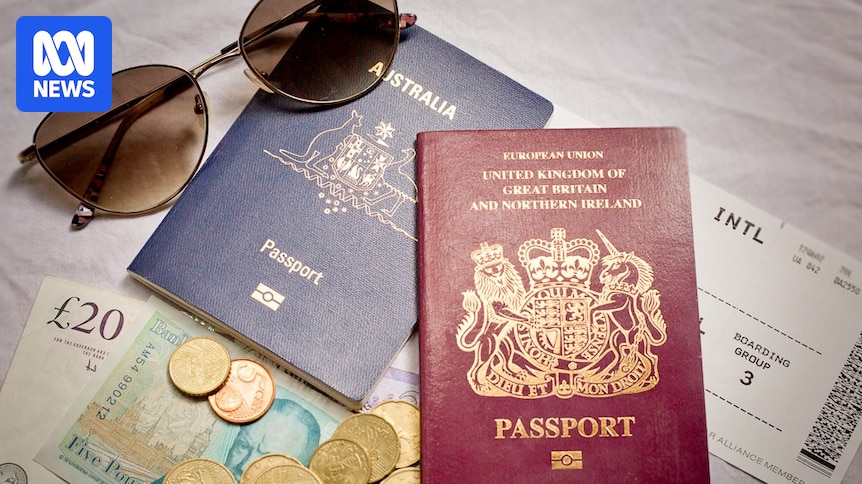
From February 25, 2024, dual citizens of the UK and Ireland will face new passport regulations, with each country implementing separate rules. These changes have sparked concern among many Australians holding dual citizenship, especially those planning to travel to the UK or Ireland in the coming months.
The new regulations stipulate that British-Irish dual citizens will no longer be able to enter the UK using a passport from a third country, such as an Australian passport. Instead, they must present a valid British or Irish passport, or another passport containing a certificate of entitlement (COE). This requirement forces dual citizens to decide whether to obtain a British passport, secure a COE, or renounce their British citizenship.
Understanding the Changes
The introduction of these passport rules has led to complications for British and Irish nationals who also hold Australian citizenship. Previously, these individuals were typically recognized as dual citizens unless they formally renounced their UK or Irish citizenship. Now, those who have opted to retain only an Australian passport must either acquire a COE or renew their British or Irish passport.
What is a Certificate of Entitlement?
A certificate of entitlement (COE) is a crucial document placed in a foreign passport, confirming the holder’s right to reside in the UK without immigration restrictions or time limits. However, it is an expensive option, costing £589 (approximately $1,180) when applied for outside the UK or Ireland. The COE must be renewed every time the passport is renewed.
The COE is an expensive option, costing £589 ($1,180) when applied for outside of the UK or Ireland.
Without a British passport or a COE, individuals will be unable to board a plane or ship to the UK starting February 25. Airlines face potential fines if they allow passengers with incorrect documentation to enter the country.
COE vs. Electronic Travel Authorisation (ETA)
From the same date, most travelers from visa-exempt countries, such as Australia and the US, visiting the UK for tourism or short stays will need an electronic travel authorisation (ETA). This digital permit, costing around $32, is required for entry into England, Scotland, Wales, and Northern Ireland, and applies to all travelers, including infants and children.
The UK’s Home Office suggests the quickest way to apply for an ETA is through the UK ETA app, available on both the Apple App Store and Google Play. An approved permit is valid for two years or until the passport expires, allowing multiple entries into the UK during that period.
If you are a British passport holder, have permission to live, work, or study in the UK, or possess a COE, you do not need an ETA.
Navigating Dual Citizenship
Determining one’s citizenship status can be complex. According to Associate Professor Dannielle Ireland-Piper, a citizenship expert at the Australian National University, “The issue is that international law is neutral to a grant of citizenship, meaning there is no internationally agreed rule on when a person can be designated a citizen.”
“So the effect of that is it is unpredictable to work out when you are a citizen and you aren’t because there are not internationally agreed upon rules,” she explained.
In the UK, dual citizenship is permitted, allowing individuals to apply for foreign citizenship without losing their British status. However, certain conditions apply, such as having a parent who is a UK national or being born in the UK.
Irish Citizenship Considerations
For those with ties to Ireland, citizenship rules depend on the birth date and parental citizenship. If you or your parent were born on the island of Ireland before 2005, you are automatically an Irish citizen. For births on or after January 1, 2005, additional factors such as parental residency history and citizenship at the time of birth come into play.
It is advisable to consult Irish authorities, such as the Embassy, to verify citizenship status and eligibility for an Irish passport.
Implications and Next Steps
For dual citizens with an expired UK passport, renewing it or obtaining a COE is necessary before traveling. While renouncing citizenship is an option, it has significant consequences, including the potential impact on future children’s citizenship status.
As the February deadline approaches, affected travelers should proactively address their documentation needs to avoid disruptions. Staying informed through official channels, such as UK government websites, is crucial to navigating these new regulations effectively.
In a world where international connections are increasingly common, understanding and managing dual citizenship status is vital for seamless travel and compliance with evolving regulations.