




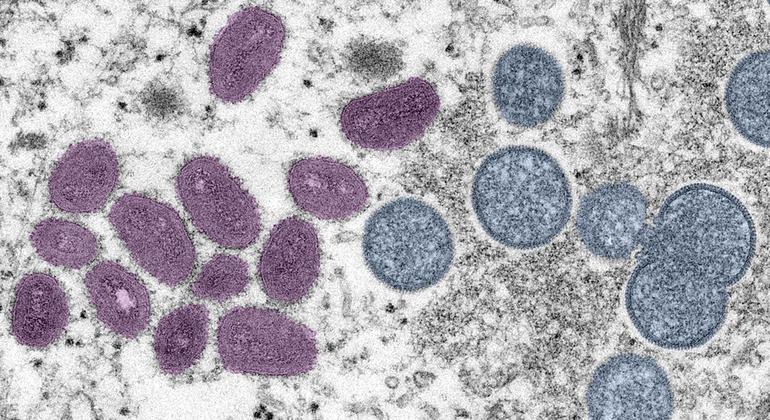
The World Health Organization (WHO) has confirmed the identification of a new recombinant strain of the monkeypox virus (MPXV) in two separate cases, one in the United Kingdom and the other in India. Both cases involve individuals with recent travel histories, and neither patient experienced severe illness. Importantly, no secondary cases have been detected following comprehensive contact tracing efforts.
The announcement comes as WHO releases a detailed update on these cases and the national responses. The recombinant strain combines genomic elements of clades Ib and IIb of the MPXV, a process known as recombination. This natural phenomenon occurs when two related viruses infect the same host and exchange genetic material, potentially leading to the emergence of new variants.
Details of the Detected Cases
According to WHO, the genomic analysis indicates that the two individuals “fell ill several weeks apart with the same recombinant strain,” raising concerns about the possibility of additional undetected cases. The first case, identified in the United Kingdom, involved a traveler who returned in December 2025 from a country in the Asia Pacific region. Initial laboratory tests identified the virus as clade Ib, but subsequent whole genome sequencing revealed genetic regions from both clade Ib and clade IIb strains. These findings were confirmed through repeat sequencing, demonstrating the virus’s capability to replicate and its potential for onward transmission.
Meanwhile, the case in India, which emerged in September 2025, was initially classified as clade II MPXV. However, updates to global genomic databases led to its reclassification as the same recombinant strain found in the UK. This case represents the earliest known detection of this strain, highlighting the importance of genomic surveillance.
WHO’s Response and Recommendations
The WHO has emphasized the need for vigilance, stating,
“Due to the small number of cases found to date, conclusions about transmissibility or clinical characterization of mpox due to recombinant strains would be premature, and it remains essential to maintain vigilance regarding this development.”
Clinical presentations in both cases were consistent with known mpox infections, and WHO’s overall risk assessment remains unchanged. The risk is considered moderate for men who have sex with men with new and/or multiple partners and for sex workers or others with multiple casual sexual partners, while the risk remains low for the general population without specific risk factors.
WHO also cautioned that clade differentiation PCR tests alone “may not reliably identify recombinant MPXV strains,” underscoring the necessity of genomic sequencing for accurate detection. The organization has urged all countries to remain alert to the possibility of MPXV genetic recombination and to continue epidemiological surveillance, sequencing, vaccination of at-risk groups, and infection prevention and control measures.
Global Implications and Historical Context
The emergence of a recombinant strain of a virus is not unprecedented, as viruses often evolve through genetic recombination. This process has been observed in other viral outbreaks, such as the influenza virus, which frequently undergoes genetic shifts and drifts, leading to new strains that can affect vaccine efficacy and public health responses.
Experts suggest that the detection of this recombinant MPXV strain highlights the importance of robust global health surveillance systems. Dr. Maria Van Kerkhove, WHO’s Technical Lead on COVID-19 and emerging diseases, noted,
“The identification of this recombinant strain underscores the need for continuous monitoring and rapid genomic sequencing to detect and respond to potential new variants.”
As the world continues to grapple with the ongoing challenges of infectious diseases, the discovery of this new mpox strain serves as a reminder of the dynamic nature of viral evolution and the necessity for international cooperation in health security measures.
Looking Ahead
WHO has advised that no travel or trade restrictions are warranted based on current information. However, the organization continues to monitor the situation closely and encourages countries to maintain vigilance. As global health authorities work to understand the implications of this recombinant strain, the focus remains on preventing further spread and ensuring that public health systems are equipped to manage potential outbreaks.
The move represents a critical juncture in the global response to infectious diseases, highlighting the need for continued investment in research, surveillance, and public health infrastructure to safeguard against emerging health threats.