

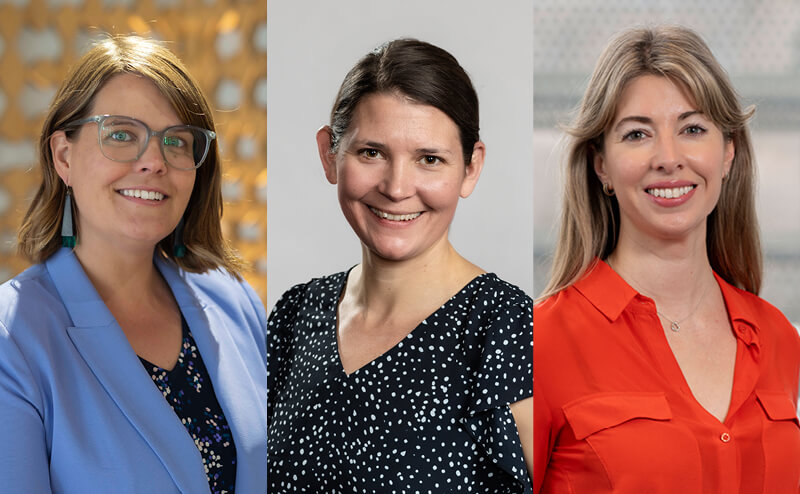
Three exceptional scientists have been appointed to lead groundbreaking research programs at the Walter and Eliza Hall Institute of Medical Research (WEHI), promising to advance the frontiers of immunology, RNA biology, and mitochondrial biochemistry. Dr. Danika Hill, Dr. Jacki Heraud-Farlow, and Dr. Sylvie Callegari bring unique expertise and visionary research agendas to their new roles, aiming to translate fundamental scientific insights into transformative therapies.
Dr. Danika Hill: Pioneering Immunology
Dr. Danika Hill, an esteemed immunologist, returns to WEHI with a mission to revolutionize vaccine and therapeutic development. Her research focuses on T and B cell biology, aiming to combat infectious diseases with innovative solutions. Dr. Hill’s journey began with a PhD at WEHI, followed by influential postdoctoral work at the Babraham Institute in Cambridge, UK, and leadership at Monash University.
At WEHI, Dr. Hill’s laboratory will tackle four interconnected areas: immune system function, vaccine design and development, antibody-based therapies, and the biological processes underpinning disease. Her work promises to address global health challenges posed by viral, bacterial, and parasitic pathogens.
“Translating fundamental insights into practical applications is crucial for combating infectious diseases,” Dr. Hill stated.
Dr. Jacki Heraud-Farlow: Advancing RNA Biology
Joining WEHI from the Hudson Institute of Medical Research, Dr. Jacki Heraud-Farlow is an RNA biologist dedicated to understanding how cells differentiate between their own RNA and viral RNA. Her research aims to uncover how errors in this process can lead to inflammation and disease, with a particular focus on rare genetic disorders like Aicardi-Goutières syndrome (AGS).
Dr. Heraud-Farlow’s lab will explore fundamental discovery, disease modeling, and the development of RNA-based therapeutics. Her work seeks to translate RNA biology into significant patient outcomes, particularly for those suffering from rare and often devastating diseases.
“Our goal is to make a meaningful impact on the lives of people affected by rare diseases,” Dr. Heraud-Farlow emphasized.
Dr. Sylvie Callegari: Unraveling Mitochondrial Mysteries
Dr. Sylvie Callegari, a prominent mitochondrial biochemist, has been a key figure in Professor David Komander’s laboratory at WEHI since 2019. Her research focuses on maintaining mitochondrial health and understanding the dysfunctions that contribute to diseases like Parkinson’s.
In 2025, Dr. Callegari was the lead author of a groundbreaking study published in Science that elucidated the structure and activation of PINK1, a protein linked to Parkinson’s disease. This discovery has opened new avenues for treatment research. Her new laboratory will focus on ubiquitin-mediated mitochondrial quality control, aiming to develop novel therapeutic strategies for neurodegenerative diseases.
“Understanding mitochondrial quality control is key to unlocking new treatments for neurodegenerative diseases,” Dr. Callegari noted.
Implications and Future Directions
The appointment of Drs. Hill, Heraud-Farlow, and Callegari represents a strategic move by WEHI to bolster its research capabilities in areas critical to human health. Their diverse expertise not only strengthens WEHI’s existing programs but also fosters interdisciplinary collaborations across fields such as cancer, inflammation, and immunity.
As these scientists embark on their new roles, the potential for groundbreaking discoveries and therapeutic advancements is immense. Their work will likely have far-reaching implications, offering hope for new treatments and improved patient outcomes worldwide.
WEHI’s commitment to cutting-edge research and innovation is underscored by these appointments, positioning the institute at the forefront of medical science. As the world faces ongoing health challenges, the contributions of these researchers will be pivotal in shaping the future of medicine.