




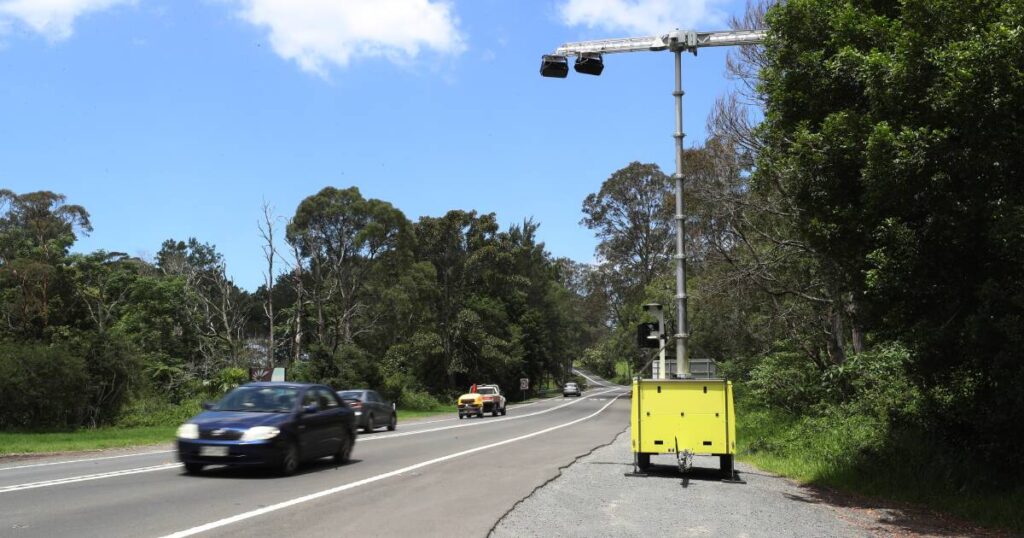
Starting Sunday, March 1, drivers in New South Wales will face enhanced scrutiny as new bi-directional cameras are set to catch mobile phone and seatbelt offences on single-lane roads. The Transport for NSW (TfNSW) announced that their 10 transportable mobile phone and seatbelt detection cameras will now operate to their full potential, monitoring traffic in both directions.
This development follows an increase in the number of registered vehicles on NSW roads, which has risen by nearly 12 percent since the program’s inception in 2019. According to TfNSW secretary Josh Murray, the expansion is crucial to maintaining the program’s effectiveness in promoting road safety.
Enhancing Road Safety Measures
The introduction of these bi-directional cameras marks a significant step in road safety enforcement. Until now, cameras were limited to monitoring traffic in a single direction, potentially missing numerous violations. By expanding the cameras’ capabilities, TfNSW aims to ensure that more vehicles are checked, thereby deterring illegal behavior and enhancing safety.
“When we switched on mobile phone detection cameras almost seven years ago, the target was to be able to check each registered vehicle in NSW an average of at least 20 times a year,” said Murray. “Since then, the number of registered vehicles in NSW has jumped almost 12 percent, from 6.7 million to 7.5 million.”
Impact of Mobile Phone and Seatbelt Cameras
The mobile phone camera program has already made a notable impact on road safety. In 2025, statistics showed that one in just under every 1300 vehicles checked by these cameras had someone breaking seatbelt laws, while around one in every 1200 were caught using their mobile phone illegally.
“This compares to one in every 400 cars when the program first started,” Murray noted, highlighting the progress made in reducing violations.
The addition of seatbelt offences to the program in 2024 further underscores the commitment to road safety. “We know lives have been saved as people change their behaviors in response to awareness and education with seatbelt use and distractions through phone use featuring as key contributors to the road toll,” Murray added.
Implementation and Future Outlook
The rollout of the bi-directional cameras is expected to take six months. During this period, no new cameras will be introduced, but the existing units will be optimized to cover both directions on single-lane roads. This move is seen as a cost-effective way to enhance the program’s reach without additional infrastructure investment.
As with all camera infringements, fines collected from these violations will be reinvested into funding more road safety programs. This approach not only penalizes offenders but also contributes to broader safety initiatives, creating a cycle of improvement.
Looking ahead, the expanded use of technology in traffic enforcement is likely to continue. As vehicle numbers grow and technology advances, authorities will need to adapt their strategies to maintain and improve road safety.
In conclusion, the introduction of bi-directional cameras represents a significant advancement in the enforcement of mobile phone and seatbelt laws in NSW. By leveraging existing technology to its fullest capacity, TfNSW aims to create safer roads for all users, ultimately reducing the number of accidents and fatalities.