



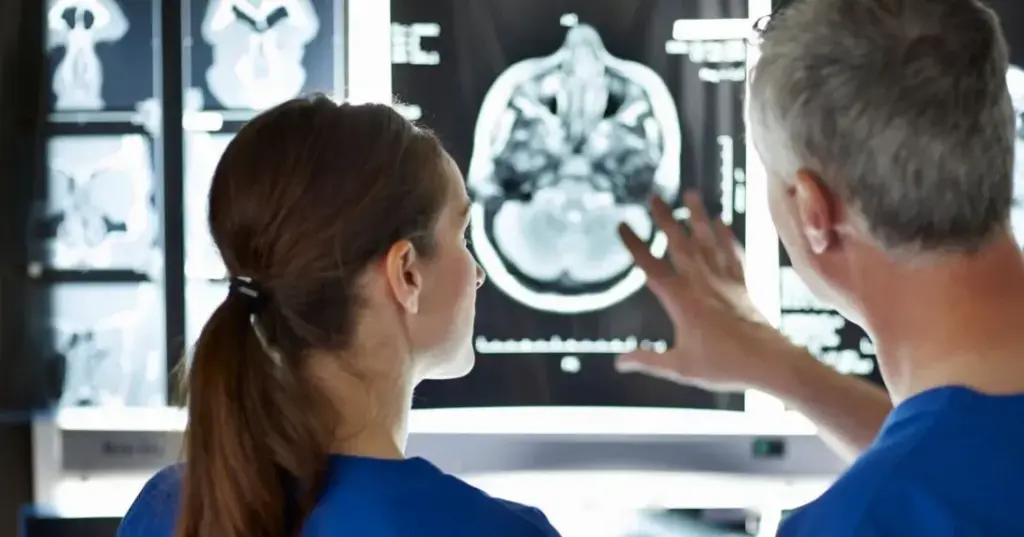
Researchers at Mass General Brigham have unveiled a groundbreaking artificial intelligence model named BrainIAC, which utilizes self-supervised learning to predict dementia risk and other medical outcomes. This innovative tool, highlighted in a report published Thursday in Nature Neuroscience, demonstrates the potential to generate insights from sparse medical datasets with remarkable accuracy.
BrainIAC has been trained on over 49,000 diverse brain MRI scans, leveraging key neurological health indicators such as age and tumor mutations. This enables it to predict dementia risk, brain cancer survival, and other diseases. The model’s adaptability to real-world settings, where annotated medical datasets are often scarce, marks a significant advancement in medical AI technology.
Why BrainIAC Matters in Medical AI
The development of BrainIAC addresses a critical challenge in medical AI: the variability and scarcity of medical datasets. Brain MRI images can differ significantly due to institutional variations and specific medical needs, such as neurology versus oncology care. This variability has historically posed difficulties for AI frameworks aiming to learn consistent information.
According to the researchers, “On one end of the spectrum, MRI sequence classification and tumor segmentation are straightforward for trained clinicians and, on the other end of the spectrum, time-to-stroke prediction, genomic subtyping, and survival prediction are very challenging based on imaging alone.”
BrainIAC’s ability to generalize its learnings across both healthy and abnormal images allows it to tackle straightforward tasks like MRI scan classification and more complex tasks such as detecting brain tumor mutation types.
Innovative Learning Techniques and Clinical Applications
The researchers employed seven “pretext tasks” to enable BrainIAC to learn from raw, unannotated data at scale. Through rigorous testing, BrainIAC outperformed three conventional, task-specific AI frameworks, showcasing its versatility and adaptability in clinical settings with limited training data.
In addition to predicting early dementia through mild cognitive impairment classification, BrainIAC offers clinical applications such as time-to-stroke prediction. This capability allows clinicians to make evidence-based decisions for time-sensitive treatments, optimizing intervention selection for stroke patients with uncertain onset times.
“Our findings demonstrate BrainIAC’s versatility and ability to adapt to several clinical settings with extremely limited training data (as few as single samples), providing a usable foundation to accelerate computational brain imaging analysis research,” the researchers stated.
The Larger Trend in AI and Medicine
This development is part of a broader trend at Mass General Brigham’s Artificial Intelligence in Medicine Program, which focuses on enhancing patient care speed and early disease detection. For instance, a deep learning algorithm called FaceAge aims to improve qualitative assessments and potentially catch diseases earlier, as noted by MGB oncologist Dr. Raymond Mak.
Dr. Mak will present this biomarker technology research at the HIMSS26 conference in Las Vegas next month, further highlighting the intersection of AI and clinical practice.
Expert Opinions and Future Prospects
Dr. Benjamin Kann, a radiation oncologist with MGB and one of the AIM researchers, emphasized the transformative potential of BrainIAC. “Integrating BrainIAC into imaging protocols could help clinicians better personalize and improve patient care,” he said. “BrainIAC has the potential to accelerate biomarker discovery, enhance diagnostic tools, and speed the adoption of AI in clinical practice.”
The researchers acknowledge that further research is necessary to test BrainIAC on additional brain imaging methods and larger datasets. However, its current capabilities already suggest a promising future for AI in healthcare, where predictive models can be adapted to various applications despite limited data availability.
As AI continues to evolve, models like BrainIAC could redefine diagnostic and treatment protocols, offering new hope for patients and healthcare providers alike.