



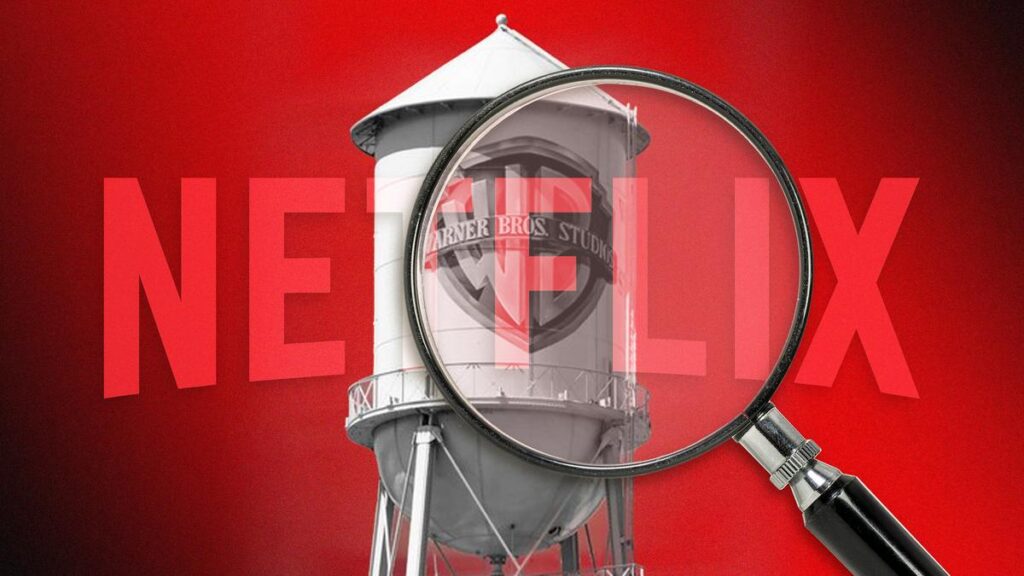
In a move that has sent shockwaves through Hollywood, Netflix has announced its acquisition of Warner Bros for a staggering $82.7 billion. The deal, which is still pending regulatory approval in the United States and potentially the European Union, has raised significant questions about the future of Warner Bros’ assets, particularly its prestigious cable network, HBO.
The acquisition was announced as Warner Bros celebrated its 100th anniversary in 2023, a milestone marked by a reflective docuseries showcasing its storied history. During the series, Warner Bros Discovery CEO David Zaslav highlighted the symbolic importance of a bird statue from the classic 1941 film noir “The Maltese Falcon,” describing it as “the stuff dreams are made of.” Yet, for many in the industry, the Netflix takeover feels more like a nightmare.
The cinema owners lobby, the writers’ guild, and directors’ guild have all expressed concerns about the implications of this deal. The theatrical box office has yet to recover from the pandemic, and Netflix’s track record of bypassing traditional cinema release windows has only heightened fears.
Streaming Wars: A New Chapter
Netflix’s history with HBO is complex. Once a mail-order DVD rental service, Netflix was rebuffed by HBO when it sought to license its content, prompting Netflix to develop its own original programming. This strategic pivot was a precursor to the streaming wars that have since dominated the entertainment landscape.
Netflix’s acquisition of Warner Bros represents a significant shift in these ongoing battles. The company has promised to maintain Warner Bros’ existing release models, though it has hinted at future “evolution.” The question remains whether this evolution will preserve or dismantle the unique identity of HBO.
HBO: A Legacy of Prestige
HBO has long been synonymous with high-quality television. From “The Sopranos” to “Game of Thrones,” its programming has set the standard for prestige TV. The network’s tagline, “It’s not TV. It’s HBO,” encapsulates its reputation for excellence and its distinct position in the market.
HBO’s journey began in the 1980s with original programming like “Not Necessarily the News” and gained momentum with iconic series such as “The Larry Sanders Show” and “Oz.” The late 1990s and early 2000s saw HBO redefine television with groundbreaking shows like “Sex and the City” and “The Sopranos.”
“HBO is not a general entertainment offering, it never was, and the Max experiment was a lesson that you should never underestimate the value of HBO.”
Despite industry shifts, HBO has continued to innovate, producing critically acclaimed series like “Succession,” “Chernobyl,” and “Watchmen.” However, the merger of Warner Bros with Discovery in 2022 brought significant changes, including a controversial rebranding of HBO Max to simply Max, which was later reversed.
The Future of HBO Under Netflix
As Netflix absorbs Warner Bros, the future of HBO is uncertain. Netflix CEO Ted Sarandos has expressed admiration for HBO’s model and has promised to maintain its operations “largely as it is.” Yet, the potential for integration or alteration looms large.
Some speculate that Netflix might offer HBO as a separate tile or add-on subscription, similar to Disney’s model with ESPN and Marvel. However, this would mark a departure from Netflix’s current pricing strategy, which does not differentiate content by price.
HBO’s strength lies in its brand, a quality Netflix has struggled to replicate. Despite its vast library, Netflix has only won the Emmy for best drama once in the past decade, compared to HBO’s eight wins. The acquisition presents an opportunity for Netflix to leverage HBO’s prestige while enhancing its technological capabilities.
Industry Reactions and Implications
The entertainment industry has reacted with skepticism to the merger. Consolidation often leads to reduced consumer choice and higher costs, a concern echoed by industry insiders. The fate of HBO, a cultural touchstone, is a particular point of contention.
“The worst case scenario, the stuff nightmares are made of, is Netflix will steamroll over the legacy of HBO as it has the rest of the entertainment industry.”
As the deal progresses, stakeholders will be watching closely to see how Netflix handles its new acquisition. The outcome could reshape the entertainment landscape, influencing everything from content creation to distribution models.
Conclusion: A New Era for Hollywood?
Netflix’s acquisition of Warner Bros marks a pivotal moment in Hollywood’s ongoing evolution. The integration of two entertainment giants presents both opportunities and challenges, particularly for HBO. As the industry braces for change, the question remains: will Netflix honor the legacy of HBO, or will it prioritize its own brand above all else?
For now, the entertainment world waits with bated breath, hoping that the dreams of Hollywood’s golden age are not overshadowed by the ambitions of Silicon Valley.