




Sam Mackaway’s future has been mapped out for as long as he can remember. As a third-generation cattle farmer in Walcha, New South Wales, he is now living his dream with a young family of his own. “I always wanted my family to grow up on a farm,” Mackaway shares. The property, spanning over 2,800 acres, has been in his family for 27 years. “It’s a beautiful part of the world to raise my kids,” he tells ABC iview’s Muster Dogs.
However, inheriting the family business involves more than just pastoral bliss. It comes with the weight of succession planning, managing inherited debt, and the desire to leave a personal mark. According to the Australian Small Business and Family Enterprise Ombudsman, seven out of ten businesses in Australia are family-owned, with a significant number in agriculture, forestry, and fishing.
The Weight of Legacy
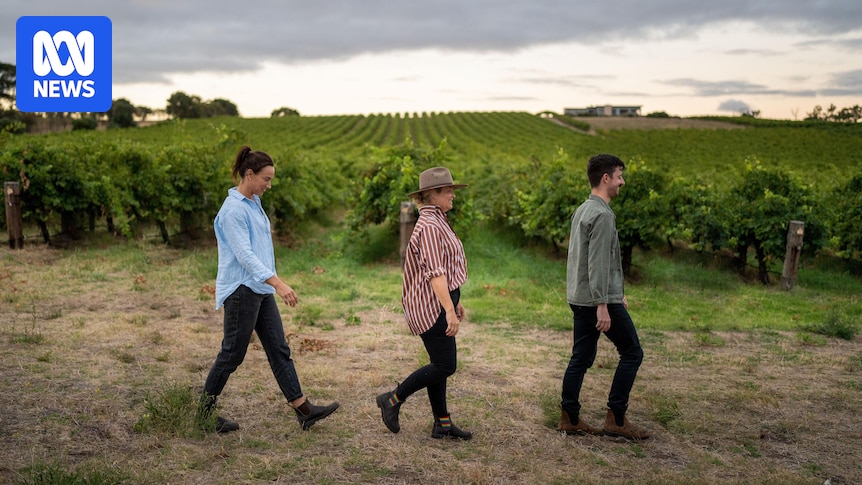
Corrina Wright, the sixth generation to run Oliver’s Taranga Vineyards in McLaren Vale, South Australia, echoes Mackaway’s sentiments. “It’s a privilege to continue the legacy,” she says, though acknowledging the pressure. “You don’t want to be the generation to stuff it up.”
For Mackaway, the path to the farm was not automatic. “My brother and I were told to do something else first, get a trade or go to uni,” he recalls. He chose to become an electrician, a skill he finds useful on the farm. “I don’t use it every day, but I use it quite a lot,” he says.
Embracing Modernization
Despite the wealth of traditional knowledge passed down, Mackaway recognizes the need to innovate for future success. He has introduced modern technology into farming practices. “I’m driving around in a tractor with a GPS and auto steer,” he says, contrasting with his father’s manual methods.
Additionally, Mackaway is implementing a data-tracking system to streamline operations, tracking cattle weights, growth, and lineage. “I’m a few weeks away from releasing a farm management app,” he reveals. This tech-savvy approach is indicative of the generational shift within family businesses.
Adapting to Change
Wright’s family business has also evolved. Her generation expanded from merely selling grapes to establishing their own brand. “You’ve gone from a business that didn’t care about what happened at the farm gate to running a business that employs a whole range of people,” she explains. Marketing, design, and social media have become integral to their operations.
The initial pressure was immense. “The pressure back in the early days was to not stuff that up,” Wright admits. Now, she feels pride in her generation’s contribution to strengthening the business.
Strategic Succession Planning
Every five years, Mackaway and his family engage in discussions about succession planning. His father’s experiences have shaped this process. “My grandfather wasn’t ready to retire, which delayed my dad’s plans,” Mackaway explains. This history informs their current approach to ensure a smoother transition.
Family support has been crucial in managing the financial aspects of the business. “As long as we’re happy to all work together, we can get that debt down quicker,” Mackaway notes. This collaborative effort is vital for the sustainability of the business.
Looking to the Future
For Wright, having non-family advisers has been essential in maintaining a clear vision. She is optimistic about creating opportunities for future family members, noting that roles have expanded beyond traditional farming. Her daughter already works for the company one day a week.
Meanwhile, Mackaway remains hopeful about the prospects of a fourth generation joining the family business. Only time will tell if his children will continue the legacy. As family businesses evolve, the balance between tradition and innovation remains a key challenge, but also a source of immense pride and potential.