



In a groundbreaking development, NASA scientists have utilized space-based technology to detect plastic pollution on land, setting the stage for similar efforts in the oceans. This innovative approach, reported in late 2025, leverages the Earth Surface Mineral Dust Source Investigation (EMIT) sensor aboard the International Space Station to identify concentrations of plastic by analyzing their unique “fingerprints.”
The announcement comes as researchers explore the potential of this technology to track marine debris. NASA intern Ashley Ohall has spearheaded the creation of a comprehensive reference library, cataloging nearly 25,000 molecular “fingerprints” from various types of debris, including plastics, metals, and other materials commonly found in the ocean.
From Land to Sea: A New Frontier for EMIT
Launched in 2022, the EMIT sensor was initially designed to map minerals across desert regions, contributing to climate studies by assessing how dust can influence atmospheric temperatures. However, its capabilities have proven far more versatile. By identifying hundreds of compounds on Earth through their spectral patterns in sunlight, EMIT has opened new avenues for environmental monitoring.
David Thompson of NASA’s Jet Propulsion Laboratory, a coauthor of the 2025 study, noted that while EMIT has successfully detected plastic in landfills and large structures, the ocean presents a unique challenge. Seawater’s absorption of infrared light complicates the detection of plastic’s spectral features, necessitating further innovation.
The Role of the Litter Library
Ohall’s work, alongside collaborators, has resulted in an open-source library that standardizes data from various studies on marine debris. This repository is crucial for developing detection algorithms, as different debris types exhibit distinct spectral characteristics based on their material, color, and condition.
“My biggest hope is that people see remote sensing as an important and useful tool for marine debris monitoring,” Ohall stated. “Just because it hasn’t been done yet doesn’t mean it can’t be done.”
Implications for Public Health and Tourism
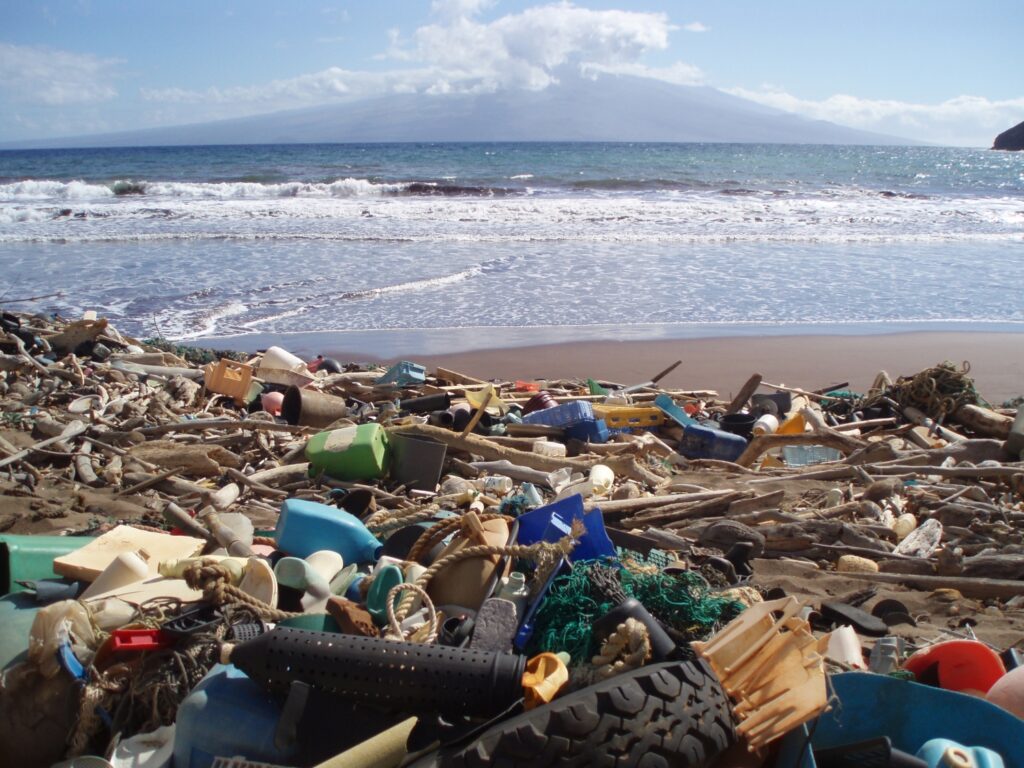
Mapping pollution hotspots near coastlines could significantly impact public health and coastal tourism by identifying and mitigating debris before it reaches beaches. With an estimated 8 million tons of plastic entering the ocean annually, primarily from land, understanding the movement and concentration of this debris is essential.
Ohall, a Florida native and recent University of Georgia graduate, emphasized the potential benefits of this research. “A better understanding of where debris is and where it’s headed could be a boon for public health and coastal tourism,” she said.
Conventional vs. Space-Based Methods
Traditional methods of quantifying ocean plastic, such as using nets in garbage patches, are insufficient for the millions of tons of debris. NASA’s support is enabling scientists to explore the capabilities of existing sensors and develop new tools, including AI-driven satellite imagery analysis.
“Humans have a visceral connection to the ocean and its health,” said Kelsey Bisson, a program manager at NASA Headquarters. “Detecting marine debris is the kind of incredible challenge that NASA can help solve.”
A Step Towards a Cleaner Ocean
The work of Ohall and her colleagues represents a significant step towards leveraging space technology for environmental protection. As researchers continue to refine detection methods and expand the capabilities of sensors like EMIT, the possibility of effectively monitoring and addressing marine debris becomes increasingly feasible.
Looking forward, the integration of these technologies could transform how we approach ocean conservation, offering a powerful tool in the global effort to combat plastic pollution.