




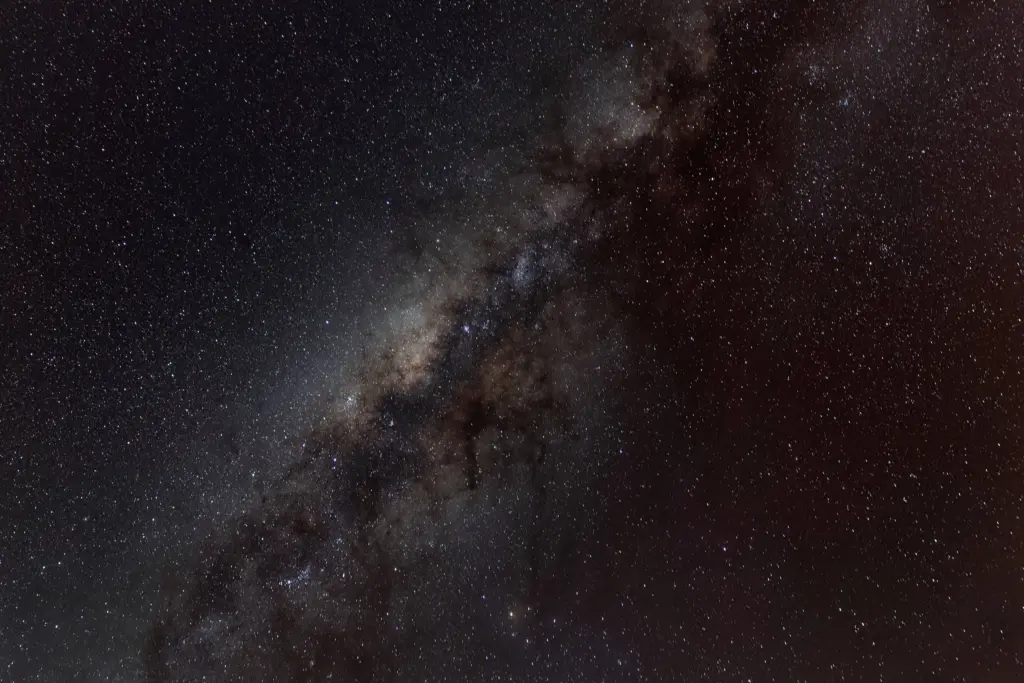
NASA is gearing up to launch a groundbreaking survey with the Nancy Grace Roman Space Telescope, aiming to map the Milky Way’s structure and delve into the mysteries of star formation. Scheduled to span 29 days over two years during the telescope’s primary five-year mission, the Galactic Plane Survey will be the Roman Telescope’s first significant general astrophysics program.
The survey will utilize infrared light to penetrate dust-obscured regions that have remained elusive in visible-light surveys, such as the European Space Agency’s Gaia mission, which mapped around two billion stars. By recording tens of billions of stars, star clusters, and other galactic structures, the survey promises to provide unprecedented positional measurements and high-resolution imaging, capturing time-dependent changes across the galaxy.
The telescope’s launch is anticipated between fall 2026 and May 2027, according to NASA officials.
Survey Design and Coverage
The Galactic Plane Survey is set to cover nearly 700 square degrees along the Milky Way’s disk, an area equivalent to approximately 3,500 full moons. The main component of the survey will image 691 square degrees over 22.5 days. A smaller section of 19 square degrees will be repeatedly observed over 5.5 days to track changes, while scattered regions totaling 4 square degrees will receive 31 hours of imaging using Roman’s full suite of infrared filters and spectroscopic tools.
This strategic design aims to detect motion and variability among stars and other objects, creating a dataset suitable for mapping galactic structure and tracking the evolution of stars over time. Technical details of this observation plan have been provided by NASA’s Goddard Space Flight Center and the survey team.
Observing Star Formation and Young Stars
The Roman Telescope will focus on stellar birthplaces within gas and dust clouds, recording millions of protostars, young stars embedded in dust, and stars with early planetary systems. The survey will encompass nearly 2,000 open clusters and multiple globular clusters near the galaxy’s center.
By observing these clusters, scientists hope to analyze star formation across different environments and determine the effects of spiral arms on star formation. The infrared capability will allow measurement of stellar birth rates, identification of faint or dust-obscured stars, and monitoring of young stars’ variability. Repeated imaging over time will enable the construction of videos showing star evolution and behavior in early stages.
Stellar Endpoints and Microlensing
The survey will also track stars reaching the ends of their life cycles, including white dwarfs, neutron stars, and black holes. Gravitational microlensing will detect these objects even when isolated by observing the temporary brightening of background stars caused by the gravity of foreground masses.
The Galactic Plane Survey complements Roman’s Galactic Bulge Time-Domain Survey, which conducts deeper microlensing observations in the central region. Repeated imaging will also monitor pulsating variable stars, which provide intrinsic brightness measurements. Comparing these data with observed brightness will improve distance measurements across the Milky Way, enhancing the accuracy of galactic maps.
Infrared Advantages and Expected Outcomes
Roman’s infrared imaging will penetrate dust that blocks visible light, allowing observation of regions inaccessible to previous surveys. The survey is expected to map up to 20 billion stars, record structural details of clusters, and detect faint or previously unobserved objects.
Data will include stellar positions, variability, and cluster properties, providing comprehensive coverage of multiple stages of stellar evolution.
The observations will also enable monitoring of ultratight binary systems, the environments of star clusters, and changes in star brightness over time, creating a dataset for detailed study of the Milky Way’s composition and dynamics.
As NASA prepares for this ambitious endeavor, the scientific community eagerly anticipates the wealth of data that will enhance our understanding of the galaxy. Stay tuned for more updates as the launch date approaches.