



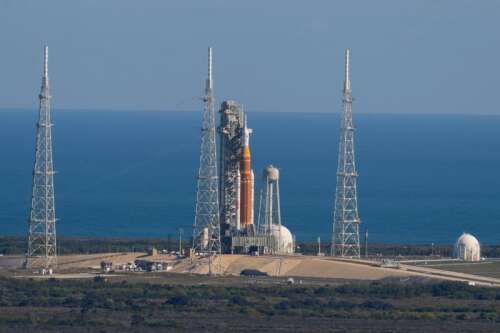
CAPE CANAVERAL, Fla. — NASA has conducted a pivotal rocket fueling test on Thursday, aiming to overcome previous setbacks and pave the way for the first crewed lunar mission in over 50 years. The test, held at the Kennedy Space Center, involved loading more than 700,000 gallons of supercold fuel into the Space Launch System (SLS) rocket, a critical step that will determine the feasibility of a March launch for the Artemis II mission.
This effort marks the second attempt this month to complete the complex fueling process, following an initial test that was halted due to leaks. The Artemis II mission, which will carry four astronauts, represents NASA’s ambitious return to lunar exploration, with a planned 10-day journey to the moon and back.
The Challenges of Rocket Fueling
The fueling process is one of the most challenging aspects of the mission’s preparation. During a previous rehearsal, significant leaks of liquid hydrogen were detected at the connections between the launch pad and the towering 322-foot SLS rocket. In response, NASA engineers have replaced faulty seals and a clogged filter, hoping to ensure a successful test this time around.
NASA has a history of grappling with hydrogen fuel leaks, a problem that dates back to the space shuttle era. The SLS rocket engines, derived from those used in the shuttle program, have been particularly susceptible to such issues. The first Artemis test flight, which was uncrewed, faced similar challenges and was delayed for months before its successful launch in November 2022.
Looking Ahead: Artemis II and Beyond
The outcome of this test is crucial for setting a launch date for Artemis II. The mission, involving three American astronauts and one Canadian, is poised to be a historic endeavor, marking the first human voyage to the moon since Apollo 17 in 1972. Although the crew will not land or orbit the moon, their journey will serve as a precursor to future missions aiming for lunar landings.
NASA’s new administrator, Jared Isaacman, has acknowledged the difficulties posed by hydrogen leaks and has committed to redesigning the fuel connections for future Artemis missions. “We will not launch unless we are ready, and the safety of our astronauts will remain the highest priority,” Isaacman emphasized last week.
Expert Opinions and Historical Context
Space experts view the Artemis program as a critical step in rekindling human exploration beyond Earth’s orbit. Dr. Emily Thompson, a space policy analyst, noted, “The Artemis missions are not just about returning to the moon; they are about establishing a sustainable presence and preparing for future Mars exploration.”
The Artemis program’s significance is underscored by its historical parallels to the Apollo missions, which captivated the world in the late 1960s and early 1970s. However, unlike Apollo, Artemis aims to foster international collaboration and commercial partnerships, reflecting a new era of space exploration.
“The Artemis missions are not just about returning to the moon; they are about establishing a sustainable presence and preparing for future Mars exploration.” — Dr. Emily Thompson, Space Policy Analyst
Implications and Future Prospects
The success of the fueling test is a linchpin for the Artemis II mission’s timeline. If successful, NASA could proceed with a March 6 launch, setting the stage for a new chapter in lunar exploration. The mission’s success would also bolster the agency’s plans for Artemis III, which aims to land astronauts near the moon’s south pole in the coming years.
Meanwhile, the broader implications of the Artemis program extend beyond lunar exploration. By advancing technologies and international partnerships, NASA is laying the groundwork for future missions to Mars and beyond, with the ultimate goal of establishing a human presence on other planets.
As NASA continues to navigate the challenges of space exploration, the world watches with anticipation, eager to witness humanity’s return to the moon and the potential for even greater achievements in the cosmos.