


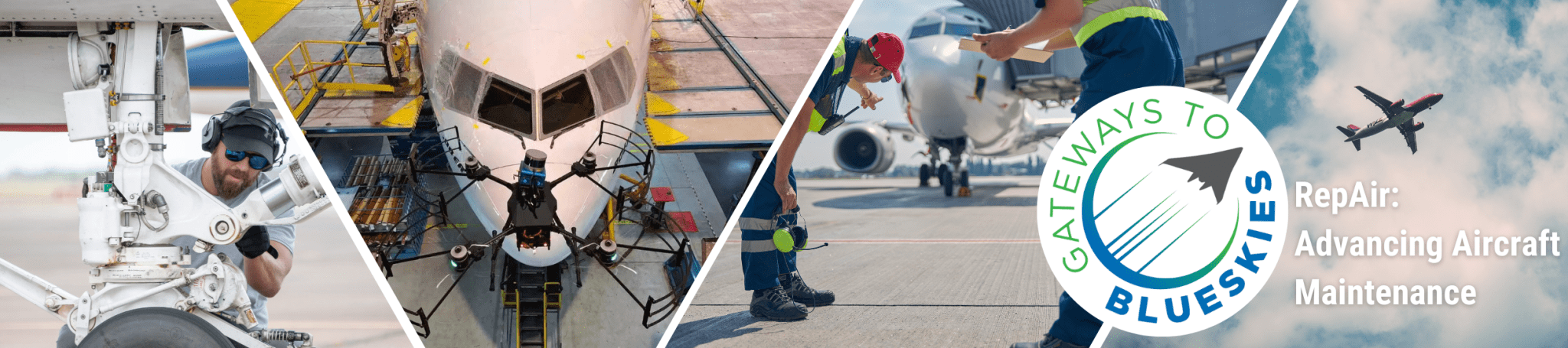
NASA has announced eight student teams as finalists in the 2026 Gateways to Blue Skies Competition, a significant step toward addressing a pressing challenge in U.S. aviation: aircraft maintenance. The competition, titled “RepAir: Advancing Aircraft Maintenance,” seeks innovative solutions to combat the shortage of qualified maintenance workers and the increasing demands on aging aircraft systems.
The announcement comes as the aviation industry grapples with maintaining complex aircraft systems amid a growing shortage of skilled maintenance personnel. Through the Gateways to Blue Skies initiative, NASA aims to harness student innovation to tackle some of the most pressing issues in aviation today. The current competition focuses on immediate impacts, unlike many NASA projects that often target long-term technological advancements.
Empowering the Next Generation of Aviation Innovators
Steven Holz, associate project manager for NASA’s University Innovation Project and judging panel co-chair for Gateways to Blue Skies, emphasized the educational and transformative potential of the competition. “Through this competition, students will learn about aviation maintenance and be empowered to change its future,” Holz stated. “By grounding innovative ideas in real operational needs and presenting them to NASA and industry experts, these teams demonstrate the kind of critical thinking, collaboration, and forward-looking problem solving that will shape a safer, more efficient aviation industry in the near future.”
The competition challenges postsecondary students to conceptualize innovative systems and practices to enhance current commercial aircraft maintenance and repair operations. It aligns with NASA’s dual goals of fostering innovative research and stimulating the potential aviation workforce of tomorrow.
Innovative Solutions with Immediate Impact
RepAir: Advancing Aircraft Maintenance aims to generate concepts that improve efficiency, safety, and cost-effectiveness in the aviation maintenance industry by 2035. This timeline contrasts with many NASA research initiatives that focus on distant future technologies, highlighting the urgency of addressing today’s maintenance challenges.
NASA selected the finalists based on their proposals and videos summarizing their RepAir concepts. Each of the eight finalist teams will receive a $9,000 prize and advance to Phase 2 of the competition. This next phase includes a review of each team’s final paper, infographic, and presentation at the 2026 Gateways to Blue Skies Forum, scheduled for May 18 at NASA Langley Research Center in Hampton, Virginia, and livestreamed globally.
“The move represents a strategic investment in the future of aviation maintenance, focusing on immediate applicability and real-world challenges.”
Diverse Proposals from Leading Institutions
The finalist projects showcase a range of innovative capabilities, including robotic inspections, augmented reality smart glasses, and advanced sensor and machine learning architectures. Notable projects include:
- Embry-Riddle Aeronautical University Daytona Beach with Cecil College Maryland: Advancing Aircraft Maintenance, Smart Mechanic Glasses
- Manhattan University: Aircraft Enhanced Resilience and Intelligence Systems (A.E.R.I.S)
- Michigan State University: Surface Evaluation Network for Tethered Inspection and Nondestructive Evaluation (SENTINEL)
- South Dakota State University: Surveying Platform and Inspection Device for Enclosed Regions (S.P.I.D.E.R.)
- South Dakota State University: WINGMAN, augmented reality data-logging and information-display system for improved efficiency in line maintenance inspections and reporting
- South Dakota State University: Surface Preservation and Rust Killer (S.P.A.R.K.) Crawler
- University of California, Irvine: Aircraft Structural Health Intelligence for Evaluation and Lifecycle Detection (Air SHIELD)
- University of Maryland Eastern Shore: A Self-Supervised Learning Framework for Auxiliary Power Unit (APU) Fuel Control Unit Health Management in Aircraft known as APU Sentinel
The Gateways to Blue Skies Challenge is spearheaded by the Transformative Aeronautics Concepts Program within NASA’s Aeronautics Research Mission Directorate. The NASA Tournament Lab, part of the Prizes, Challenges, and Crowdsourcing Program in the Space Technology Mission Directorate, manages the challenge through the National Institute of Aerospace on behalf of NASA.
Looking Ahead: Implications and Opportunities
The implications of this competition extend beyond immediate technological advancements. By engaging students in real-world aviation challenges, NASA not only fosters innovation but also helps cultivate a new generation of skilled professionals ready to enter the workforce. The opportunity for members of the winning team to intern with NASA Aeronautics further underscores the agency’s commitment to nurturing future talent.
As the aviation industry continues to evolve, initiatives like the Gateways to Blue Skies Competition play a crucial role in ensuring that the sector remains safe, efficient, and at the forefront of technological innovation. More information about the competition and its ongoing developments can be found on the official competition site.