


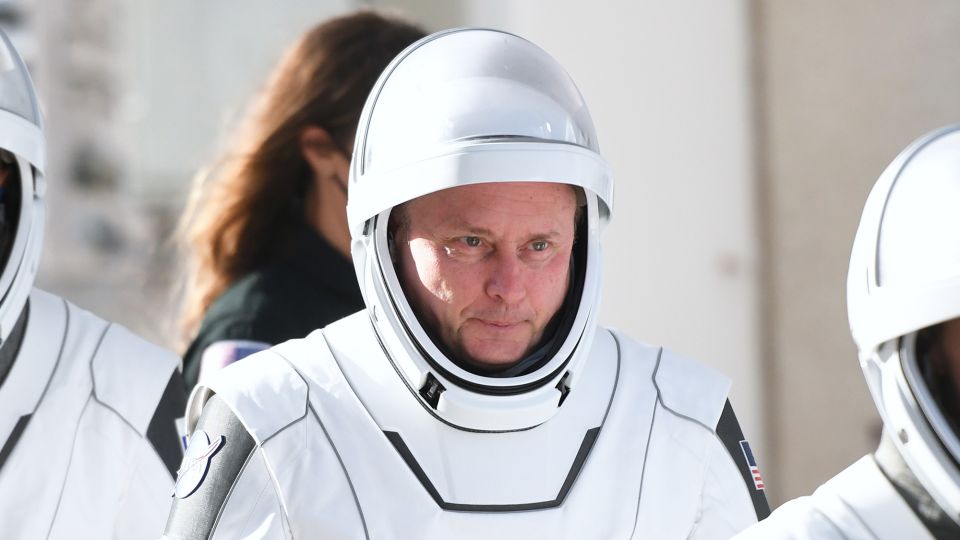
Veteran NASA astronaut Mike Fincke has identified himself as the crew member who experienced a significant “medical event” that necessitated an unprecedented early return from the International Space Station (ISS) last month. The incident marked the first time in history that NASA had to cut short an ISS staffing mission due to health concerns.
Fincke, alongside his fellow crewmates—NASA astronaut Zena Cardman, Kimiya Yui of the Japan Aerospace Exploration Agency, and cosmonaut Oleg Platonov of the Russian space agency, Roscosmos—returned to Earth in mid-January. Their sudden departure left a skeleton crew of just three astronauts to maintain operations on the nearly football field-sized orbiting laboratory.
Details of the Medical Event
While Fincke publicly acknowledged his condition, he refrained from disclosing specific details about the medical issue. In a statement released on Wednesday, he expressed gratitude for the prompt response from his crewmates and the guidance of NASA flight surgeons, which helped stabilize his condition. “I experienced a medical event that required immediate attention from my incredible crewmates,” Fincke stated. “Thanks to their quick response and the guidance of our NASA flight surgeons, my status quickly stabilized.”
NASA determined that returning to Earth was necessary to utilize “advanced medical imaging not available on the space station.” Although the ISS is equipped with medical tools, it lacks the comprehensive facilities of a typical emergency room.
Privacy and Protocols
NASA has a long-standing policy of protecting the personal medical information of its astronauts. While the agency confirmed during the crew’s return journey that the affected astronaut was in stable condition, it remains unclear whether the medical event posed a life-threatening emergency or how the crew managed the situation.
Historically, NASA has shared information about the effects of spaceflight on the human body through broader scientific studies without naming individuals. Previous research has examined conditions like space adaptation syndrome, characterized by vomiting and vertigo, and other in-space medical issues such as optic nerve swelling and blood clots.
Response and Future Implications
After the return of Fincke and his crewmates, collectively known as Crew-11, they participated in a news conference at NASA’s Johnson Space Center in Houston. The astronauts chose not to identify the individual with the medical concern but emphasized that their return was not considered an emergency. “How we handled everything all the way through, from nominal operations to this unforeseen operation, really bodes well for future exploration,” Fincke remarked during the January 21 news conference.
The medical issue triggered a rapid sequence of events, including the cancellation of a planned spacewalk, the expedited scheduling of the crew’s return, and the hastening of the launch for NASA’s next staffing mission to the ISS. Crew-12, a group of four astronauts, arrived at the space station on February 14, restoring staffing levels to the desired seven-person team necessary for maintaining scientific experiments and other duties.
“I’m doing very well and continuing standard post-flight reconditioning at NASA’s Johnson Space Center in Houston. Spaceflight is an incredible privilege, and sometimes it reminds us just how human we are,” Fincke stated in a written message on Wednesday.
Looking Ahead
NASA continues to push the boundaries of human space exploration with its Artemis program, aiming to send humans into deep space for the first time in over five decades. This recent incident underscores the importance of preparedness and adaptability in the face of unforeseen challenges during space missions.
As NASA and its international partners continue to explore the final frontier, the lessons learned from Crew-11’s experience will undoubtedly contribute to the safety and success of future missions. The agency remains committed to ensuring the well-being of its astronauts while advancing the scientific knowledge that benefits all of humanity.