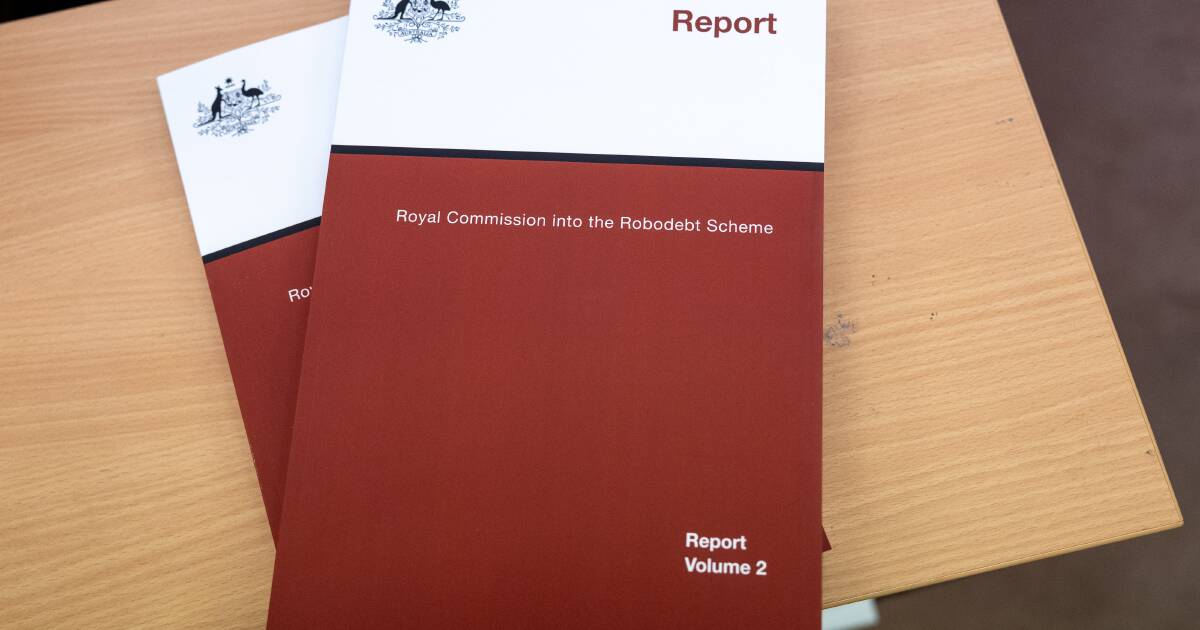




The National Anti-Corruption Commission (NACC) has released a comprehensive report identifying serious corrupt conduct by two former public servants involved in the notorious robodebt scheme. This revelation concludes a series of investigations initiated nearly three years ago, clearing four others of wrongdoing.
The 400-page report, a culmination of years of scrutiny following a royal commission’s damning assessment, names Mark Withnell, a former general manager in the Department of Human Services, and Serena Wilson, a former deputy secretary at the Department of Social Services, as individuals who engaged in corrupt practices. The royal commission had previously labeled the scheme as “neither fair nor legal” in its July 2023 findings.
Background and Investigation
The robodebt scheme, operational from 2015 to 2019, involved the automatic generation of debt notices to social welfare recipients by comparing their reported income with averaged annual data from the Tax Office. This process placed the burden of proof on recipients to contest the debts, a method deemed unlawful by the 2023 royal commission.
Initially, the NACC had ruled out corruption investigations, citing a lack of public interest. However, public outcry prompted an independent review, leading to the current findings. Deputy Commissioner Kylie Kilgour, with Geoffrey Nettle as chief advisor, spearheaded the investigation, while Anti-Corruption Commissioner Paul Brereton was not directly involved in the report published on Wednesday.
Key Findings and Implications
The NACC report highlights that Mark Withnell misled Department of Social Services officers during the preparation of a cabinet submission in 2015, constituting serious corrupt conduct. Similarly, Serena Wilson was found to have misled the Commonwealth Ombudsman during a 2017 investigation by omitting critical legal advice that questioned the scheme’s reliance on income averaging.
“Mr Mark Withnell engaged in serious corrupt conduct by intentionally misleading officers of the Department of Social Services during the preparation of a cabinet submission in 2015,” the commission stated.
“Ms Serena Wilson engaged in serious corrupt conduct by intentionally misleading the Commonwealth Ombudsman during an investigation in 2017,” the report noted.
Despite these findings, the report concluded that there was insufficient admissible evidence to pursue criminal charges against Withnell or Wilson. Consequently, neither was referred to the Commonwealth Director of Public Prosecutions, as key admissions made during the investigation are inadmissible in court.
Broader Context and Reactions
The robodebt scheme has been a source of significant controversy and distress, with many recipients reporting undue stress and financial hardship. The royal commission’s earlier findings and the NACC’s report have further fueled public discourse on accountability and transparency within government operations.
In response to the findings, the Public Service Commission, the Australian Federal Police, and the ACT Law Society have been involved in reviewing the roles of various officials. Notably, the Public Service Commission found former secretaries Kathryn Campbell and Renee Leon in breach of their obligations, alongside ten unnamed individuals who violated the Public Service Code of Conduct.
Deputy Commissioner Kilgour emphasized the importance of transparency, stating, “The report makes public the royal commission’s referrals and all the relevant evidence and basis for the commission’s findings in relation to each of the six individuals.”
Looking Forward
As the dust settles on this chapter of the robodebt saga, questions linger about systemic reforms needed to prevent similar occurrences. The NACC’s findings underscore the necessity for robust checks and balances within government frameworks to safeguard public interest and uphold ethical standards.
The release of the report marks a significant step in addressing the wrongs of the past, yet it also serves as a cautionary tale for future policy implementations. As Australia grapples with the implications of the robodebt scheme, the focus now shifts to ensuring accountability and fostering a culture of integrity within public service.