




Hadi, 32, a prominent figure in last year’s student-led uprising that toppled longtime Prime Minister Sheikh Hasina, was shot in the head by masked assailants in Dhaka last week while launching his campaign for elections due in February. He died on Thursday in Singapore after spending six days on life support.
His killing has triggered a fresh wave of instability in the South Asian nation, including coordinated mob attacks on major newspapers and cultural institutions, raising fears that the violence could derail Bangladesh’s fragile democratic transition. Police and paramilitary forces were deployed across Dhaka for Saturday’s funeral, though authorities reported no renewed violence during the proceedings.
A Symbolic Farewell
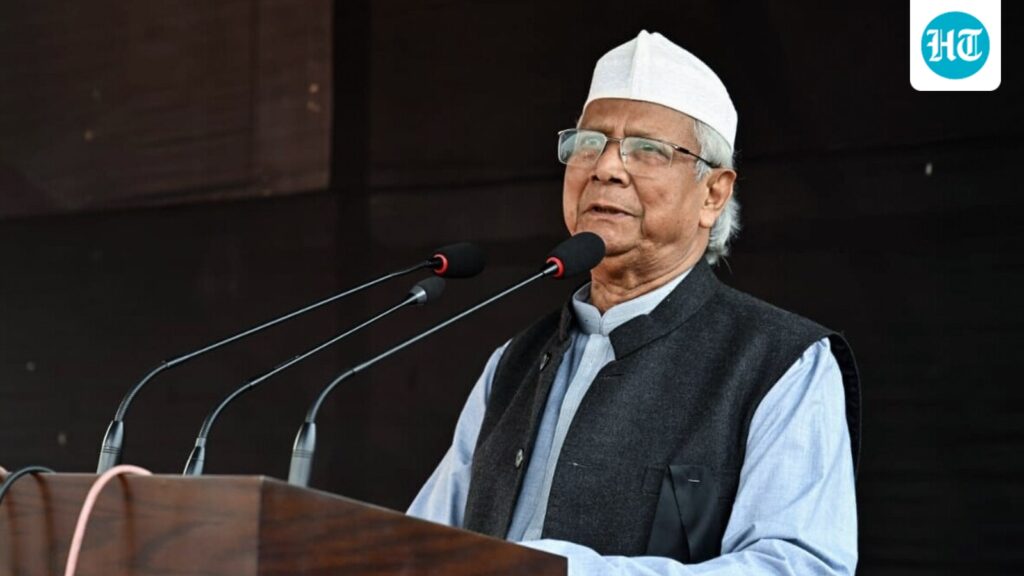
In a rare and symbolic honor, Hadi was laid to rest on the Dhaka University campus beside the grave of national poet Kazi Nazrul Islam. The funeral drew thousands, reflecting the deep impact Hadi had on the nation’s youth and political landscape. Addressing the crowd, Nobel laureate Muhammad Yunus described the funeral as a collective pledge to uphold Hadi’s ideals.
“Today, we have come to promise you that we will fulfill what you stood for,” Yunus declared, adding that Hadi’s legacy would endure.
Yunus emphasized that the young leader demonstrated how politics could be conducted with humility and grace, pledging to elevate Bangladesh’s political culture by following that example. The mourners included Bangladesh’s army chief and representatives from across the political spectrum, underscoring the broad support Hadi garnered.
Political Turmoil and Hopes for Stability
Bangladesh is scheduled to elect a new parliament on February 12, a transition many hope will help the Muslim-majority nation of 175 million recover from nearly two years of political turmoil and reclaim its standing as a regional success story. However, frequent bouts of violent protests and intense political wrangling among disparate groups, including Islamist hardliners, have punctured the sense of optimism that followed Hasina’s ouster in August 2024.
The announcement of Hadi’s death has intensified these tensions, with fears that the violence could escalate as the election date approaches. According to political analysts, the upcoming elections are crucial for stabilizing the nation and ensuring a peaceful transition of power.
Expert Opinions and Historical Context
Experts warn that the current instability mirrors past challenges faced by Bangladesh during its democratic transitions. Dr. Ayesha Rahman, a political science professor at Dhaka University, noted that the assassination of key political figures has historically led to increased violence and political instability in the region.
“The assassination of Osman Hadi is reminiscent of the political violence that has plagued Bangladesh in the past. It is imperative for the government and political parties to come together to ensure a peaceful election process,” Rahman stated.
Meanwhile, international observers have expressed concern over the potential for further unrest. The United Nations has called for calm and urged all parties to engage in dialogue to prevent the situation from deteriorating further.
Looking Ahead
The move to uphold Hadi’s ideals represents a broader effort to steer Bangladesh towards a more stable and democratic future. As the nation prepares for the upcoming elections, the focus remains on maintaining peace and ensuring that the democratic process is respected.
Yunus and other leaders have called for unity and resilience, urging citizens to honor Hadi’s legacy by participating in the democratic process and rejecting violence. The coming weeks will be critical in determining whether Bangladesh can navigate this turbulent period and emerge stronger.
As the nation mourns the loss of a promising leader, the resolve to continue his work and vision could be the catalyst needed to bring about meaningful change in Bangladesh’s political landscape.