


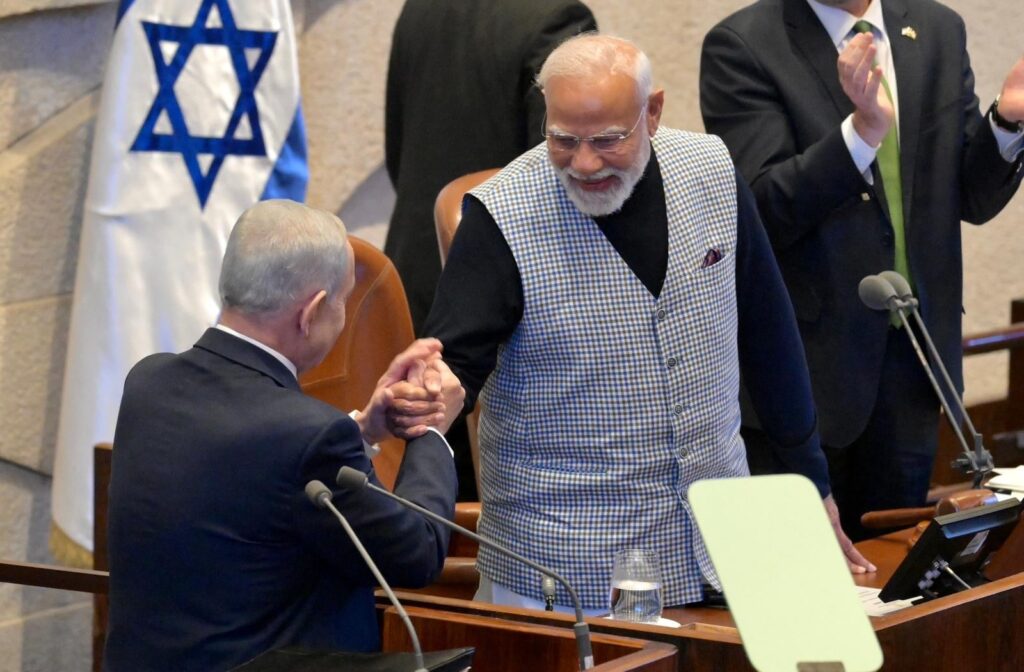
In a powerful demonstration of diplomatic solidarity, Indian Prime Minister Narendra Modi and Israeli Prime Minister Benjamin Netanyahu reaffirmed their commitment to a robust alliance against Islamist terrorism during a historic session at the Knesset on Wednesday. Modi, the first Indian leader to address Israel’s parliament, declared that India stands “firmly” with Israel, underscoring the deepening ties between the two nations.
“India stands with Israel firmly with full conviction in this moment and beyond,” Modi stated, addressing the lawmakers in a special session. This visit marks a significant moment in the evolving relationship between India and Israel, characterized by a strategic partnership that has been steadily expanding over the decades.
Strengthening Strategic Ties
The meeting between the two leaders highlighted the ongoing collaboration in various sectors, including the development of the IMEC initiative, a US-backed transport project aimed at connecting India to Europe through the Middle East. Netanyahu emphasized the importance of stable and secure countries along this corridor, praising the strength of India and Israel in this regard.
“This maritime-land corridor can exist and flourish only if it passes through stable and secure countries. And there are no stronger and more secure countries on this axis than India and Israel,” Netanyahu remarked.
“The massacre of October 7 made it absolutely clear: either the jihadist axis of evil will break us, or we will break it,” Modi said, referring to the Hamas invasion of southern Israel in 2023.
Modi’s address also included heartfelt condolences for the victims of the October 7 terrorist attack by Hamas, which triggered a regional conflict involving Israel, Iran, and their respective allies. Netanyahu expressed gratitude for India’s unwavering support following the attack, acknowledging the moral clarity with which Modi and his government responded.
Historical and Cultural Bonds
The alliance between India and Israel is not only strategic but also cultural and historical. Modi praised Israel as “a protective wall against barbarism,” echoing Netanyahu’s sentiments when addressing Western audiences. Netanyahu, in turn, highlighted India’s historical tolerance towards its Jewish communities, noting that India is a civilization where Jews were never persecuted by the state.
“In a world where antisemitism is rising, India stands out — a civilization where Jews were never persecuted by the state, only welcomed. We don’t forget that, too. Thank you, India,” Netanyahu stated.
Modi also expressed support for the US administration’s Gaza peace plan, which aims for a just and durable peace in the region, addressing the Palestine issue. However, the implementation of this plan remains uncertain, with challenges such as the disarmament of Hamas posing significant obstacles.
Economic and Military Cooperation
The economic relationship between India and Israel has grown significantly, with bilateral trade reaching approximately $5 billion in 2024. This includes substantial trade in diamonds and military hardware, as Israel is the fourth largest supplier of military equipment to India. Recent visits by Israeli ministers to India have further strengthened this economic partnership, paving the way for a potential free trade agreement.
India is the most populous country and the fifth-largest economy in the world. The $3.9 trillion economy is Israel’s second-largest trading partner in Asia, after China.
Despite ongoing negotiations, the free trade agreement faces hurdles, particularly regarding the inclusion of foreign workers, which Israel opposes. Nevertheless, the personal and strategic relationship between Modi and Netanyahu remains strong, as evidenced by their public displays of camaraderie and shared visions for future cooperation.
Political Dynamics and Future Prospects
Modi’s visit was not without domestic political drama, as opposition members temporarily exited the Knesset to protest the exclusion of High Court president Isaac Amit from the session. However, they returned to show respect for Modi’s address, emphasizing the bipartisan admiration for his leadership and friendship.
As Modi concluded his speech with the rallying cries “Am Yisrael Chai” and “Jai Hind,” he received a standing ovation, reflecting the deep-rooted respect and enthusiasm for the India-Israel partnership. The leaders’ commitment to overcoming challenges and expanding cooperation signals a promising future for this alliance, with potential impacts on regional stability and global geopolitics.
With both nations poised to continue their collaboration across various sectors, the visit marks a pivotal moment in the India-Israel relationship, setting the stage for future developments and shared successes.