



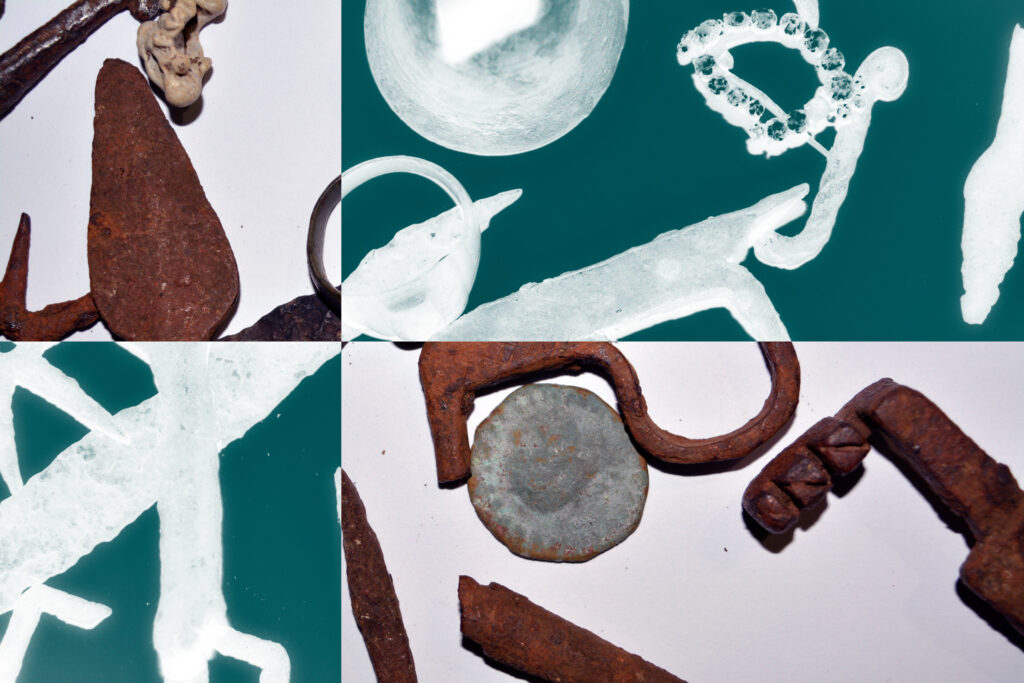
A groundbreaking study by MIT researchers has unveiled new insights into early metal production techniques, dating back 5,000 years in present-day Iran. Utilizing advanced X-ray computed tomography (CT) scans, the team has analyzed ancient slag waste, a byproduct of smelting ore, to uncover details about the nascent stages of metallurgy. This research, published in the journal PLOS One, marks a significant step in understanding how ancient civilizations first harnessed metal technology.
The use of CT scanning, traditionally a medical imaging technique, allowed researchers to noninvasively examine the internal structures of slag samples. This approach offers a new lens through which to view the technological capabilities of early metallurgists, providing a clearer picture of how they refined raw materials into metal.
Revolutionizing Archaeological Methods
The study was led by postdoctoral researcher Benjamin Sabatini and senior author Antoine Allanore, a professor of metallurgy at MIT. By combining CT scanning with traditional archaeological methods, such as cutting samples for further analysis, the team demonstrated the potential of CT scans to complement existing techniques. This method revealed pores and droplets of various materials within the slag, offering clues about the materials used and the technological sophistication of early metallurgists.
“Even though slag might not give us the complete picture, it tells stories of how past civilizations were able to refine raw materials from ore and then to metal,” says Sabatini. “It speaks to their technological ability at that time, and it gives us a lot of information.”
Allanore, who also directs MIT’s Center for Materials Research in Archaeology and Ethnology, emphasized the importance of these findings. “The Early Bronze Age is one of the earliest reported interactions between mankind and metals. Artifacts from that period are crucial to archaeology, yet the materials themselves are not well-characterized in terms of our understanding of the underlying materials and chemical processes,” he explained.
Insights from Tepe Hissar
The slag samples analyzed in the study originated from Tepe Hissar, an ancient site in Iran, dated between 3100 and 2900 BCE. The site is significant for its early evidence of copper processing and organized society, making it a focal point for metallurgical research. The Penn Museum loaned these samples to MIT for study in 2022.
One of the challenges in studying ancient slag is its chemical complexity. Modern metallurgical practices often leave behind unwanted elements, such as arsenic, in slag. These elements are prone to dissolution and leaching, complicating efforts to interpret the original metal production processes. However, the CT scans allowed researchers to identify intact copper droplets and gas voids, providing valuable information about the smelting process.
“Slag waste is chemically complex to interpret because in our modern metallurgical practices it contains everything not desired in the final product – in particular, arsenic,” Allanore noted. “There’s always been a question in archaeometallurgy if we can use arsenic and similar elements in these remains to learn something about the metal production process.”
Future Implications for Archaeology
The use of CT scanning in this context is a novel approach, partly due to the high cost and limited availability of medical-grade scanners. The researchers collaborated with a local startup in Cambridge and utilized MIT’s own CT scanner to overcome these obstacles. This innovative method could pave the way for more systematic studies of ancient metallurgical processes.
In addition to CT scans, the team employed conventional archaeological techniques such as X-ray fluorescence, X-ray diffraction, and electron microscopy. The combination of these methods provided a comprehensive view of the slag’s internal structure, aiding in the selection of sample sections for further analysis.
“My strategy was to zero in on the high-density metal droplets that looked like they were still intact, since those might be most representative of the original process,” Sabatini explained. “The CT scanning shows you exactly what is most interesting, as well as the general layout of things you need to study.”
Moving forward, the researchers believe that CT scanning could become a powerful tool in archaeology, helping to unravel the complexities of ancient materials and processes. This technique offers the potential to better understand the role of elements like arsenic in early metal production and to study the long-term stability of artifacts.
“This should be an important lever for more systematic studies of the copper aspect of smelting, and also for continuing to understand the role of arsenic,” Allanore stated. “It allows us to be cognizant of the role of corrosion and the long-term stability of the artifacts to continue to learn more.”
This research was supported in part by the MIT Human Insight Collaborative (MITHIC), highlighting the interdisciplinary nature of this innovative study. As the field of archaeometallurgy continues to evolve, the integration of advanced imaging techniques like CT scanning promises to unlock further secrets of our ancient past.