


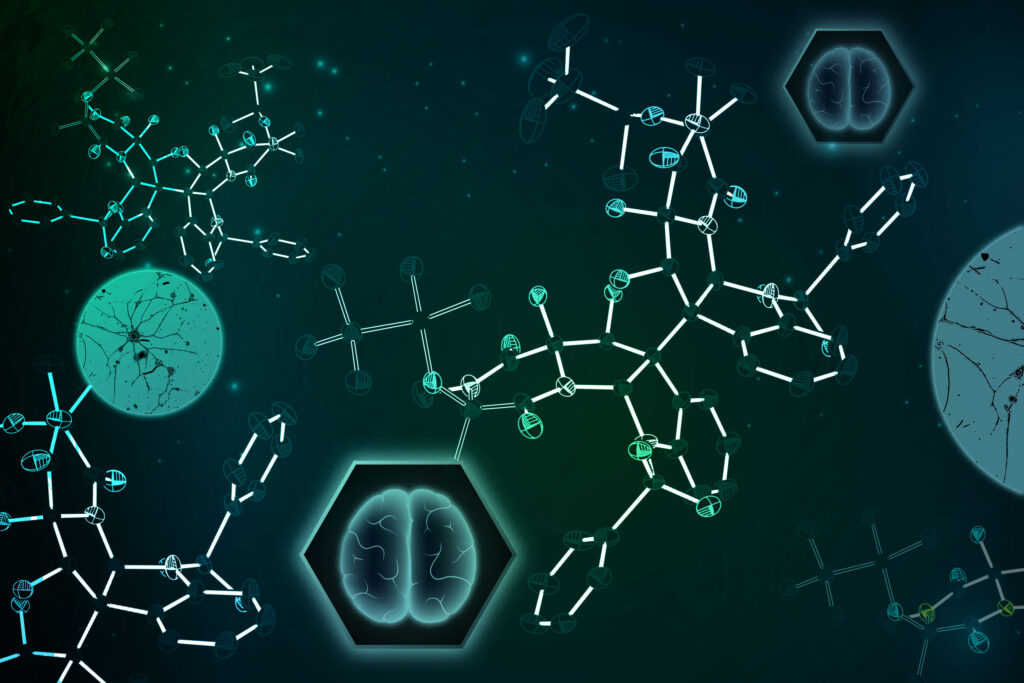
For the first time, chemists at the Massachusetts Institute of Technology (MIT) have successfully synthesized verticillin A, a complex fungal compound discovered over 50 years ago, now showing significant potential as an anticancer agent. The breakthrough could pave the way for new treatments, particularly for pediatric brain cancers.
Verticillin A, known for its intricate structure, has long eluded scientists due to its synthesis complexity, despite differing from related compounds by only a few atoms. “We have a much better appreciation for how those subtle structural changes can significantly increase the synthetic challenge,” said Mohammad Movassaghi, an MIT professor of chemistry. “Now we have the technology where we can not only access them for the first time, more than 50 years after they were isolated, but also we can make many designed variants, which can enable further detailed studies.”
Breaking New Ground in Cancer Research
In laboratory tests, a derivative of verticillin A showed particular promise against diffuse midline glioma, a rare and aggressive form of pediatric brain cancer. However, further testing is necessary to evaluate its clinical potential, according to the researchers. The study, published in the Journal of the American Chemical Society, was led by Movassaghi and Jun Qi, an associate professor of medicine at Dana-Farber Cancer Institute/Boston Children’s Cancer and Blood Disorders Center and Harvard Medical School.
Walker Knauss, a PhD candidate at MIT, is the lead author, with contributions from Xiuqi Wang, a medicinal chemist and chemical biologist at Dana-Farber, and Mariella Filbin, research director in the Pediatric Neurology-Oncology Program at Dana-Farber/Boston Children’s Cancer and Blood Disorders Center.
A Complex Synthesis Journey
The journey to synthesize verticillin A began with its initial isolation from fungi in 1970. These fungi utilize the compound for protection against pathogens. Despite its potential anticancer and antimicrobial properties, the compound’s complexity has made synthesis a formidable challenge.
Movassaghi’s lab previously synthesized a related compound, (+)-11,11′-dideoxyverticillin A, in 2009. This molecule features 10 rings and eight stereogenic centers, requiring precise attachment of chemical groups to ensure correct stereochemistry. The challenge with verticillin A lay in its additional two oxygen atoms, which significantly complicated the synthesis process.
“Those two oxygens greatly limit the window of opportunity that you have in terms of doing chemical transformations,” Movassaghi explained. “It makes the compound so much more fragile, so much more sensitive, so that even though we had had years of methodological advances, the compound continued to pose a challenge for us.”
The synthesis of verticillin A involves a 16-step process starting from beta-hydroxytryptophan, an amino acid derivative. Researchers meticulously added various chemical functional groups, including alcohols, ketones, and amides, ensuring the correct stereochemistry. A critical step was the early introduction of a functional group containing carbon-sulfur bonds and a disulfide bond, which required protection to prevent breakdown during subsequent reactions.
Implications for Cancer Treatment
Upon successful synthesis, the team was able to create derivatives of verticillin A, which were then tested against several types of diffuse midline glioma (DMG) at Dana-Farber. The most susceptible DMG cell lines were those with high levels of the protein EZHIP, a previously identified potential drug target.
“Identifying the potential targets of these compounds will play a critical role in further understanding their mechanism of action, and more importantly, will help optimize the compounds from the Movassaghi lab to be more target specific for novel therapy development,” Qi stated.
The verticillin derivatives appear to interact with EZHIP, increasing DNA methylation and inducing programmed cell death in cancer cells. The most effective compounds were N-sulfonylated (+)-11,11′-dideoxyverticillin A and N-sulfonylated verticillin A, with the N-sulfonylation enhancing molecular stability.
Movassaghi emphasized the importance of natural product synthesis in advancing drug discovery, stating, “The natural product itself is not the most potent, but it’s the natural product synthesis that brought us to a point where we can make these derivatives and study them.”
Future Directions and Research
The Dana-Farber team is now focused on further validating the mechanism of action of the verticillin derivatives and plans to test the compounds in animal models of pediatric brain cancers. Qi noted, “Natural compounds have been valuable resources for drug discovery, and we will fully evaluate the therapeutic potential of these molecules by integrating our expertise in chemistry, chemical biology, cancer biology, and patient care.”
The research received funding from the National Institute of General Medical Sciences, the Ependymoma Research Foundation, and the Curing Kids Cancer Foundation, underscoring the collaborative effort to bring new hope to cancer treatment.