

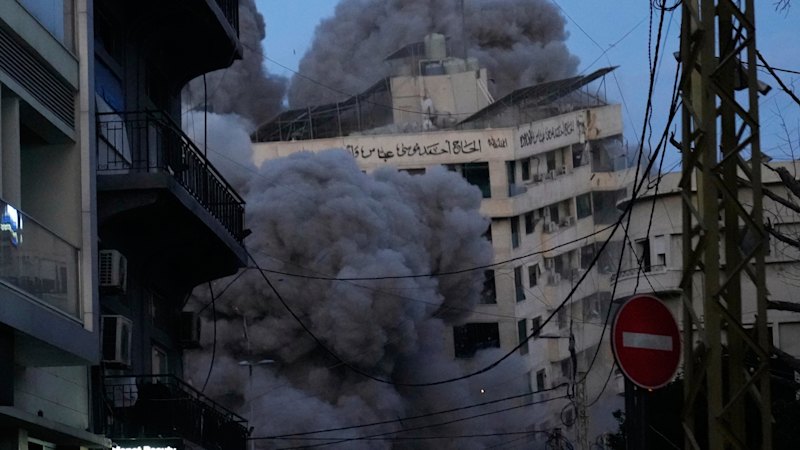
As tensions in the Middle East continue to escalate, Israel has conducted a series of airstrikes in Lebanon, targeting the Zuqaq al-Blat district in Beirut and other areas. According to reports from Al Jazeera, the latest strike targeted an apartment, following the destruction of a multistorey building earlier in the day. The Lebanese Health Ministry has confirmed that Israeli airstrikes have killed at least two people in Lebanon’s western Bekaa Valley and wounded six others in the town of Sohmor.
The situation has drawn Lebanon further into the ongoing conflict, which began when Iran-backed militia Hezbollah attacked Israel on March 2. Hezbollah’s actions were in response to the assassination of Iran’s supreme leader Ali Khamenei on February 28, marking the start of the current hostilities. Israel’s counteroffensive has resulted in over 900 deaths in Lebanon and displaced more than 800,000 people, according to the Lebanese Health Ministry.
Global Shipping Disruptions Amid Conflict
Meanwhile, the International Maritime Organisation (IMO) is set to hold an emergency meeting in London to address the war’s impact on global shipping. The IMO reports that approximately 3,200 vessels are currently confined west of the Strait of Hormuz, affecting around 20,000 seafarers. The meeting will consider establishing a “safe maritime corridor” to facilitate the evacuation of stranded ships and personnel.
The IMO, a specialized UN agency, plays a crucial role in regulating the shipping industry. This meeting, requested by several member states, underscores the global ramifications of the Middle Eastern conflict on trade and transportation.
Iran’s Retaliation and Regional Implications
In a retaliatory move, Iran has targeted Tel Aviv with missiles, claiming it was in response to the assassination of its security chief, Ali Larijani. The attack, which involved Khorramshahr 4 and Qadr missiles, resulted in two fatalities in Tel Aviv and heightened fears of further escalation. Iranian state television reported that General Gholamreza Soleimani, commander of the IRGC branch Basij, was also killed. Soleimani was known for his role in suppressing internal protests in Iran.
Iran’s Foreign Minister Abbas Araghchi stated that the deaths of Larijani and Soleimani would not weaken the country’s resolve.
“Iran has a strong political structure with established institutions. The presence or absence of a single individual doesn’t influence the structure,” he said.
Economic Repercussions and International Responses
The ongoing conflict has significant economic implications, particularly concerning global oil prices. Australian Treasurer Jim Chalmers has warned that inflation could exceed 5% due to rising oil prices. Preliminary Treasury modeling suggests that if oil prices remain high, the Australian economy could experience long-term impacts, with GDP potentially 0.6% lower by 2027.
European Union President Ursula von der Leyen is set to visit Australia to sign a free trade agreement, emphasizing the need for diversified trade relationships in light of Middle Eastern instability. Australian Trade Minister Don Farrell highlighted the importance of this agreement, noting that it could deliver $10 billion in additional trade during its first year.
Continued Military Engagements and Political Tensions
Across the Gulf region, new attacks have been reported, including on Saudi Arabia’s Eastern Province and various locations in Kuwait, Bahrain, Qatar, and the UAE. The Saudi government plans to host a consultative meeting of Arab and Islamic foreign ministers to discuss regional security and stability.
Iran continues to export oil despite the conflict, with about 90 ships, including oil tankers, crossing the Strait of Hormuz. Many of these vessels are involved in “dark” transits to evade sanctions. The US has urged allies to deploy warships to reopen the strait, a critical channel for global oil transport.
In a separate development, Iran executed Kurosh Keyvani, convicted of spying for Israel. The Iranian judiciary stated that Keyvani provided Mossad with sensitive information, a charge often met with severe penalties in Iran.
The situation remains fluid, with potential for further escalation as international actors respond to the evolving crisis. The global community continues to monitor developments closely, considering both diplomatic and economic measures to address the conflict’s far-reaching impacts.