
Welcome to our comprehensive coverage of the intensifying conflict in the Middle East, as significant developments continue to unfold across the region. If you’re just joining us, here’s what you need to know today.
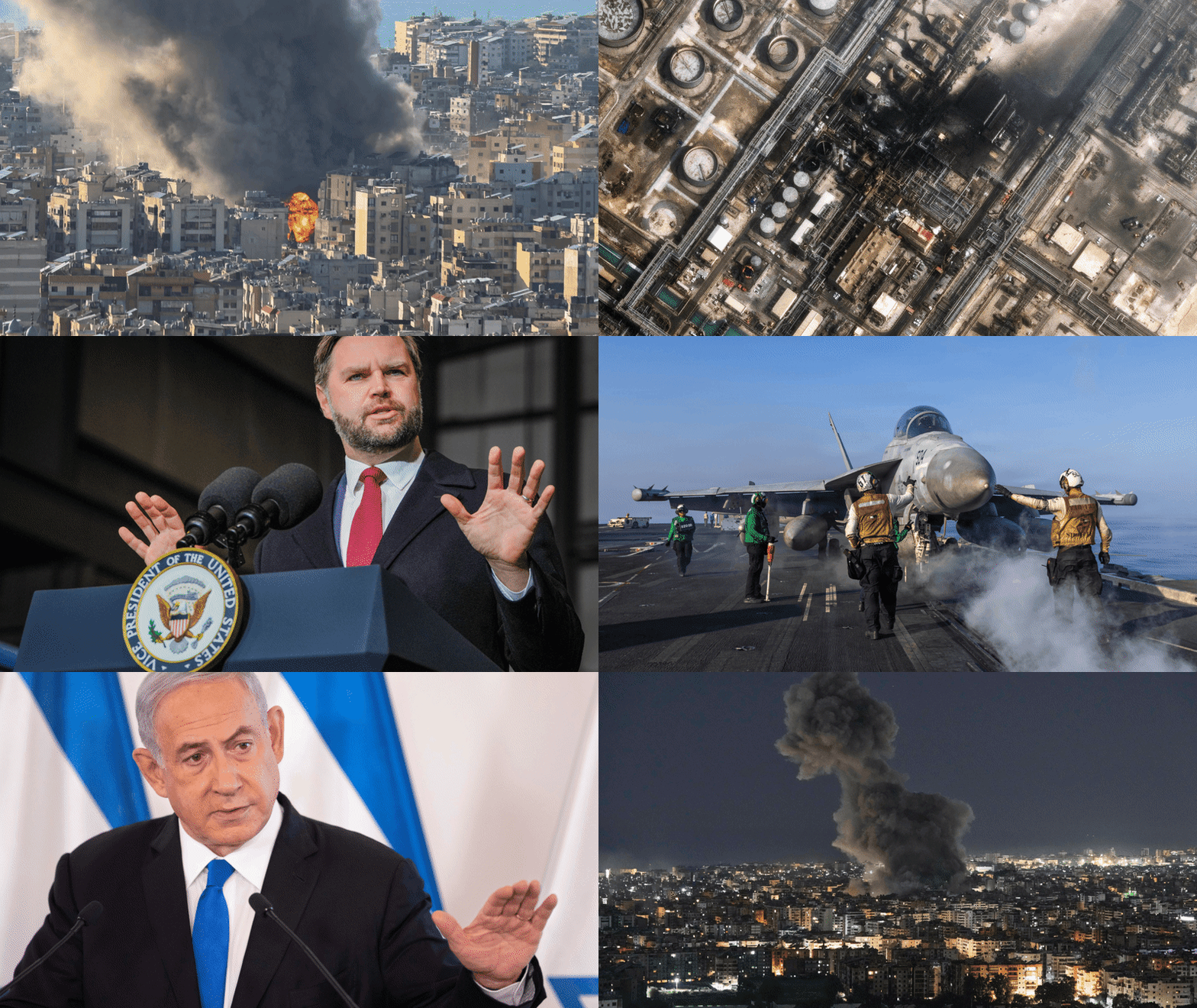
US President Donald Trump addressed reporters in the Oval Office, reiterating his justification for launching an attack on Iran, citing an imminent nuclear threat. However, the head of the UN’s nuclear watchdog, Rafael Grossi, refuted this claim, stating that Iran was not on the brink of acquiring a nuclear weapon.
In a related development, French President Emmanuel Macron condemned the US and Israeli attacks on Iran as illegal during a speech from the Élysée Palace. Macron announced that France would deploy anti-missile and anti-drone systems to protect its military bases and allies in the region, including Cyprus.
Global Repercussions and Energy Concerns
The conflict’s impact on global energy supplies is becoming increasingly evident. President Trump has vowed that the US Navy will ensure the free flow of energy through the Strait of Hormuz, a critical chokepoint for global oil supply. This statement follows Iran’s declaration that it would target any ships attempting to pass through the strait.
Meanwhile, the Albanese government in Australia is urging motorists not to panic over petrol supplies despite long queues at petrol stations. Global markets have reacted negatively, with significant tumbles observed in early trading sessions.
Military Escalations and Regional Tensions
Israel has intensified its military operations by deploying ground troops in Lebanon, marking a new escalation in its campaign against Hezbollah. This move comes amid ongoing retaliatory attacks by Iran across the Gulf region, targeting US assets and allies.
“Iran has hit 10 countries, and we have seen an attack on the US consulate,” said Australian Foreign Minister Penny Wong, highlighting the conflict’s unprecedented nature.
Iran’s retaliatory actions have included missile strikes on US bases in Qatar and Saudi Arabia, as well as drone attacks on US consulates. The conflict has resulted in casualties on both sides, with reports of deaths in Israel and among US military personnel.
Leadership Changes and Political Dynamics
Amidst the turmoil, Mojtaba Khamenei, the second son of Iran’s late supreme leader Ali Khamenei, has been tipped to become the next head of state. Known for his close ties to Iran’s Revolutionary Guards, Khamenei’s potential appointment suggests the organization retains significant influence in Iran.
Khamenei has a background in theology and military service, having participated in the Iran-Iraq war. His leadership could signal a continuation of the hardline policies associated with his father.
Cultural and Humanitarian Concerns
The conflict has also taken a toll on cultural heritage sites. Tehran’s Golestan Palace, a UNESCO World Heritage site, sustained damage from a recent strike. UNESCO has expressed concern and is monitoring the situation to ensure the protection of cultural properties.
On the humanitarian front, Australia is deploying additional consular assistance to support its citizens caught in the conflict. The first commercial flight from Dubai to Sydney since the outbreak of hostilities has successfully departed, carrying over 200 Australians.
Economic and Strategic Implications
The ongoing conflict poses significant economic challenges. Jim Chalmers, the Australian Treasurer, warned of potential increases in the cost of essentials like petrol and food due to disruptions in global supply chains.
“It depends very heavily on how much oil and gas infrastructure is damaged in the conflict,” Chalmers stated, emphasizing the uncertainty surrounding the economic impact.
In response to the escalating military demands, the Trump administration plans to meet with major US defense contractors to discuss accelerating weapons production. This move underscores the urgency in Washington to replenish munitions supplies depleted by recent military operations.
As the situation continues to evolve, the international community remains on high alert, with diplomatic efforts ongoing to de-escalate tensions and stabilize the region.