
If humankind is to explore deep space, one small passenger should not be left behind: microbes. These tiny organisms, which inhabit our bodies, surfaces, and food, could become invaluable allies in our quest to explore the cosmos. Researchers have discovered that microorganisms, particularly bacteria and fungi, can extract crucial minerals from rocks, offering a sustainable alternative to transporting resources from Earth.
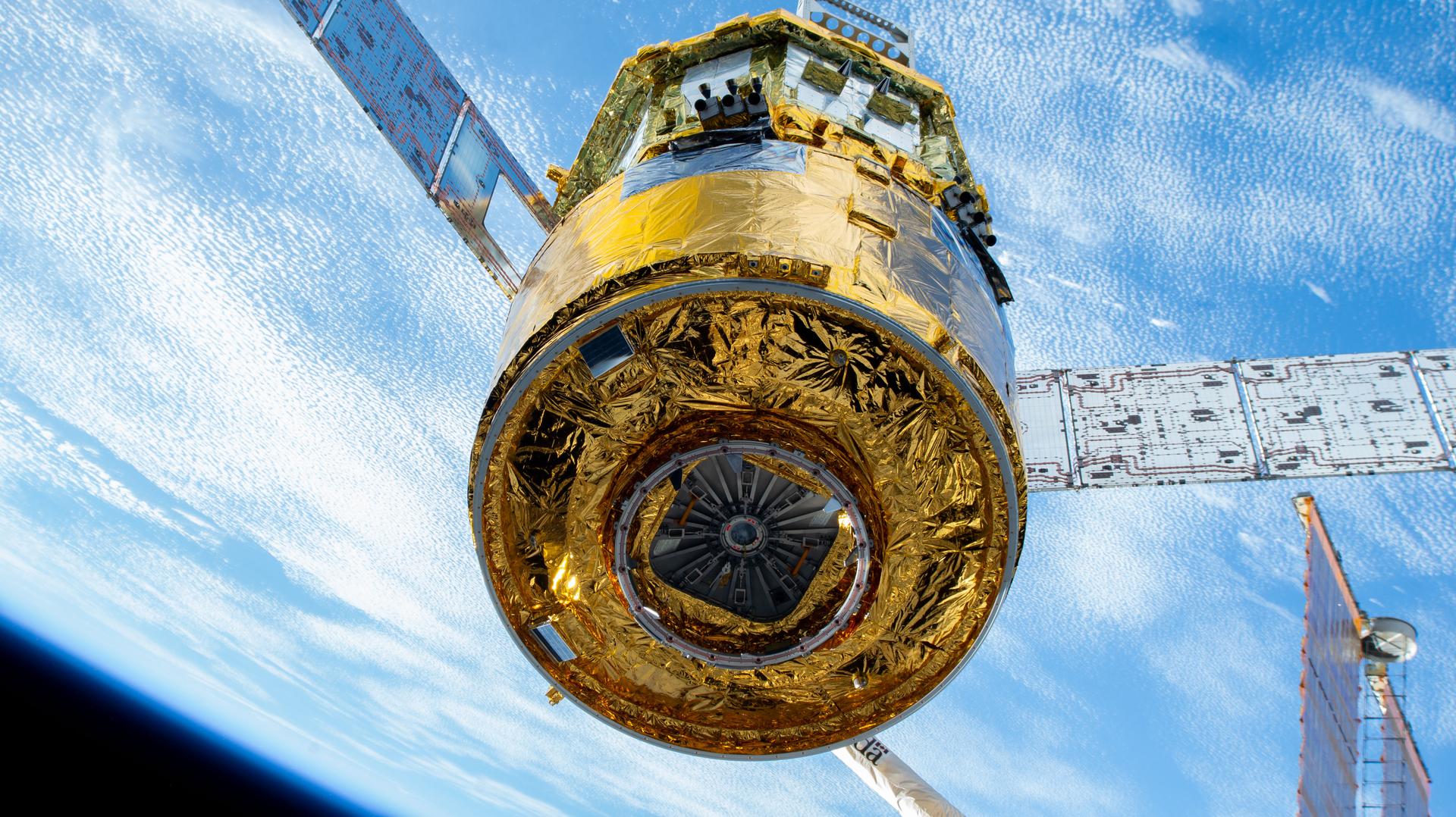
In a groundbreaking study, researchers from Cornell University and the University of Edinburgh collaborated to investigate how microbes extract platinum group elements from meteorites in microgravity. The experiment, conducted aboard the International Space Station (ISS), revealed that “biomining” fungi are especially proficient at extracting the valuable metal palladium. Removing the fungus resulted in a negative effect on nonbiological leaching in the microgravity environment.
Microgravity Experiment on the ISS
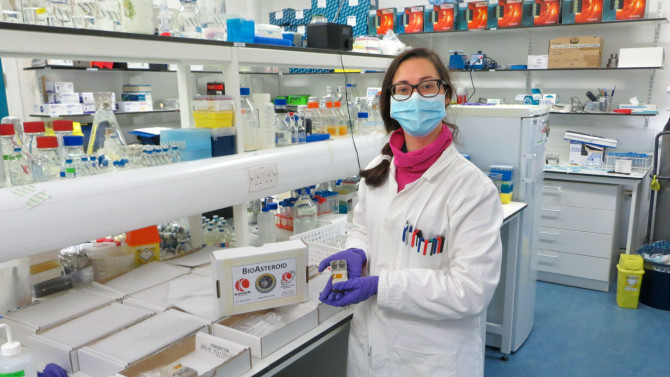
The research, published on January 30 in npj Microgravity, was led by Rosa Santomartino, assistant professor of biological and environmental engineering at Cornell, and included contributions from Alessandro Stirpe, a research associate in microbiology. The BioAsteroid project, directed by Charles Cockell, professor of astrobiology at the University of Edinburgh, utilized the bacterium Sphingomonas desiccabilis and the fungus Penicillium simplicissimum to explore which elements could be extracted from L-chondrite asteroidal material.
“This is probably the first experiment of its kind on the International Space Station on meteorite,” Santomartino stated. “We wanted to keep the approach tailored in a way, but also general to increase its impact. These are two completely different species, and they will extract different things. So we wanted to understand how and what, but keep the results relevant for a broader perspective, because not much is known about the mechanisms that influence microbial behavior in space.”
Mechanisms of Microbial Extraction
Microbes are promising tools for resource extraction because they produce carboxylic acids, carbon molecules that can attach to minerals via complexation and spur their release. However, many questions remain about how this mechanism works, prompting the team to conduct a metabolomic analysis. This involved collecting a portion of the liquid culture from the completed experiment samples and examining the biomolecules contained, specifically the secondary metabolites.
NASA astronaut Michael Scott Hopkins performed the ISS experiment to test microgravity, while researchers conducted a control version in the lab to compare terrestrial gravity results. Santomartino and Stirpe analyzed the voluminous data collected, which included 44 different elements, 18 of which were biologically extracted.
“We split the analysis to the single element, and we started to ask, OK, does the extraction behave differently in space compared to Earth? Are these elements more extracted when we have a bacterium or a fungus, or when we have both of them? Is this just noise, or can we see something that maybe makes a bit of sense? We don’t see massive differences, but there are some very interesting ones,” Stirpe explained.
Implications for Space and Earth
The analysis revealed distinct changes in microbial metabolism in space, particularly for the fungus, which increased its production of many molecules, including carboxylic acids, enhancing the release of palladium, platinum, and other elements. For many elements, nonbiological leaching was less effective in microgravity than on Earth, while microbes maintained consistent results in both settings.
“In these cases, the microbe doesn’t improve the extraction itself, but it’s kind of keeping the extraction at a steady level, regardless of the gravity condition,” Santomartino noted. “And this is not just true for the palladium, but for different types of metals, although not all of them. Indeed, another complex but very interesting result, I think, is the fact that the extraction rate changes a lot depending on the metal that you are considering, and also depending on the microbe and the gravity condition.”
Broader Applications and Future Research
Beyond aiding space exploration, these findings have potential terrestrial benefits. They could lead to efficient biomining from resource-limited environments or mine waste, or the creation of sustainable biotechnologies for a circular economy. However, Santomartino cautions that while the biotechnology community is eager to understand the exact impact of space on microbial species, a simple explanation may not be forthcoming due to the numerous variables involved.
“Depending on the microbial species, depending on the space conditions, depending on the method that researchers are using, everything changes,” Santomartino said. “Bacteria and fungi are all so diverse, one to each other, and the space condition is so complex that, at present, you cannot give a single answer. So maybe we need to dig more. I don’t mean to be too poetic, but to me, this is a little bit the beauty of that. It’s very complex. And I like it.”
The research was supported by the United Kingdom Science and Technology Facilities Council, the Leverhulme Trust, the University of Edinburgh School of Physics and Astronomy, and Edinburgh-Rice Strategic Collaboration Awards. As scientists continue to explore the potential of microbes in space, these tiny organisms may play a pivotal role in the future of both space exploration and sustainable resource management on Earth.