




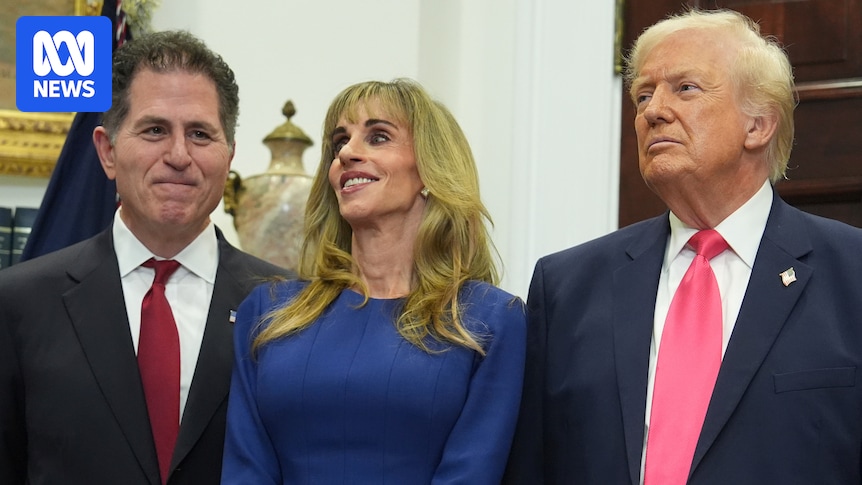
Tech billionaires Michael and Susan Dell have announced a groundbreaking philanthropic initiative, pledging $9.5 billion to fund new investment accounts for children, commonly referred to as “Trump accounts.” This historic donation will allocate $250 to individual accounts for 25 million children, marking one of the largest single charitable commitments in recent decades.
The donation is set to bolster the Trump accounts program, a financial initiative established under former President Donald Trump’s One Big Beautiful Bill Act. This program allows parents to open tax-deferred investment accounts for their children under 18, with the funds invested in an index fund that tracks the stock market. Upon reaching adulthood, account holders can withdraw the funds to invest in education, housing, or starting a business.
Understanding the Trump Accounts
The Trump accounts were legislated in July and are scheduled to launch on July 4, 2026. The U.S. Department of Treasury plans to deposit $1,000 into accounts for children born between January 1, 2025, and December 31, 2028. With an assumed 7% annual return, these funds could grow to approximately $3,750 by the time they are accessible.
The Dells’ contribution specifically targets children aged 10 and under, living in areas where the median family income is $150,000 or less, who fall outside the eligibility window for the government’s initial seed money. The couple hopes their donation will inspire families to engage with the program and contribute additional funds.
“We’re thrilled to be spearheading this in the philanthropy sector and are so excited because we know that more people are going to jump on board,” said Susan Dell.
Reception and Criticism of the Accounts
Supporters of the Trump accounts argue that the initiative introduces more individuals to the stock market, providing children from various economic backgrounds an opportunity to accumulate wealth. The accounts are seen as a countermeasure to socialism’s rising popularity, offering a path to financial independence.
However, critics express concerns that the accounts may exacerbate the wealth gap. Wealthier families, capable of maximizing pre-tax contributions, stand to gain the most, while poorer families may struggle to contribute at all. Amy Matsui, vice-president of income security and childcare at the National Women’s Law Center, criticized the policy as a “tax shelter for the wealthiest.”
“If the White House were serious about supporting families struggling with the costs of living, it would be advocating for investments in child care, an expanded Child Tax Credit, and undoing the historic cuts to SNAP and Medicaid,” Matsui stated.
This sentiment is echoed by others who argue that the accounts do little to address early childhood poverty or compensate for cuts to essential programs like food assistance and Medicaid.
The Philanthropic Landscape
Michael Dell, founder and CEO of Dell Technologies, is ranked as the 11th richest person globally, with a net worth of $148 billion. Together with Susan, the Dells have previously donated $2.85 billion, primarily to children’s causes. Their latest pledge significantly elevates their philanthropic profile.
In the broader context of tech philanthropy, the Dells’ donation is notable. Bill Gates and Melinda French Gates have donated $47.7 billion over their lifetimes, with $5.2 billion in 2024 alone. MacKenzie Scott has contributed $19.25 billion to various causes, focusing on education and economic equity. Meanwhile, Mark Zuckerberg and Priscilla Chan have shifted their focus to science and AI, donating $5.1 billion to date.
The Dells’ contribution underscores a growing trend among tech billionaires to leverage their wealth for social impact, though the effectiveness and equity of such initiatives remain subjects of debate.
Looking Ahead
As the Trump accounts prepare for their official launch, the success of the program will likely depend on widespread participation and additional contributions from families. The Dells’ donation sets a precedent, potentially encouraging other philanthropists to follow suit.
While the initiative aims to foster financial literacy and independence, its long-term impact on economic inequality and social mobility will be closely monitored. As discussions around wealth distribution and social welfare continue, the role of private philanthropy in addressing systemic issues remains a critical conversation.