

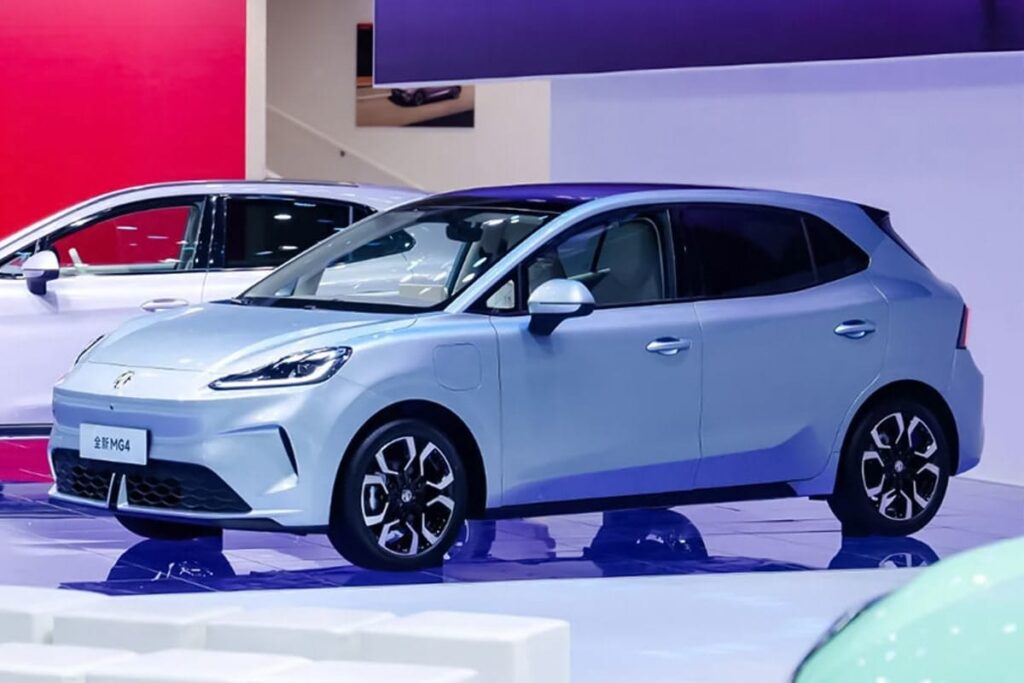
In a bold move to capture the global electric vehicle market, MG has commenced deliveries of its MG4 ‘Anxin Edition’ in China, featuring a cutting-edge semi-solid-state battery. This strategic launch follows the unveiling of a new generation of the MG4 Electric by SAIC in March 2025, just three years after its initial debut in Europe. The update aims to bolster the MG Motor brand’s presence in China, where it has struggled to gain significant traction.
The new MG4 EV is poised to become the brand’s first truly global model, targeting key markets in China, other Asian countries, and Europe. While European customers will have to wait until next year for its release, Chinese consumers have already begun purchasing the vehicle since late summer. The launch event revealed a surprise fifth variant, the ‘Anxin Edition,’ which showcases a semi-solid-state battery developed by QingTao Energy, a startup backed by MG’s parent company, SAIC.
Revolutionary Battery Technology
Semi-solid-state batteries, a rarity in the current market, are seen as a transitional technology towards fully solid-state batteries. They offer substantial improvements in range, charging speed, and safety over traditional liquid electrolyte-based batteries. The MG4’s adoption of this technology marks a significant milestone, as it becomes the first mass-market compact car to feature such an innovative power source.
Prior to this, only Nio, a manufacturer of high-end electric vehicles, had successfully integrated semi-solid-state batteries into its production models, supplied by WeLion. The introduction of this technology in a more affordable vehicle like the MG4 could democratize access to advanced battery technology, potentially reshaping consumer expectations and industry standards.
Market Implications and Pricing
MG’s decision to roll out the MG4 ‘Anxin Edition’ in China at a competitive price of approximately 100,000 yuan (€12,000) could disrupt the market dynamics, especially considering that models with conventional lithium-ion batteries start at around 70,000 yuan (€8,500). However, the pricing strategy for Europe remains uncertain, as export costs and import duties significantly inflate vehicle prices. Currently, the older MG4 Electric model starts at €34,990 in Germany.
Whether the ‘Anxin Edition’ will make its way to European shores is yet to be confirmed. The potential introduction of this variant could influence the competitive landscape, especially if MG can maintain a price advantage over other electric vehicle manufacturers.
Technical Specifications and Performance
The MG4 ‘Anxin Edition’ is equipped with a manganese-based semi-solid-state battery that contains 5% less liquid electrolyte than conventional lithium batteries. It boasts a battery capacity of 53.95 kWh and is paired with a permanent magnet synchronous motor delivering a maximum output of 120 kW. The vehicle achieves a CLTC range of 530 km, with an energy consumption of 11.9 kWh per 100 km. Notably, the battery supports 2C fast charging, allowing it to charge from 30% to 80% in just 21 minutes. The car’s top speed is 160 km/h.
The new MG4 measures 4.40 meters in length, 1.84 meters in width, and 1.55 meters in height, with a wheelbase of 2.75 meters, making it noticeably larger than its predecessor.
Looking Ahead
The introduction of the MG4 ‘Anxin Edition’ with semi-solid-state battery technology represents a significant step forward for MG in its quest to become a global leader in the electric vehicle market. As the industry continues to evolve, the adoption of advanced battery technologies will likely play a crucial role in determining the success of automakers worldwide.
As MG prepares for the European launch of the new MG4 EV, industry analysts will be watching closely to see how the market responds to this innovative model. The potential for widespread adoption of semi-solid-state batteries could accelerate the transition to more sustainable transportation solutions, benefiting both consumers and the environment.
With the automotive industry at a pivotal juncture, MG’s strategic decisions in the coming months could have far-reaching implications, not only for its brand but also for the broader electric vehicle market.