


Mexico City: A clandestine meeting with a romantic partner led to the demise of Nemesio Oseguera Cervantes, better known as “El Mencho,” Mexico’s most-wanted drug cartel leader. Mexican authorities confirmed his death as they continue to confront cartel violence across Jalisco.
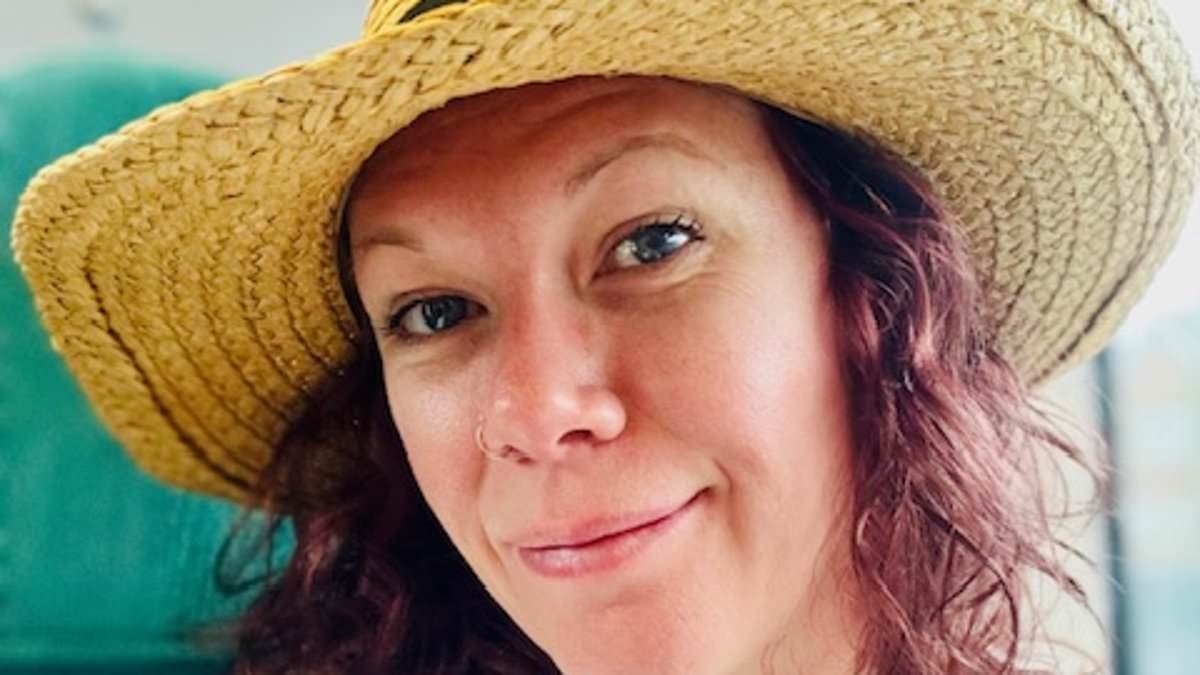
Both Mexico and the United States had long pursued Oseguera Cervantes, who faced numerous charges related to organized crime and drug trafficking. This time, intelligence efforts bore fruit when investigators tracked a trusted associate of one of his romantic partners. The associate escorted the woman to Tapalpa, Jalisco, for a rendezvous with the notorious drug lord. The location was verified by US intelligence and communicated to Mexican authorities.
After the woman departed, having spent the night with “El Mencho,” special forces confirmed his presence in the area and executed their plan. The operation culminated in a military confrontation that resulted in Oseguera Cervantes’ death.
Who Was “El Mencho”?
Nemesio Oseguera Cervantes, the mastermind behind the Jalisco New Generation Cartel (CJNG), was a former policeman who became one of the most powerful figures in Mexico’s drug underworld. The US government had offered a $15 million reward for information leading to his capture.
At 59, Oseguera Cervantes had a long history of criminal activity. In 1994, he was convicted of heroin trafficking in the US and served three years in prison. Upon his return to Mexico, he quickly ascended the ranks of the drug trade, founding CJNG around 2009. The cartel rapidly expanded, trafficking cocaine, methamphetamines, and fentanyl to the United States and employing extreme violence, including the use of drones and explosive devices.
The CJNG became infamous for its audacious attacks on Mexican security forces, including the downing of a military helicopter in 2015 and an attempted assassination of Mexico City Police Chief Omar Garcia Harfuch in 2020. The cartel also diversified its operations, engaging in fuel theft, extortion, and timeshare fraud.
The Raid and Its Aftermath
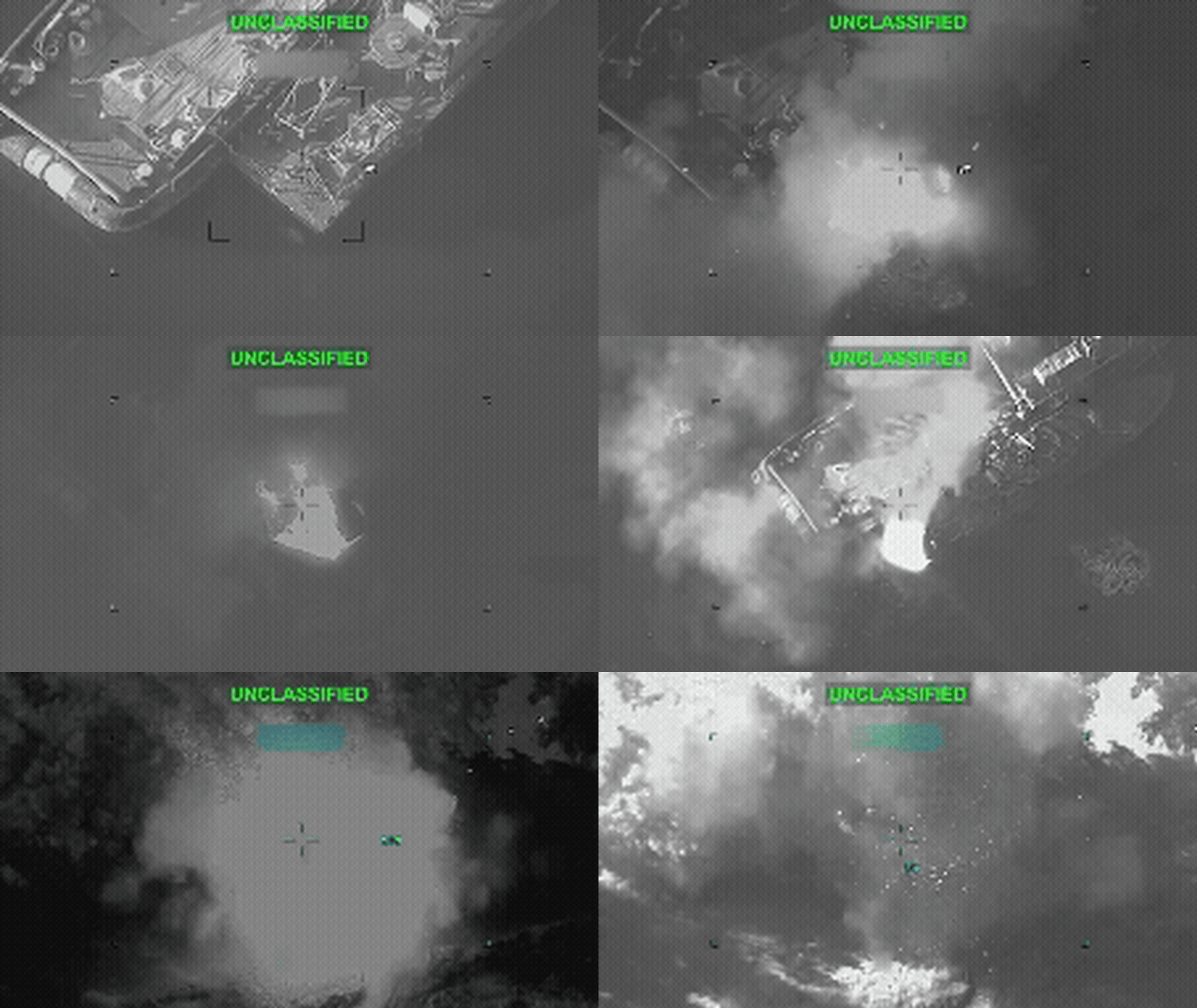
Oseguera Cervantes was fatally injured during a military operation by Mexican special forces near Tapalpa. According to Defence Minister Ricardo Trevilla, intelligence from a confidante of Oseguera’s romantic partner facilitated the swift planning of the raid.
During the operation, cartel gunmen engaged security forces, leading to a firefight at a cabin complex. Oseguera Cervantes and two bodyguards were injured and airlifted to Mexico City, but none survived. Authorities discovered a cache of weapons, including rifles with grenade launchers and mortar shells, at the scene.
President Claudia Sheinbaum emphasized that while US intelligence aided in locating the compound, the operation was executed solely by Mexican forces. “There was no participation in this operation of US forces. What there was, was an exchange of information,” she stated.
Violence Erupts in Response
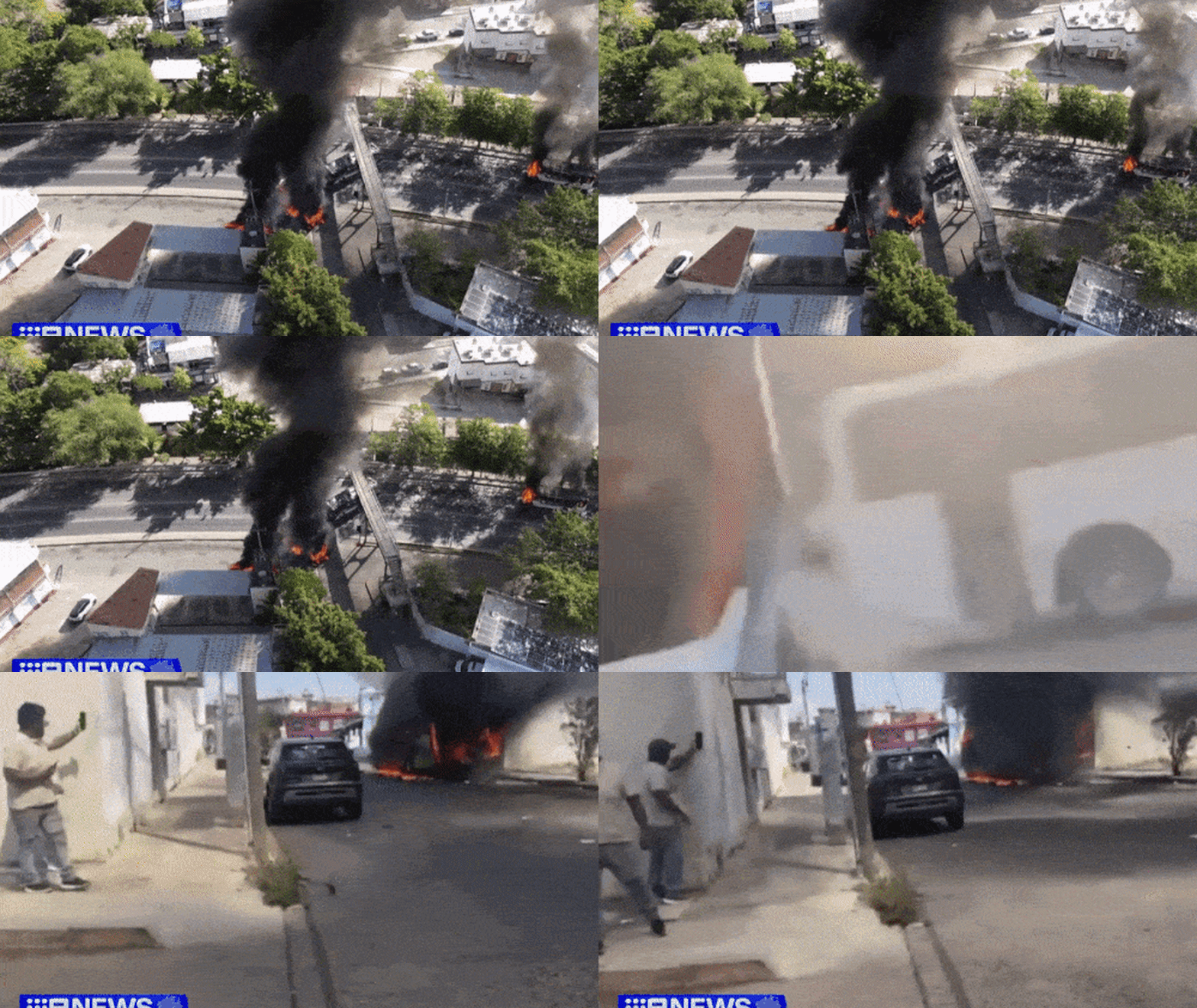
The death of Oseguera Cervantes has triggered widespread violence across Jalisco and beyond, challenging the Mexican government’s ability to control the powerful drug cartels. In retaliation, cartel members have blocked roads and set vehicles ablaze. The Defence Ministry reported that these attacks were orchestrated by Oseguera’s lieutenant, “El Tuli,” who was also killed in a clash with security forces.
More than 70 people, including 25 members of the Mexican National Guard, have died in the ongoing conflict. Approximately 9,500 troops have been deployed to restore order as cartel fighters continue to clash with heavily armed security forces.
Mexican authorities confirmed that 25 National Guard members were killed in six separate attacks, with 30 criminal suspects killed in Jalisco and four in Michoacán.
As violence threatens to escalate, several Mexican states have cancelled school, and local and foreign governments have advised citizens to remain indoors. No foreigners have been reported harmed, according to a government statement.
The Role and Future of CJNG
The death of Oseguera Cervantes is a significant blow to the CJNG, a major supplier of fentanyl to the US. The cartel originated as an offshoot of the Sinaloa Cartel, once led by Joaquín “El Chapo” Guzmán. The CJNG eventually became independent and waged war against other major cartels in Mexico.
The cartel’s reputation for extreme violence, including torture and public executions, has made it a formidable force in Mexico. Security experts are now watching for potential fractures within CJNG leadership that could lead to internal conflict.
“There will definitely be skirmishes between the various factions, and these spasms of violence could last for years,” said Carlos Olivo, a former US Drug Enforcement Administration assistant special agent.
While the US has urged Mexico to intensify efforts against drug trafficking, Mexico has called on the US to curb illegal firearm sales that empower cartels. According to US government data, 70% of illegal weapons traced in Mexico originate from the US.
US Deputy Secretary of State Christopher Landau praised Oseguera’s killing as a positive development for both nations and the region. However, President Sheinbaum has pledged to strengthen cooperation with the US while maintaining Mexico’s sovereignty and warning against unilateral military actions by the US.