



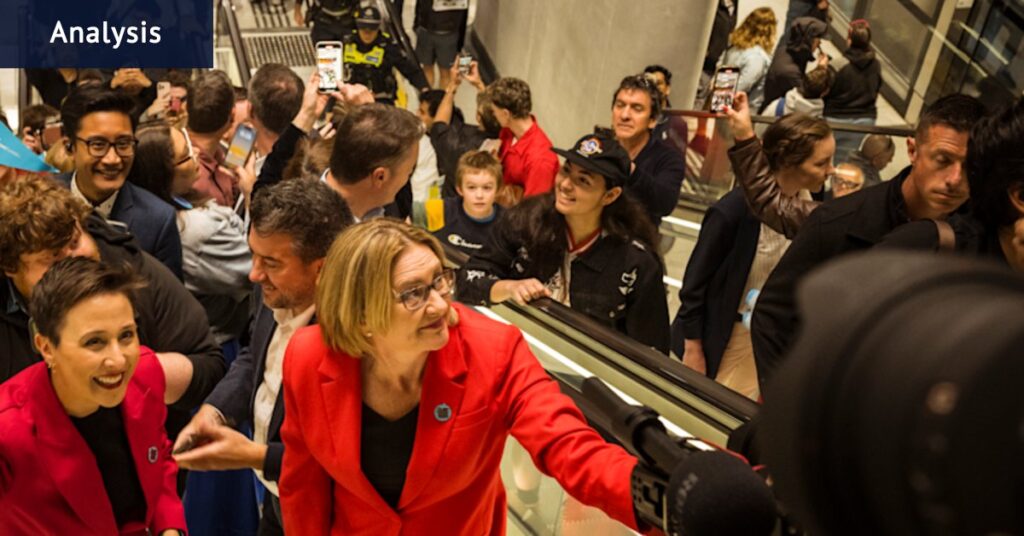
The excitement surrounding the Metro Tunnel’s opening is palpable, with passengers eagerly anticipating their first rides. However, the fanfare is perhaps most pronounced among Premier Jacinta Allan and her fellow MPs. A decade ago, Labor took a significant gamble by committing to this cross-city rail line, and now they are ready to celebrate its completion.
Premier Allan is expected to emphasize two points repeatedly leading up to the state election in November next year: the Coalition opposed the new train tunnel, while Labor delivered it “ahead of schedule.” While the former is accurate, the latter claim warrants a closer examination.
Timeline and Claims: A Closer Look
Daniel Andrews initially committed to constructing the Metro Tunnel in February 2015, projecting an opening date of 2026. The following year, the project’s business case outlined a timeline for “new rail services commencing by 2026.” In February 2018, Andrews announced that the project was running “ahead of schedule,” with an anticipated opening in 2025, a year earlier than expected. Allan has since inherited this narrative, asserting that the tunnel is opening a “full year” ahead of schedule.
However, based on the original business case, the project is actually on time. The timeline set for the project’s “testing, commissioning, and operational readiness” phase was to conclude in January 2026, suggesting full services would start in early 2026. As it stands, full timetable services are slated to commence on February 1.
Current Operations and Challenges
During the current “soft launch” phase, the tunnel operates only between 10 a.m. and 3 p.m. on weekdays, with trains running every 20 minutes. This phase serves as an opportunity to address any glitches and allows Melburnians to explore the new infrastructure without disrupting peak-hour commuters. However, the tunnel won’t be fully “open” until February 1, when the complete “day one” service plan is implemented.
Behind the publicly announced timeline, the project’s journey has been less smooth. The initial contract with the Cross Yarra Partnership consortium (CYP) set a timeline for day one operations by September 17, 2024. This was later revised to June 2025, following disruptions from the COVID-19 pandemic and other issues. Whether these deadlines were ever feasible or intentionally ambitious remains unclear, but they provided some leeway to ensure the tunnel opened within the state government’s publicly committed 2025 timeline.
Financial Implications and Political Stakes
Credit must be given where due: completing a decade-long, $15 billion infrastructure project nearly on time is a commendable feat. However, the claim of an early opening does not hold up under scrutiny. It’s not the most egregious of exaggerations, but it does raise questions about what was necessary to have the first passengers board before 2026.
In mid-2024, the state government offered CYP up to $888 million in “additional payments” to finish the project, tied to delivery milestones, including day one operations in June 2025. This agreement increased Victoria’s bill to as much as $13.48 billion, compared to the original $10.9 billion budget. The total project budget is approximately $15.5 billion, including costs borne by the builders. The exact number of milestone incentives included in these figures remains unknown.
“Some cost overruns were inevitable and beyond the government’s control, following the pandemic and the Ukraine war.”
Nevertheless, the government found itself vulnerable to pressure from builders, as Andrews and Allan had already invested significant political capital in a 2025 opening.
Looking Ahead: What’s Next?
As the Metro Tunnel approaches its full launch, the project stands as a testament to the complexities and challenges of large-scale infrastructure development. While the government touts its success in delivering the tunnel on time, the financial and political implications of its journey cannot be overlooked.
Moving forward, the focus will likely shift to the tunnel’s impact on Melbourne’s transportation network and its role in shaping the city’s future growth. As commuters prepare to embrace this new addition to their daily routines, the Metro Tunnel’s story serves as a reminder of the intricate balance between ambition, execution, and accountability in public projects.