


When Opposition Leader Jess Wilson replaced Brad Battin as the Liberal leader last year, she promised to prioritize housing affordability in her party’s re-election campaign. Now, with the November election looming, the Coalition has unveiled a significant housing policy that aims to reshape Melbourne’s urban landscape by focusing on high-density development in inner-city areas traditionally held by Labor and the Greens.
This policy announcement directly challenges the Labor government’s strategy, which seeks to provide housing for Millennials by promoting high-density development across Melbourne’s suburbs. Premier Jacinta Allan has criticized the Liberals, labeling them as “blockers” who hinder young Victorians’ access to housing while opposing NIMBY (Not In My Backyard) sentiments.
Labor’s approach has sparked controversy by removing local communities’ and councils’ rights to object to planning applications, favoring expedited processes. However, the Liberals’ counter-proposal, which seeks to protect inner and middle-ring suburbs from intensive development, has not garnered support from many economists and urban planners.
The Competing Visions for Melbourne’s Housing
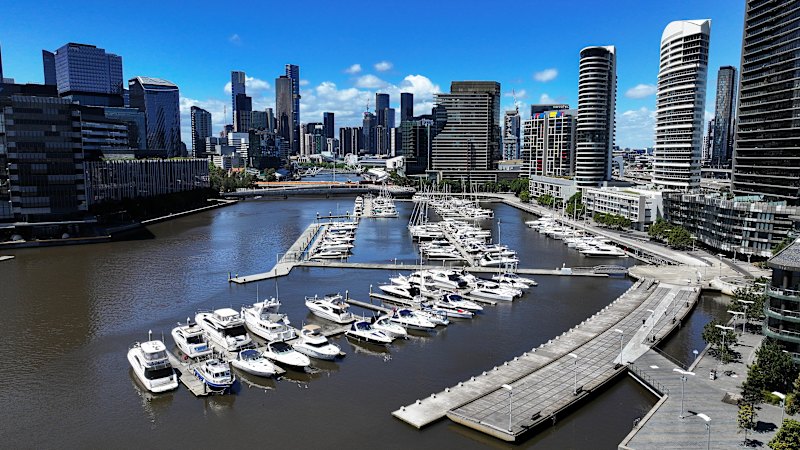
The Liberal Party’s plan centers on expanding the Capital City Zone, currently limited to Melbourne’s CBD. This expansion would include Southbank, Parkville, North Melbourne, Collingwood, Fitzroy, and Fishermans Bend, allowing for taller buildings in these areas, even in heritage zones, to rejuvenate the city post-pandemic. Wilson promises that development would scale down as it approaches established residential streets, though specific height limits and housing targets remain vague.
In contrast, Labor’s policy focuses on rezoning 60 suburban hubs near public transport for buildings up to 20 stories, aiming to deliver 300,000 new homes by 2051. The Coalition also proposes addressing bottlenecks in Melbourne’s urban fringe by imposing a two-year limit on approving 27 Precinct Structure Plans, which Wilson describes as “broken” due to extended timelines.
“The state is looking at the city as a whole, and rightly so,” said Stephen Glackin, a senior research fellow at Swinburne University, criticizing the Liberal plan for ignoring the potential vibrancy of middle suburbs.
Brendan Coates, the Grattan Institute’s economic policy program director, described the opposition’s plan as “very back to the future,” noting that Victoria already excels in building homes on the urban fringe, contributing to its relative affordability compared to other states.
Challenges and Criticisms
While the Urban Development Institute of Australia supports the greenfield plan, citing costly delays that hurt affordability in new suburbs, Labor’s plans face their own hurdles. Glackin highlighted that activity center developments might take decades to materialize due to slow building rates and challenges with small subdivisions.
Data from the Grattan Institute reveals that of the 600,000 homes possible in Labor’s activity centers, only about 110,000 are currently economically feasible to build.
Critics and local councils have slammed Labor’s program as a top-down approach that undermines community rights. David Hayward, emeritus professor of public policy at RMIT, questioned the assumptions underlying both parties’ plans, advocating for more government intervention in the housing market.
Hayward pointed out that the Liberal plan appears election-focused, shielding inner and middle-ring suburbs the party aims to win or retain, while pushing high-density development into safe Labor and Greens seats.
Millennials’ Housing Preferences
For Millennials like 25-year-old Mohi Gholamy, the decision to buy property involves balancing lifestyle and investment potential. Gholamy chose a $700,000 two-bedroom apartment in Balwyn, prioritizing proximity to work and lifestyle over potential investment growth in outer suburbs.
“I’m really happy with the decision. I’ve never had to use my car so little,” Gholamy said, reflecting a preference for local living that aligns with Labor’s pitch to younger voters.
Premier Allan has emphasized that Labor’s activity center program aims to ensure Millennials can afford to live in the suburbs where they grew up, with more housing options near public transport.
The Missing Middle and Planning Reforms
The Coalition’s policy notably omits the “missing middle” of medium-density housing, such as townhouses and low-rise apartments. Labor’s statewide Townhouse Code, introduced in early 2025, sets uniform standards for such developments, streamlining approvals if projects comply with the code.
While the Victorian Coalition has yet to state its position on the code, Wilson has expressed support for medium-density housing in past speeches. Coates considers the Townhouse Code the government’s strongest policy for increasing housing supply, unlocking capacity for nearly 1 million extra homes.
“Collingwood and Fitzroy are places that are fine-grain subdivisions. It might seem like a good idea to get higher density in areas with good access to the city, but there is a structural barrier to achieving that,” said Planning Institute Victoria president Patrick Fensham.
Industry experts warn that planning reform alone won’t resolve the housing crisis. Beau Arfi, a property investor, highlighted high taxes and construction costs as primary barriers to new supply, calling for both planning and tax reforms to boost development.
The Urban Development Institute of Australia has urged for urgent tax reform in its election platform, advocating for the removal of windfall gains tax and surcharges on foreign investors to enhance housing supply.