



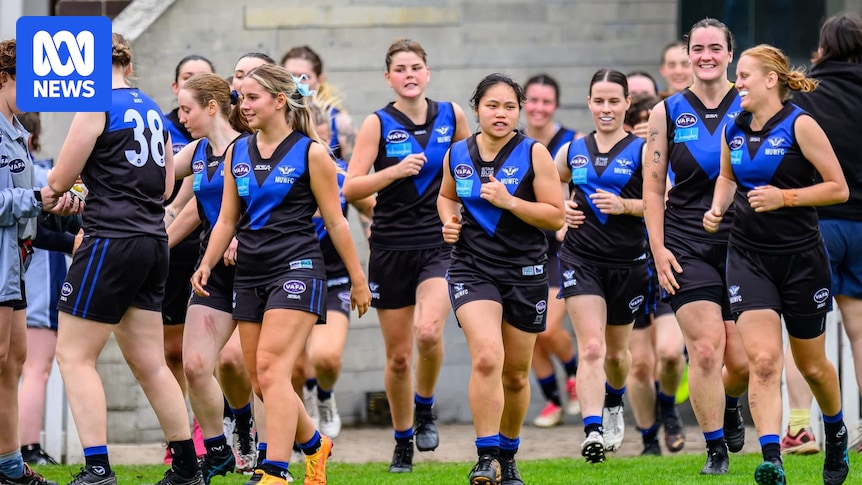
Melbourne University Women’s Football Club (MUWFC), a historic cornerstone in Australian Rules football, is grappling with the possibility of closure. Known for its legacy of nurturing talent, including AFLW stars like Ash Riddell and Emma Kearney, the club now finds itself fighting for survival. Co-president Michelle Andrews candidly acknowledges the precarious situation, stating, “I would say the club came very, very close to folding, and if I’m honest with you, it still is.”
The struggles of MUWFC highlight broader shifts in grassroots women’s football, compounded by internal challenges. The resignation of former president Maddy Noack marked a significant turning point, as the club was reduced to a single senior team from three in 2023. This contraction mirrors a broader decline in participation among women and gender-diverse individuals in Australian Rules football, a decade after the AFLW’s inception.
Leadership Challenges and Player Exodus
MUWFC’s recent performance in the Victorian Amateur Football Association (VAFA) has been troubling, with the club losing its first three games of the season by a cumulative 368 points. This prompted an unprecedented mid-season re-grading request. Previously a competitor in the VFLW, MUWFC relinquished its license to the Kangaroos, resulting in a drop to the VAFA tier.
The club faced a “player exodus” in 2025, with only five senior players returning after the off-season. Noack attributed these challenges to an overemphasis on performance, stating, “We tried to run the club like a VFL club, because we thought it would boost results.” However, Andrews offers a different perspective, suggesting that mismanaged conflicts and a lack of clear direction were more to blame.
Despite these setbacks, Andrews remains optimistic about the club’s future. Balancing her full-time role as an osteopath and gym owner, she is committed to leveraging the club’s volunteer-driven model to unlock its potential. “I’m probably wired to see opportunity, and to be optimistic … and there’s a massive opportunity with the club. It’d be a real shame if it didn’t reach its potential,” she said.
Historical Significance and Leadership Legacy
Laura Kane, the AFL’s general manager of football and former MUWFC president, is another staunch supporter of the club’s potential. Although not currently involved in an official capacity, Kane remains a life member and advocate for MUWFC. She emphasizes the club’s role in normalizing female leadership in sports, stating, “The club has been a powerhouse for women in football, and not just on the field.”
Kane’s tenure on the committee provided her with invaluable insights into football operations and governance. She highlights the club’s success in fostering careers within the AFL industry, including players, coaches, and administrators who have emerged from MUWFC’s ranks.
Changing Landscape of Women’s Football
The landscape of women’s football has evolved significantly since the early days of MUWFC. Andrews recalls her time as a strength and conditioning coach during the club’s heyday, when the AFLW’s launch spurred a surge in participation. “The players didn’t like me at the start, because I made them do a warm-up,” Andrews laughs, reflecting on the less professional nature of women’s football at the time.
Despite the initial influx, participation has waned for clubs like MUWFC and the Darebin Falcons, another powerhouse in Victorian women’s football. The Falcons recently sought financial assistance from the AFL to secure their future. However, Kane remains optimistic, viewing the proliferation of women’s and girls’ teams across the state as a positive development. “It’s hard to keep a community club going because there are so many places for women to play now,” she noted.
Community and Cultural Impact
For players like 20-year-old Reg Hudson, the survival of women-led community clubs is crucial. Inspired by the AFLW’s launch, Hudson joined MUWFC during her high school years. “It would be upsetting and disappointing [to lose MUWFC] because we have such a great history,” she said, underscoring the club’s inclusive and welcoming culture.
Hudson acknowledges the challenges of recent seasons, citing a disconnect within the club as a factor in player departures. However, she remains hopeful, as players rally to preserve MUWFC’s legacy. Andrews, too, is determined to ensure the club’s storied history continues, with plans to strengthen ties with the University’s men’s teams and leverage institutional resources.
As MUWFC looks to the future, securing a new coach is a top priority. “Our goal is to find a really good coach who’s willing to be involved in creating something,” Andrews said. “It’s going to be a challenging season, but they will have full scope, capacity and support to really make this club a powerhouse [again].”