

Melbourne’s rail service provider, Metro Trains, and Premier Jacinta Allan have both issued apologies to thousands of commuters left stranded after a major fault disrupted peak hour services on Tuesday evening. The incident, which occurred on the newly operational Metro Tunnel, left passengers sweltering in carriages for hours, sparking widespread frustration and calls for a thorough investigation.
The disruption unfolded when an overhead power fault at Armadale brought trains on the Cranbourne, Pakenham, and Sunbury lines to a standstill. This incident occurred just days after these lines began full operations through the new tunnel, marking a significant setback for the city’s transport network.
Stranded Passengers and Service Chaos
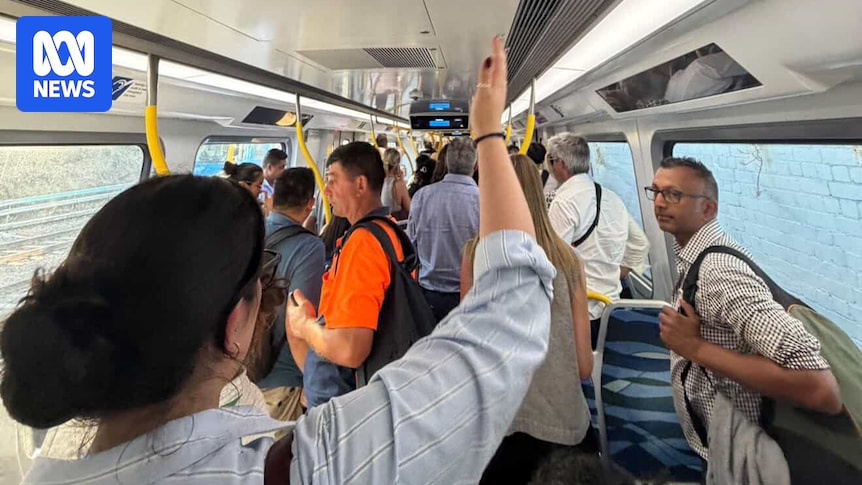
Approximately 600 passengers were trapped on two trains without air-conditioning for up to two hours in 30-degree Celsius heat. They were eventually evacuated and walked along the tracks to the nearest station in Malvern. Meanwhile, other services were canceled, including those from Caulfield through the Metro Tunnel to West Footscray, causing further disruption throughout Tuesday night.
Metro Trains CEO Raymond O’Flaherty explained that the shutdown was due to an overhead wire and pantograph—the apparatus that connects the train to the powerline—becoming entangled. “I know it was incredibly frustrating and took a lot of extra time for them to make their journeys,” O’Flaherty stated in an interview with ABC Radio Melbourne. He apologized specifically to the 600 passengers stuck on the network, emphasizing the complexity of safely evacuating them.
“Because of where the incident occurred between two stations on a live track, it was a very complex environment,” O’Flaherty said. “We had trains running on adjacent lines, we had electrical wires that came down and were on top of the trains.”
Communication Breakdown
Transport and technology journalist Jeremy Burge, who was on a City Loop train during the disruption, noted significant communication failures. He observed that screens displaying service information continued to show trains running as normal, even after the lines were shut down. “Staff were frantically trying to stop people heading down to the platforms,” Burge reported, highlighting the confusion caused by outdated information displays.
Premier Jacinta Allan acknowledged these issues, stating, “It’s not the experience that we want passengers on any part of our train network to have.” She confirmed that investigations into both the cause of the fault and the failures in passenger information systems were underway.
Political and Public Reactions
The state opposition has seized upon the incident, criticizing the government for inadequate preparation of Melbourne’s train network for high-capacity metro trains (HCMT). Shadow Minister for Public Transport Matthew Guy likened the situation to “an Apple iPhone but the system is built … with a battery that can manage Nokia phones,” suggesting that the infrastructure is not equipped to handle the new trains.
The routes of the Cranbourne, Pakenham, and Sunbury lines, which were altered as part of the Metro Tunnel project, had only just begun operating at full capacity every three to four minutes through the underground stations. The disruption has raised questions about the readiness of the network to handle such high-frequency services.
Looking Ahead
Metro Trains has indicated it will consider compensation for affected passengers in the coming weeks. This move may help to mitigate some of the public dissatisfaction, but it underscores the need for robust systems and infrastructure to support Melbourne’s growing transport demands.
As investigations continue, the incident serves as a critical reminder of the challenges faced by urban transport networks in adapting to new technologies and the importance of effective communication during service disruptions. With Melbourne’s population and transport needs continuing to grow, the pressure is on for authorities to ensure that the city’s rail systems are both reliable and resilient.