


A groundbreaking facility in Melbourne, housing hundreds of childhood cancer tissue samples, has unveiled a pioneering catalog of pediatric cancers. This initiative aims to enhance the identification of how the immune system can effectively target each cancer type.
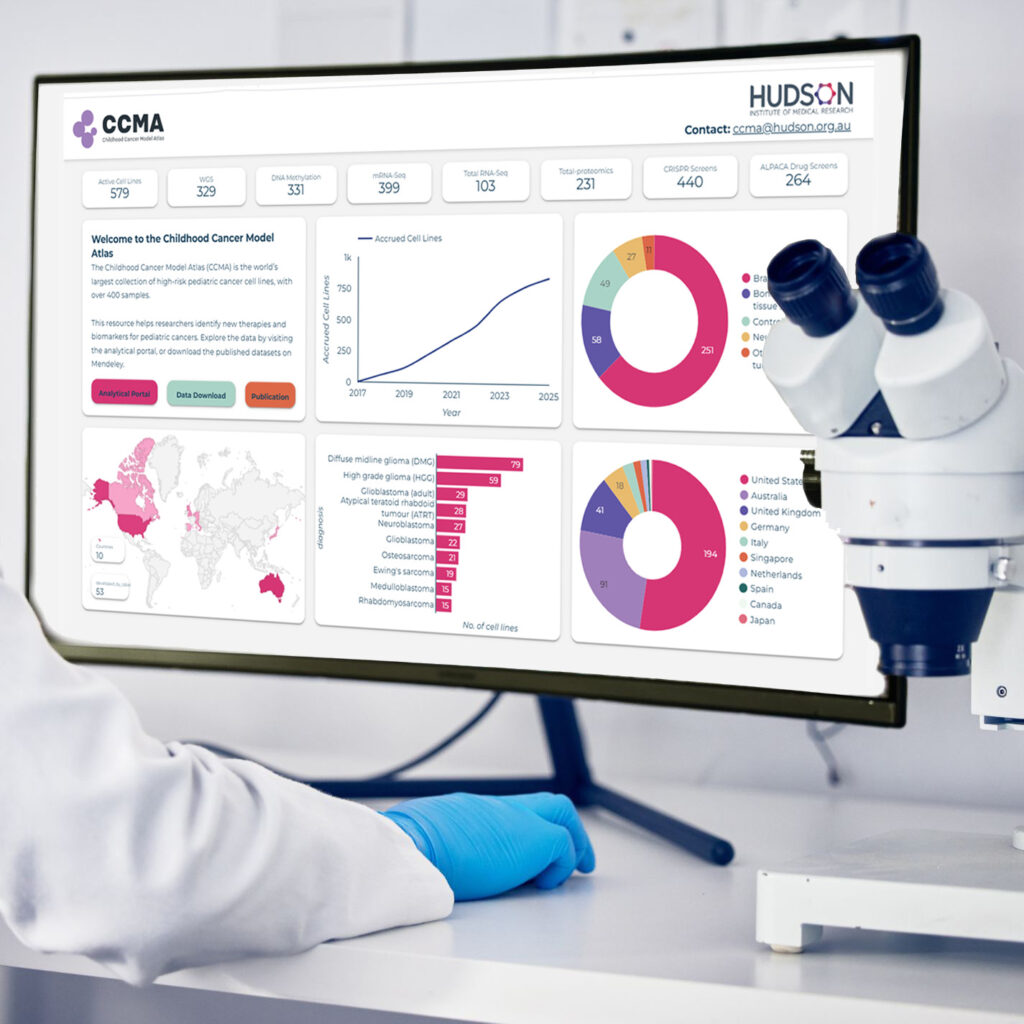
Pediatric cancer remains the leading cause of disease-related mortality among children in the Western world. However, immunotherapy options are limited, as childhood cancers often do not respond to treatments designed for adult cancers. The Children’s Cancer Model Atlas (CCMA) at the Hudson Institute of Medical Research stands as the world’s largest repository of pediatric cancer cell lines, offering researchers a unique opportunity to explore potential treatments using advanced AI techniques.
Revolutionizing Pediatric Cancer Treatment
Within the CCMA, researchers have meticulously examined over 200 high-risk pediatric cancer cell lines to identify a critical characteristic known as the HLA type and the potential neoantigens they present to the immune system. This comprehensive analysis has been published in the journal iScience, marking a significant milestone in pediatric cancer research.
Understanding HLA Types and Neoantigens
Senior author Dr. Claire Sun explained the significance of the study, emphasizing that it provides a detailed resource of high-potential immune targets in childhood cancers. “Human leukocyte antigens (HLA) are proteins on the surface of cells that the immune system uses to distinguish between ‘self’ and ‘non-self’,” Dr. Sun stated. “Using this information, we predicted which neoantigens each cancer model might produce and present.”
Neoantigens, small abnormal protein fragments formed when cancer cells mutate, play a crucial role in the immune system’s ability to recognize and attack cancer cells. Different HLA types can present different neoantigens, and understanding these types is vital in determining which neoantigens can be effectively recognized by the immune system.
Implications for Future Treatments
The research’s impact extends beyond immediate findings. According to research assistant Yiwen Guan, the study aids in identifying tumors with actionable antigens, making them prime candidates for immunotherapy. “Our research provides valuable support for the research community by guiding the development of safer, more effective immunotherapies for children,” she noted.
This development follows a growing trend in personalized medicine, where treatments are tailored to the genetic and molecular profile of individual patients. The CCMA’s findings could significantly influence the direction of future pediatric cancer therapies, potentially leading to more targeted and effective treatment options.
Looking Ahead
The announcement comes as a beacon of hope in the ongoing battle against pediatric cancer. By unlocking the potential of immunotherapy tailored specifically for children, researchers are paving the way for breakthroughs that could transform the landscape of cancer treatment.
As the scientific community continues to explore the vast possibilities presented by the CCMA, the focus remains on translating these findings into clinical applications. The ultimate goal is to improve survival rates and quality of life for children diagnosed with cancer, offering new avenues of hope for patients and their families worldwide.
Meanwhile, the success of the CCMA underscores the importance of collaborative research efforts and the integration of cutting-edge technologies in advancing medical science. As more data becomes available, the potential for developing innovative therapies grows, promising a brighter future for pediatric cancer care.