



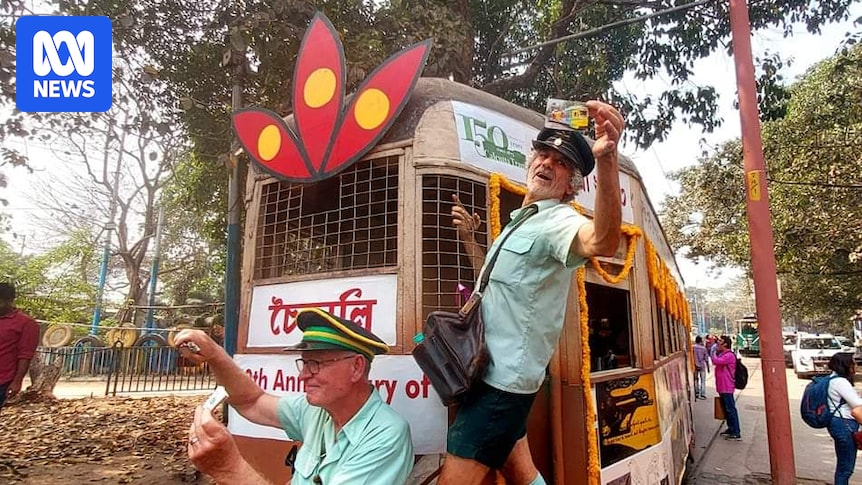
After 30 years of fostering a unique cultural bond, the connection between Melbourne and Kolkata may soon be at risk. The Tramjatra festival, a celebration that has united tram enthusiasts from both India and Australia, faces an uncertain future as the West Bengal government plans to decommission Kolkata’s historic tram system. The decision, attributed to worsening traffic congestion, has sparked significant backlash from locals who view the trams as an essential part of the city’s identity.
“It’s very important for me to see the trams every day,” said Deep Das, a member of the Calcutta Tram Users Association (CTUA), echoing the sentiments of many who cherish the trams as a daily fixture in Kolkata’s urban landscape.
Melbourne Conductor Leads Charge
Leading the charge to preserve Kolkata’s tramways is Roberto D’Andrea, the founder of Tramjatra and a former Melbourne tram conductor. D’Andrea, along with a dedicated group of Melbourne tram enthusiasts, has been at the forefront of efforts to keep the historic tramways operational.
“‘Jatra’ means journey in Bengali,” D’Andrea explained. “We’ve been on a trajectory for over 30 years, decorating trams and performing.” The Tramjatra festival, which celebrates the cultural significance of trams in both cities, features performing conductors, decorated trams, and public forums that bring together tram enthusiasts, known as gunzels, from across continents.
Melbourne’s tram network, now fully offset by renewable energy thanks to two large solar farms in Victoria, serves as a model of sustainability. Plans are also underway to construct tram stops entirely from repurposed industrial waste. D’Andrea believes that Kolkata can learn from Melbourne’s emphasis on sustainability, which has helped shield the city from a global decline in tram usage.
Environmental Concerns
The CTUA argues that dismantling the tram system would be a setback for environmental sustainability, especially as Kolkata grapples with transport-related pollution. The West Bengal government’s rationale for decommissioning the trams is to create more space for vehicles and larger roads. However, research indicates that Kolkata experiences the highest levels of vehicular air pollution exposure among major Indian cities.
Efforts to reduce emissions are already underway in the city, with plans to introduce 5,000 electric buses by 2030 and fully electrify ferries crossing the Ganges River. In 2019, Kolkata received a C40 Cities “Green Mobility” award for its project to electrify buses. Mayor Firhad Hakim has expressed a vision to make the city’s transportation all-electric by 2030, with trams initially considered a key component of this plan.
“We in Kolkata are throwing it into the gutters,” lamented Sagnik Gupta, joint secretary of the CTUA, highlighting the missed opportunity to leverage trams as a cost-effective and energy-efficient public transport solution.
Global Tram Revival
While trams face extinction in India, they are experiencing a renaissance globally. Cities such as Manchester and Nottingham in England have re-established their tram networks, Helsinki has ordered dozens of new trams for its city center, and the Brazilian city of Salvador is developing a new tram network. D’Andrea believes Kolkata should follow this global trend.
“There’s so many tram-related stories in Kolkata, so there’s this sort of universal love of trams there,” he noted, emphasizing the cultural and historical significance of trams in the city.
The CTUA has launched legal action against the closure of the tram network, with the case currently before the West Bengal courts. As the battle to save Kolkata’s trams continues, the outcome may well determine the future of this cherished mode of transport in a city where it has long been a symbol of heritage and sustainability.