



March 5, 2026 — A coalition of major media organizations has petitioned Victoria’s Attorney-General, Sonya Kilkenny, to amend laws that allow high-profile defendants to conceal their identities and crimes from public scrutiny. The media groups argue that the increasing use of suppression orders on “mental health grounds” is undermining the principle of open justice in the state.
Senior representatives from The Age, The Australian, Herald Sun, The Guardian, the ABC, and Melbourne’s three commercial broadcast networks have united in their appeal to Kilkenny. They warn that the current trend of issuing suppression orders is eroding transparency within the judicial system. The Victorian opposition supports this push for reform, contemplating its own amendments to the Open Courts Act, which governs the use of suppression orders.
Victim Impact and Public Outcry
A woman, who cannot be identified as a victim of a sex offence, expressed frustration over the system that allowed her rapist to protect his identity during his trial. “I couldn’t understand that the only reason for the suppression order was to protect his mental health,” she said. “If the law is changed, survivors in the future will know that the justice system is doing everything it can to support them.”
Shadow Attorney-General James Newbury highlighted the frequency with which defendants facing serious charges secure orders for mental health reasons. “Many victims feel like their voice has been silenced when a suppression order is granted,” he stated. “We need to accept that every serious matter causes an accused mental strain.”
Legal and Academic Perspectives
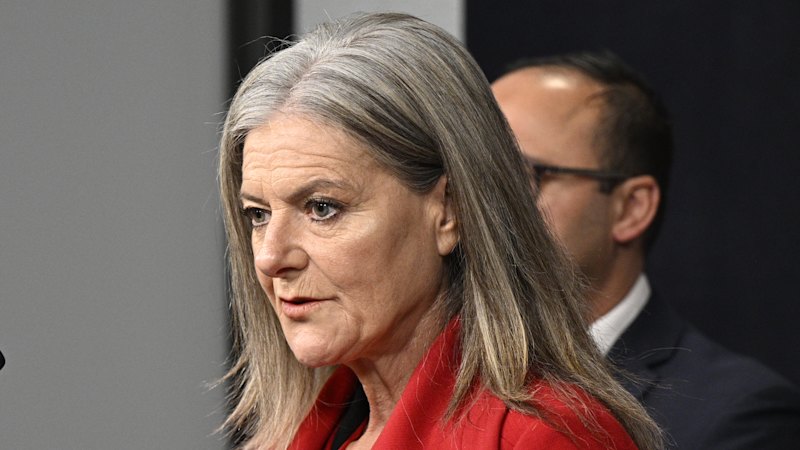
Attorney-General Kilkenny emphasized the need to balance open justice with the right to a fair trial, stating, “We need to make sure the balance is right, and we need to make sure also, as we have clearly demonstrated, that we listen to the voices of victim survivors.”
Melbourne Law School associate professor Jason Bosland, whose research influenced the Open Court Act, argued that the law should rarely allow defendants to secure orders on mental health grounds. “It is entirely justified for defendants in criminal proceedings to get name suppression in circumstances where disclosure of their identity would cause them to commit suicide,” he explained. “The problem we have is it is very easy to make that claim. It is very, very difficult to distinguish legitimate cases and cases where they are just trying it on.”
Under the Open Courts Act, defendants can obtain a court order suppressing the publication of their identity if they can prove it is “necessary to protect the safety of any person”.
High-Profile Cases and Legal Challenges
This provision is increasingly utilized by sportspeople, politicians, lawyers, and other high-profile figures. Notable cases include:
- Tom Silvagni, whose identity was protected for 18 months after his defense team argued that publication would severely damage his mental health. The order was lifted following his conviction on two counts of rape.
- A former Victorian councillor charged with drugging and raping a 17-year-old, whose identity remains protected due to a suppression order.
- Melbourne lawyer Glenn Thexton, who unsuccessfully sought a suppression order after being charged with sexually assaulting an underage girl.
Media lawyers argue that the law is being applied with unintended consequences. Sam White, a lawyer for Nine, stated, “Harm to mental health wasn’t contemplated when this legislation was introduced. I think such a complex issue needs more careful consideration from parliament.”
Calls for Legislative Reform
The media groups propose an amendment to clarify that “safety of any person” refers to a real and substantial, physical safety risk from another person. This change aims to prevent defendants from using mental health concerns to block the publication of their identities.
“The enormous recent increase in these types of suppression orders together with the nature of the suppression order applications themselves make it clear the mental health ground is being used as a tactic to obtain suppression orders in circumstances where no such order should be made,” the letter states.
The letter’s signatories include prominent media figures such as The Age editor Patrick Elligett and Herald Sun editor Sam Weir. They argue that the current application of the law undermines open court principles in Victoria.
The Victorian Supreme Court Chief Justice Richard Niall refuted claims that suppression orders are overused, noting they are issued in a “tiny fraction” of cases. Director of Public Prosecutions Brendan Kissane, KC, also reported no evidence of courts misapplying the criteria for suppression orders.
As the debate continues, the media groups remain steadfast in their call for legislative clarity to uphold the principles of open justice while addressing legitimate mental health concerns.