
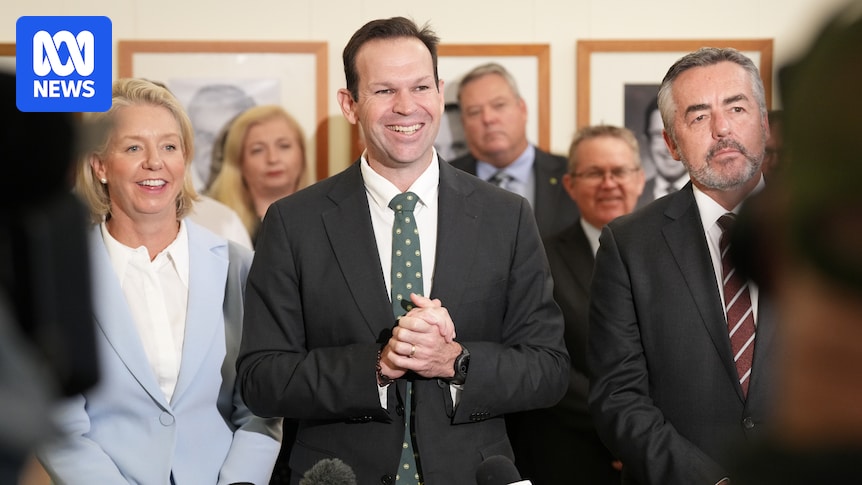
Newly appointed Nationals leader Matt Canavan has pledged to “fight back” for Australians, emphasizing the need for a resurgence in local manufacturing, a population boost, and a return to the country’s iconic larrikin spirit. In his inaugural press conference, the outspoken Queensland senator expressed concerns about Australia’s declining living standards and criticized the federal government’s reliance on overseas solutions.
“We’re losing our relaxed and larrikin nature, and we have to fight back for Australians,” Canavan declared. He highlighted that Australia’s abundant natural resources could be key to restoring the nation to its former glory. “All we need to do to revive our great nation is to have more Australia,” he added.
Challenges and Political Stance
Senator Canavan dismissed the notion that the Coalition must moderate its politics to regain centrist voters in urban areas, suggesting that the public is less concerned with political labels. “We often get labelled as left or right. I just want to do what is right, and that’s what most Australians want from their politicians,” he stated.
The announcement comes as the Nationals prepare for the Farrer by-election in May, where they face stiff competition from One Nation, the Liberals, and an independent candidate. Despite trailing in polls, Canavan is determined to “fight like hell” to boost the party’s prospects. “I’ll just be out on the ground putting the case for why the record of achievement we’ve got as a party, in delivering hospitals, delivering roads, in delivering infrastructure for regional areas, is what Farrer needs,” he asserted.
Addressing Identity Politics and Leadership Role
With One Nation posing a significant electoral threat, Canavan sought to distance his approach from Pauline Hanson’s divisive rhetoric. “I’m very concerned that the identity politics of the division that we’ve seen on the left is creeping into the right now,” he remarked. “I was very critical of Pauline’s comments dividing Australia into different groups … suggesting that there are no good in certain groups of Australians. I totally reject that.”
As a leader known for opposing net-zero emissions and breaking ranks on various issues, Canavan acknowledged the shift in responsibilities his new role entails. “Everything I do in the parliament, here in the party room, out fighting on the ground, will be to get a better standard of living for the Australian people,” he pledged. He also reiterated his opposition to Labor’s emissions and renewables targets, arguing that they are detrimental to lowering power prices.
“I have nothing against solar — I’ve got it on my own roof … there’s role for it in our system — we’re just doing way too much of a good thing, and everybody is paying the price for that,” he said.
Leadership Dynamics and Future Prospects
Traditionally, the leader of the Nationals under a Coalition government serves as deputy prime minister, which would necessitate Canavan’s move from the Senate to the lower house. However, when questioned about this possibility, Canavan emphasized his current focus on leading his team. Based in central Queensland, he is a social conservative on issues like abortion and previously served as a cabinet minister in the last Coalition government.
Canavan expressed gratitude for being elected leader, acknowledging his predecessor David Littleproud’s contributions. The leadership contest included Victorian senator Bridget McKenzie and Page MP Kevin Hogan, both of whom had declared their leadership ambitions. Gippsland MP Darren Chester was elected as Nationals deputy leader and echoed Canavan’s commitment to improving Australians’ living standards.
“The message I hear everywhere I go in regional Australia is that people have been left behind,” Chester noted.
The leadership change was prompted by Littleproud’s unexpected resignation, announced on Tuesday, though he will remain the MP for Maranoa. Nationals whip Michelle Landry announced the election result after a 45-minute party room meeting, emphasizing the need for “strong leadership” in the face of upcoming challenges.
“We’ve got a mighty battle coming up ahead of us,” Landry said. “We’ve got two years to get ourselves up in the polls. We’ve got fights with Labor, One Nation, the teals, so we really need strong leadership. I think we’ve voted for that today and we’re looking forward to getting on with the job.”
This development follows a period of reflection for the Nationals as they strategize to regain political ground and address the concerns of regional Australians. As Canavan steps into his leadership role, the party’s direction and policies will be closely scrutinized in the lead-up to the next federal election.